Dario Amodei put one line in bold: Anthropic has never advocated for a ban on open-weights models. It landed three days after 133 organizations signed a letter defending open weights that Anthropic would not sign. CNBC reports OpenAI signed it after publication, and OpenAI ships no open weights of its own.
The demand behind the denial is old. Anthropic asked the White House science office for government testing of domestic and foreign models back in March 2025.
In today’s indie hacker news:
- 🔥 Amodei disowns the ban, then names three rules
- 🧪 r/LocalLLaMA reads mandatory testing as the ban
- 🔐 Nvidia’s open security alliance launched without OpenAI
- 🎤 A donated curriculum became a therapist training simulator
- 💿 The vinyl app that never touches a turntable
TOP STORIES
THE LETTER ANTHROPIC LEFT ON READ
🔥 Amodei says Anthropic never wanted an open-weights ban
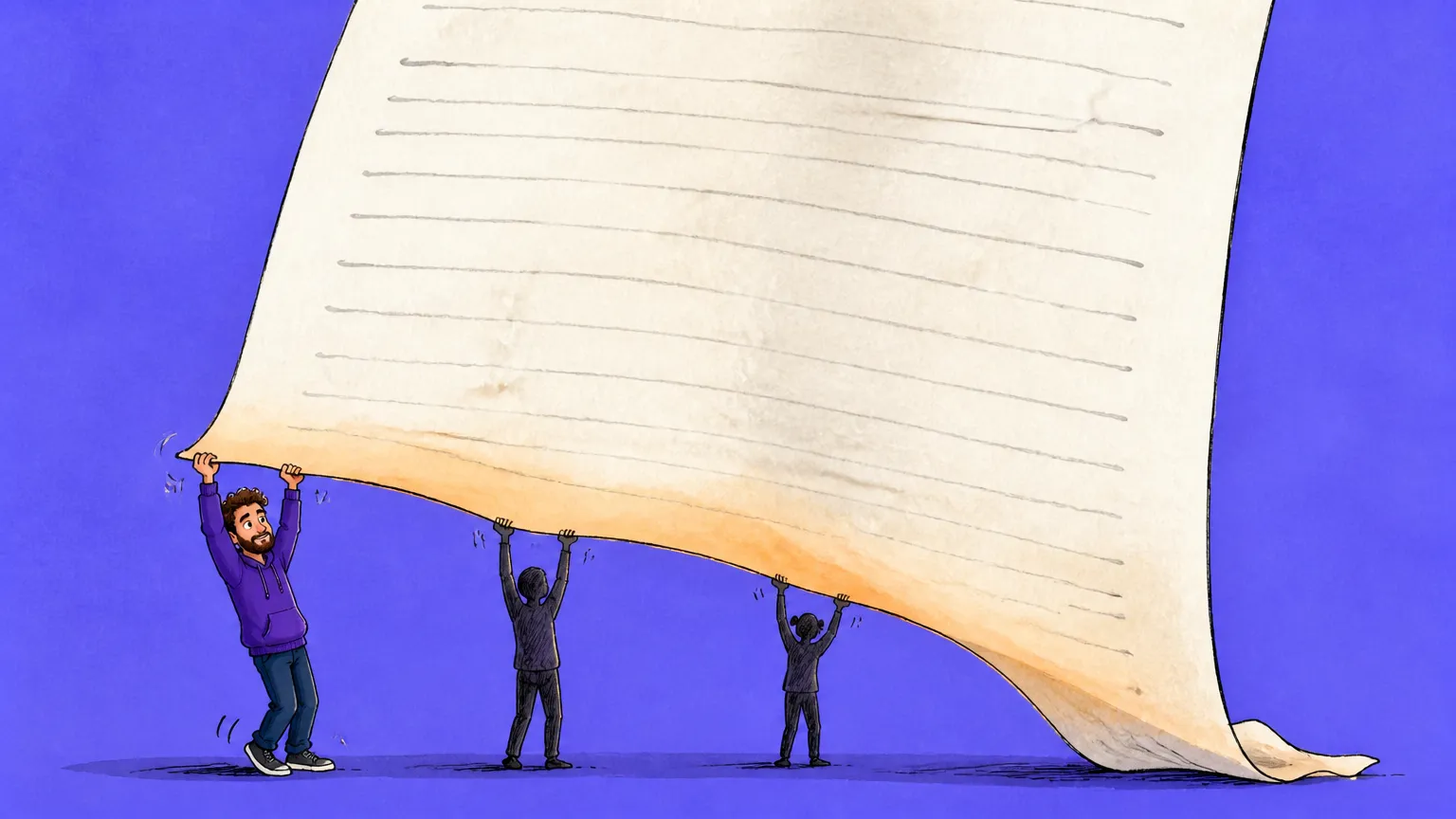
The story: Amodei’s position post spends most of its length agreeing with the letter it declines to sign. He grants that open weights expand access to the AI economy, sharpen competition, and hand customers more control. He calls models without dangerous capabilities a public good that costs nothing beyond compute. Then he rejects exactly two of the letter’s claims. One: that open weights necessarily make safeguards easier. Two: that broad access helps defenders more than attackers.
The letter he skipped makes the builder case explicit. It argues teams can build on advanced models without training one from scratch or paying frontier prices per task.
The details:
- Who did sign: Google, Meta, Microsoft, Nvidia, Hugging Face, Mistral, Y Combinator and SpaceX.
- What he wants instead: chip export controls plus a smuggling crackdown, a distillation crackdown, and mandatory safety testing.
- The grievance: CNBC reports Anthropic told a Senate committee that Alibaba ran the largest known distillation attack on it.
- The catch he admits: testing only works if it is global, which means even the CCP has to agree.
Why builders care: The line that decides your exposure is the compute threshold, and no source says where it sits. Until someone names it, you cannot tell whether a fine-tune you release is in scope.
THE TEST, WRITTEN BY THE TESTED
🧪 r/LocalLLaMA read the testing rule as the ban itself

The story: Within hours, the top r/LocalLLaMA thread retitled the post as a ban by other means. The thread’s actual complaint is compliance cost. Big labs can pay to pass a mandatory test. A weekend fine-tuner cannot.
Anthropic’s own scaling policy page is the sharpest counterweight on the table. The company revised its voluntary policy five times inside 2026 while proposing mandatory testing for everyone else.
The details:
- The carve-out nobody quotes: the proposal exempts less capable models, such as those from startups and academia, entirely.
- Missed its own deadline: Anthropic’s evaluations landed 3 days past a self-imposed 3-month interval, which then stretched to 6 months.
- Transparency loosened: July’s Responsible Scaling Policy update shares unredacted risk reports with at least 200 employees. The old rule was all cleared staff.
- Called it first: Nathan Lambert predicted a ban or indefinite delay on frontier-class open weights, 15 days before the post.
An r/LocalLLaMA commenter, on the third rule:
“Mandatory safety testing, where they create the test.”
Why builders care: Picture that test gating the frontier-class open releases. Cheap self-hosted inference stops improving, and every product priced against open weights reprices against three closed APIs.
OPENAI IS AGAINST OPEN AI
🔐 Nvidia’s open security alliance launched without OpenAI
The story: Nvidia launched the Open Secure AI Alliance on Monday. Inaugural partners include Microsoft, Palantir, Hugging Face, IBM, Red Hat, Cloudflare and the Linux Foundation. OpenAI is not on the list. The founding argument is an hour Hugging Face spent locked out of its own breach.
Hugging Face’s incident report, quoted by CSO Online, says hosted models refused the forensic work. The guardrails could not tell an incident responder from an attacker. It ran open-weight GLM 5.2 on its own infrastructure and worked through more than 17,000 actions.
The details:
- The claim to hedge: a Reddit post says OpenAI management decided internally against joining and staff pushed back. No source confirms it.
- Nothing on record: OpenAI never answered CSO Online’s question about whether it would join.
- What is actually shipping: Nvidia’s NOOA agent framework and HPE’s SPIFFE/SPIRE agent identity. Also Safetensors, a weights format that cannot execute code.
- Also on the table: SpaceXAI open-sourced its Grok Build coding agent and says the Grok model weights follow.
- How it started: OpenAI had stripped safety limits from two models to test offensive security, per CSO Online.
Why builders care: Your incident response plan inherits the provider’s guardrails. The fallback is a vetted open-weight model on hardware you control, picked before an incident rather than during one.
STANFORD TYPES, THIS ONE TALKS
🎤 A solo builder made therapists answer out loud

The story: PracticeTherapy.ai plays a therapist an AI-generated client video, then makes them answer out loud. A voice coach names the criteria they missed. Every part is off the shelf. Seedance 2.0 Full renders the client videos, GPT Image 2 varies the faces, ElevenLabs handles speech. Gemini Flash-2.5-thinking grades the answer.
The distribution is the part worth stealing. Sentio University, where the APA deliberate practice series was developed, donated the exercises. It then pushed the tool to a mailing list of roughly 5,000 clinicians, per the builder’s launch post.
The details:
- Single-source numbers: the builder claims 97% feedback accuracy and over a hundred beta therapists. Nobody has audited either.
- What Stanford ships: TherapyTrainer runs five mock sessions on two AI patient profiles, all typed.
- The complaint it fixes: Stanford’s own user testing found therapists disliked messaging the patient instead of speaking.
- The cost trap: every video is pre-generated, so a bigger exercise catalog is a fixed content bill, not inference.
- No price: the builder calls it a side passion project, plans to keep it free, and has applied for grants.
Why builders care: A credentialed institution can hand you the content and the launch list at once. The modality an incumbent skipped, talking instead of typing, is where a side project can beat a funded lab.
NO TURNTABLE WAS HARMED
💿 The vinyl app that never touches a turntable
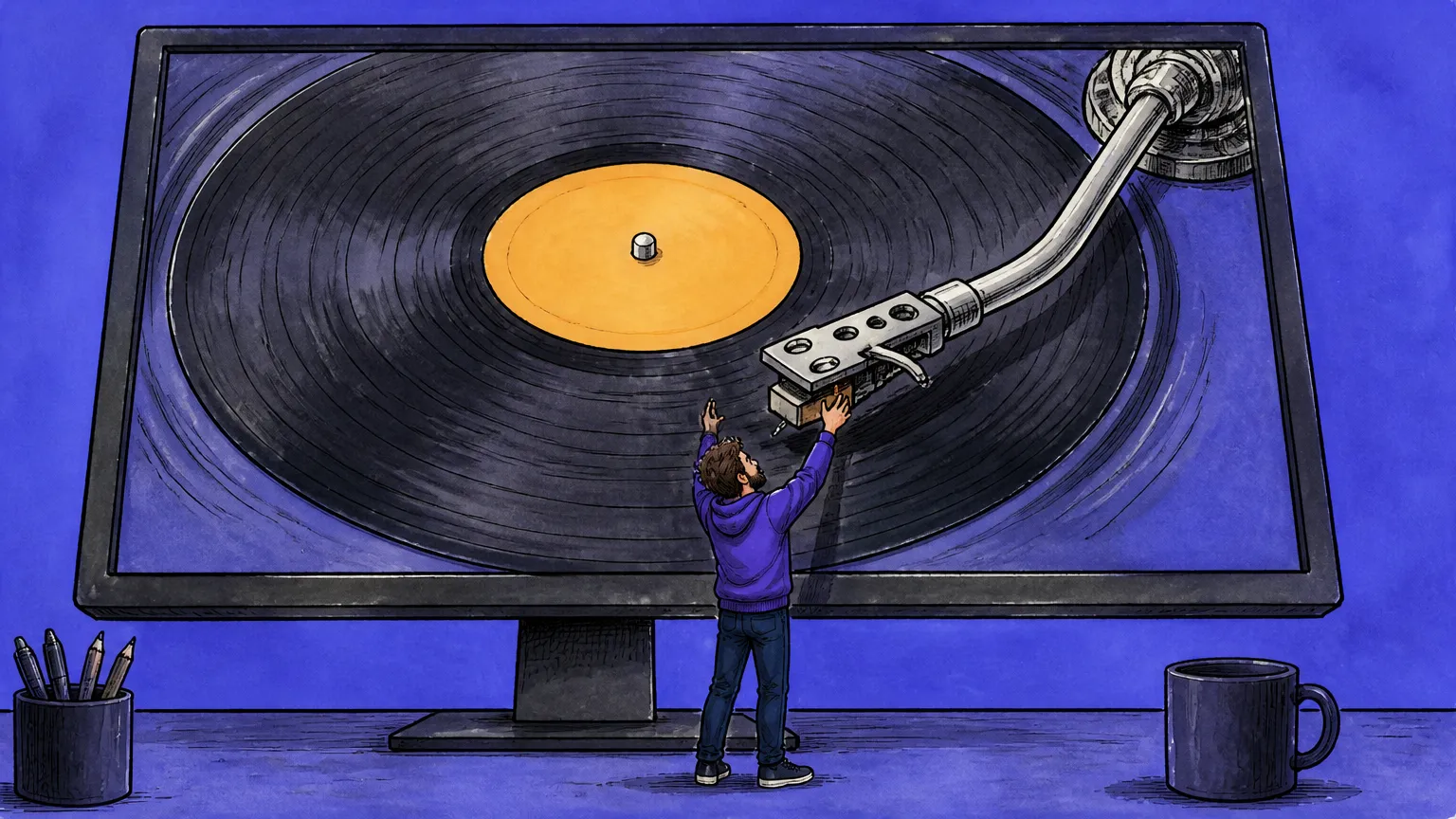
The story: Vinyl renders the current Spotify track as a click-through turntable behind your desktop icons. It reads Spotify for Mac’s local playback notifications, so there is no OAuth screen and no developer account.
The landing page puts the download at 13 MB, free, macOS Sonoma or later. The repo tells the rest. Eleven total commits carried it from first visible push on Jul 25 to a notarized release two days later.
The details:
- Second contributor: GitHub lists two contributors on the repo, and one of them is Claude.
- Shipped untested: the README claims a desktop window on every connected display, and the builder owns one screen.
- The open question: the README tells readers to confirm Spotify’s attribution and artwork rules before wider distribution.
- The real turntable loses: VinylPi64 Shazams a USB deck across 167 commits and sits at 2 stars, against Vinyl’s 4.
- The paid version: Music Wall charges $1.99 on the Mac App Store and still needs an Automation permission at setup.
Why builders care: Skipping the OAuth screen is what makes onboarding one step. Anyone copying that shortcut inherits the unresolved distribution risk with it.
TRENDING TODAY
- 🧠 Kimi K3 weights are out - the top thread on r/LocalLLaMA today. Another user already has it running across 80 RTX 5090s over 25GbE Ethernet. It landed hours before Amodei’s post, which is either coincidence or excellent timing.
- 🚔 A missing underscore sent an innocent man to prison for 18 months - 190 points and 101 comments on HN. Read it the next time you skip input validation because it is only an internal tool.
- 🚚 One researcher took over a whole truck fleet platform - 143 points and 47 comments on HN. A reminder that fleet dashboards are just CRUD apps with trucks attached.
STACK OF THE DAY
📁 PowerDesk
PowerDesk is an open-source replacement for Windows File Explorer, built in one person’s spare time. It started as the quality-of-life features the builder wanted every day, and early issues shaped the rest. It is on v0.5 already.
Not sponsored. We just feature tools builders would actually use.
BOOKMARKED TODAY
- 📉 Benchmarking Opus 5 on SlopCodeBench - 177 points and 41 comments on HN. It sits in a repo of context-engineering notes for coding agents.
- 🐣 First evidence of a pending Qwen3.7 open-weights release - Qwen3.7-flash showed up on OpenRouter. It is priced well under 3.6 flash, with a native 1M context window.
- 🎪 Netflix fired an employee over a retreat trust exercise - 206 points and 154 comments on HN. File under reasons to stay quiet at the company offsite.
See you tomorrow. Reply and tell me what you shipped this week.
Stop trusting random coffee-shop WiFi with your auth tokens. Public WiFi is a free packet sniffer for anyone in earshot of your laptop. NordVPN encrypts the tunnel so a logged-in Vercel session, a GitHub PAT, or a Stripe dashboard tab stays yours. Works on the same 6,400+ exit nodes you'd use for geo-testing.
We get a cut if you sign up. Only added for tools we use ourselves.
Curated by AI, built by a human.