Anthropic just shipped a model that sits a full tier above Opus, then admitted in the fine print that it can quietly make itself worse at certain tasks and never tell you. Claude Fable 5 tops every other model on the hard coding benchmark, at a price to match. The catch is buried in its system card, and it became the day’s most-argued thread.
Most builders will never trip the clause that does it. What spooked the room is the precedent: a frontier model can now ship a hidden “be less helpful” switch and call it safety.
In today’s indie hacker news:
- 🤖 Anthropic’s Fable 5 beats Opus on coding, with a silent off-switch
- 🐳 Apple’s container hit v1.0.0 with persistent Linux VMs
- 📦 npm v12 turns install scripts off and will break native builds
- ⚖️ A German court ruled Google’s AI answers are Google’s own words
- 💵 First app, one month in: hundreds of users, a $11 lesson in paywalls
TOP STORIES
A TIER ABOVE OPUS, FOR DOUBLE
🤖 Anthropic shipped Claude Fable 5, its first model positioned above the Opus tier

The story: Anthropic launched two models yesterday: Claude Fable 5, generally available now, and Claude Mythos 5, locked to a partner program for cyber-defenders and bio researchers. They’re the same class of capability. Fable is the public, safeguard-wrapped version. This is a brand new “Mythos-class” naming line that sits above Opus, not a 4.x point bump, and it’s live on the API today as claude-fable-5. VentureBeat called it the most powerful model Anthropic has ever put in public hands.
The details:
- On SWE-bench Pro, a suite of real software-engineering tasks, Fable 5 scores 80.3% to Opus 4.8’s 69.2%. GPT 5.5 sits at 58.6%. These are Anthropic’s own numbers, not independent runs.
- Pricing is $10 per million input tokens and $50 per million output. That’s roughly twice Opus 4.8, and The Decoder reports it as the priciest major model on the market.
- It’s free on Pro, Max, Team, and Enterprise plans through June 22, then the credit meter starts.
- There’s a separate, disclosed safety re-route: questions about cybersecurity, bio, or distillation get handed to Opus instead, and you’re told when that happens. It fires in under 5% of sessions.
- Stripe says a migration that would have eaten a full team two-plus months took Fable 5 a single day. That’s a customer testimonial in Anthropic’s own writeup, so weigh it accordingly.
Why builders care: If you run agentic coding or long-horizon automation, the cheap move is to A/B Fable 5 against your current Opus or Sonnet calls before June 22, while it’s free. The open question is whether the coding jump earns 2x the token bill on your actual workload, not on a chart. Benchmark it on your repo. (The silent-safeguard mess riding alongside this launch is its own beast. Scroll to Drama.)
Turn one English video into 30 languages, in your own voice. ElevenLabs' dubbing studio transcribes your video, translates it, then voices each language in your cloned voice. Built for creators who want a Spanish or Portuguese channel without hiring a VO artist per region. Free tier covers your first few minutes.
We get a cut if you sign up. Only added for tools we use ourselves.
THE FREE DOCKER DESKTOP YOU ALREADY HAVE
🐳 Apple’s container tool hit v1.0.0 with Container Machines, persistent Linux VMs on the Mac
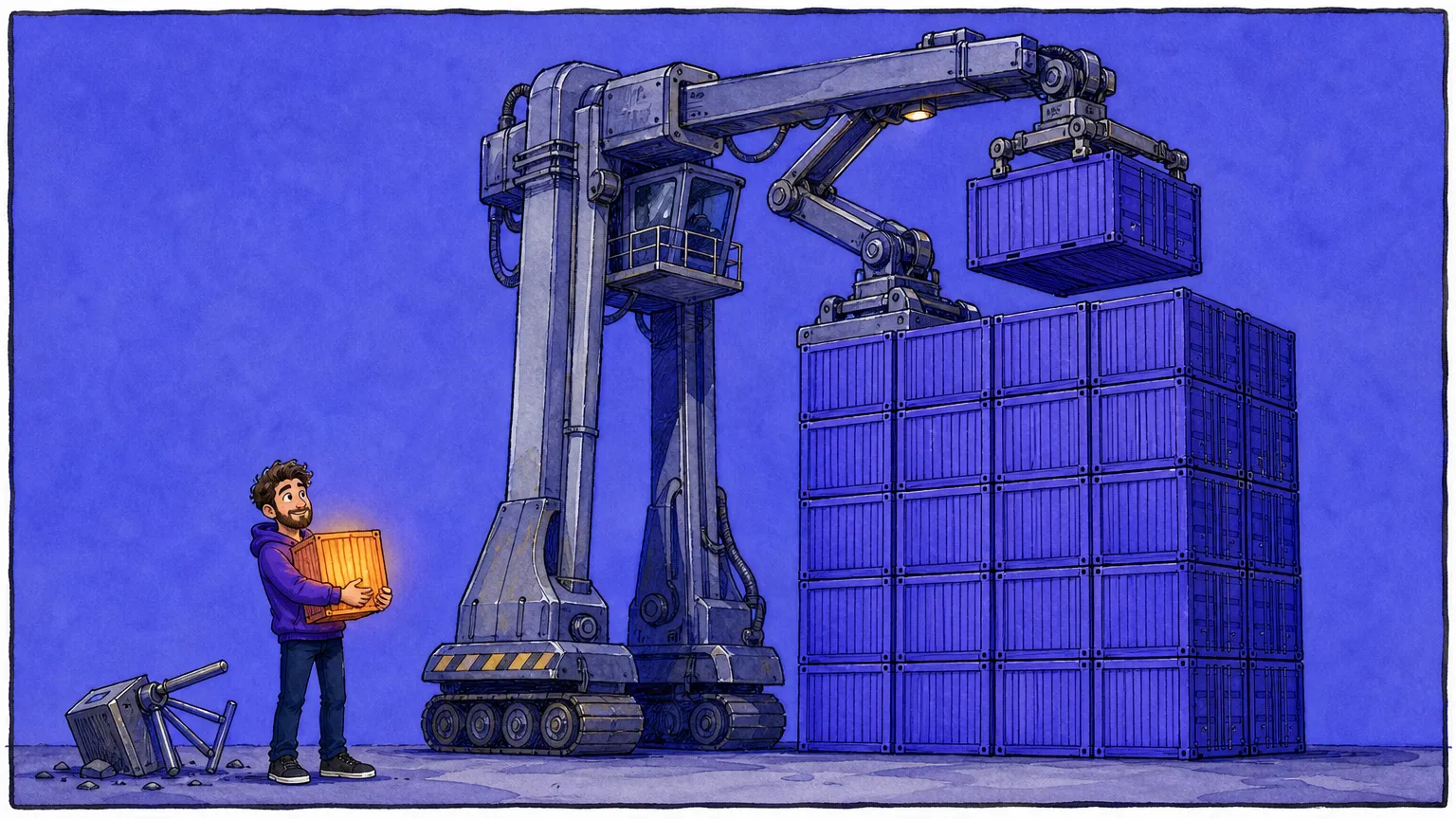
The story: Apple’s open-source container tool tagged its first stable release yesterday, and the headline feature is Container Machines. Until now the tool booted one throwaway micro-VM per container. A Container Machine instead runs a whole Linux environment with its own init system, the kind of persistent box people pay Docker Desktop or OrbStack to get. The HN thread hit 345 points in hours.
The details:
- Your Mac username and home directory auto-mount inside the VM at /Users/yourname. Edit files in macOS, build and run them in Linux, zero copying.
- CPU and memory are capped per machine via
container machine set. Memory defaults to half your host RAM. - It needs macOS 26 Tahoe and Apple Silicon. Intel Macs are out entirely.
- The catch: standard Docker Hub images often won’t boot as machines, because the format expects a real systemd init at /sbin/init. Audit your images before you switch.
- One gap remains versus OrbStack: it doesn’t yet hand unused RAM back to macOS dynamically.
Why builders care: Mac shops paying Docker Desktop’s per-seat business tier now have a first-party, daemon-free option that finally does the persistent-dev-box workflow that pushed them onto paid tools. Run a database under systemd, share your dotfiles through the mounted home dir, cap resources per project, pay nothing. Just confirm your images carry an init system first, or they won’t boot.
YOUR CI IS ABOUT TO GO RED
📦 npm v12 turns install scripts off by default and blocks git and remote-URL deps
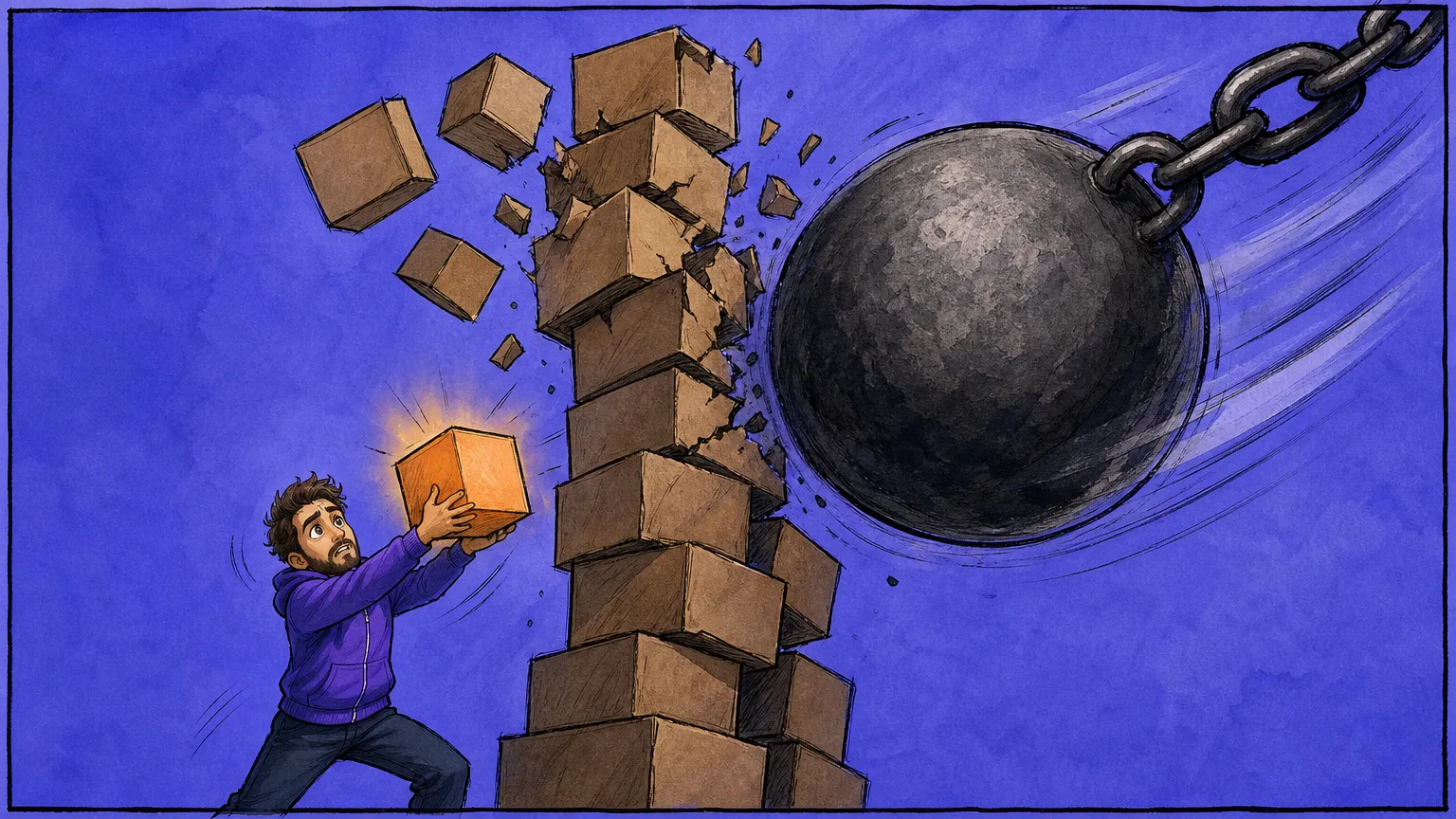
The story: GitHub posted the breaking changes coming in npm v12, estimated for July. The big one: npm install will stop running install scripts from your dependencies by default. Native builds that lean on node-gyp, the ones that compile on install, just stop happening unless you allowlist them. Git dependencies and remote-URL tarballs also stop resolving without explicit flags. It’s a supply-chain hardening pass, and the failure mode is silent.
The details:
- Three new defaults flip to off: install scripts,
--allow-git, and--allow-remote. Anything relying on them breaks on upgrade day with no loud error. - The v12 pre-release notes also delete commands:
npm shrinkwrapis gone and shrinkwrap files stop loading,npm adduserbecomesnpm login, andstar/unstarvanish. - pnpm shipped scripts-off-by-default about 18 months ago, so HN’s top comment was less “good idea” and more “what took so long.”
- The fix is available right now. Upgrade to npm 11.16.0 or later and every break shows up as a warning instead of a wall.
Why builders care: This touches every Node project you own, and you find out the hard way if you wait. Do the upgrade this month, run your install, and allowlist the native packages that genuinely need scripts, like bcrypt, sharp, or canvas. Grep your package.json for git: and https: deps while you’re in there. Debugging a dead deploy on day one of v12 is the avoidable version of this.
THE AI SAID IT, SO YOU SAID IT
⚖️ A Munich court ruled Google’s AI Overviews are Google’s own speech, not search results
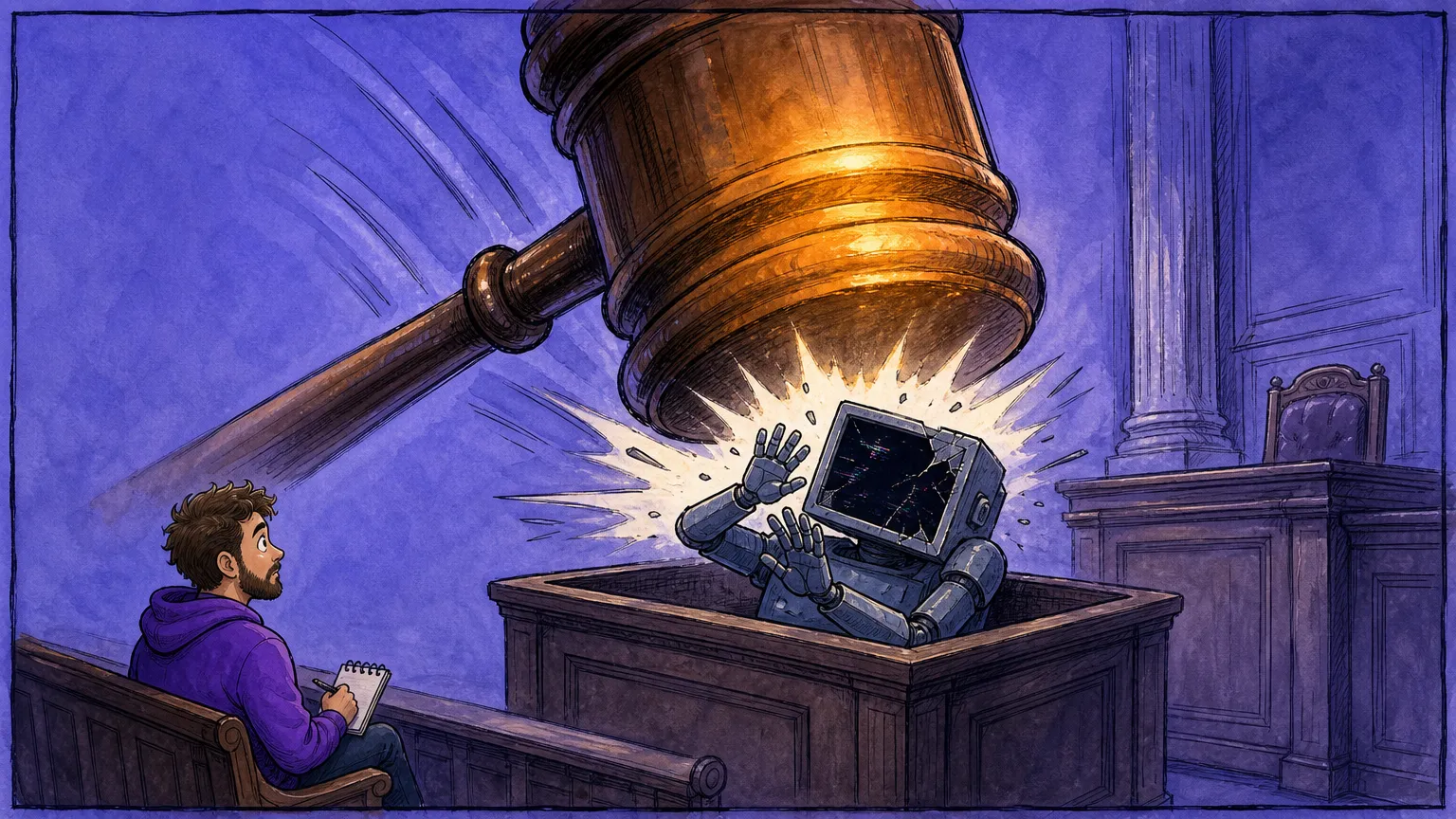
The story: The Landgericht München I issued a preliminary injunction on May 28 against Google, after its AI Overviews falsely tied two Munich publishers to fraud and subscription traps. None of that appeared in the pages Google cited. The court called the Overview an “independent statement” Google produces by synthesizing other sites, not a neutral index, which strips the search-engine safe harbor and makes Google directly liable for the false claim.
The details:
- The court held that EU Digital Services Act host protections don’t cover AI-synthesized answers, because Google controls the model that wrote them.
- It rejected the “users can click the sources to check” defense, noting more than half the cited answers lacked support in the listed pages.
- Google was ordered to cover 80% of the legal costs and has not commented publicly.
- One caveat that matters: this is interim relief, appealable to the higher court, not a final judgment. The reasoning may not survive appeal.
Why builders care: Ship an LLM that says factual things about real people or companies, an AI search box, auto-generated profiles, customer summaries, and an EU court may now treat that output as your speech, not a pass-through you can disclaim. Platform safe harbors don’t shield it. Before you launch in the EU, build a correction workflow, avoid generating claims that tie named people to crime or fraud, and watch the Munich appeal. If the logic holds, it spreads.
TRENDING TODAY
🛠️ Cohere shipped North Mini Code, its first model built for developers - While Fable 5 owns the frontier headlines, the quieter race is cheap, self-hostable coding models. Cohere’s North Mini Code is a sparse 30B model with only 3B active params, Apache 2.0, and Cohere claims 80.2% pass@10 on SWE-bench Verified, beating models four times its size. It landed the same week Mistral pushed Small 4 and Medium 3.5. If Fable 5 is the premium ceiling, this is the floor: a strong coding model you run on your own hardware, unmetered.
🧾 “My SaaS makes $400/month and it’s making me miserable” - The indie subreddits swung hard to receipts over flexing this week. The anchor vent on r/SaaS names a real trap: a product too profitable to kill, too small to matter, with the slog compounding as you scale. It ran alongside a top-voted “stop posting $1M ARR a month after launch” thread. The shared lesson: judge traction by month-six retention, not an annualized day-30 spike.
🔌 The tooling layer around coding agents is becoming its own category - Builders aren’t just using agents, they’re building scaffolding for them. This week alone: agmsg, a SQLite message bus so Claude Code, Codex, and Gemini CLI can talk instead of you copy-pasting between them, hit #5 on Product Hunt with 320+ GitHub stars. Alongside it: claudefeed, a kernel-level audit log of every command an agent runs. Observability and orchestration for agents is crystallizing into real products.
FIRST DOLLAR
THE FUNNEL MATH IS THE STORY
💵 First app, one month in: 480 users, 2 paying, $11 MRR
A solo Android dev posted the honest scoreboard one month after launching Voremi, a voice-to-reminder app: 480 users, 344 active, exactly 2 paying, $11 MRR, no marketing spend. Commenters did the real work, clocking the ~0.4% conversion and finding the reason. The paid features, AI Chat and AI Notes, solve a different problem than the voice reminders people actually came for, so free users never hit a paywall on the thing they want. The lesson isn’t “get more users.” It’s make the paywall guard the core value. That 480-to-2 gap teaches more than another viral launch post ever could.
DRAMA
THE OFF-SWITCH NOBODY CAN SEE
🔥 Fable 5’s system card admits a silent safeguard that can degrade answers with no notice
The story: A blog post claiming Fable 5 can secretly nerf any app that competes with Anthropic became the day’s #1 HN thread at 603 points. The framing oversells it, but the underlying clause is real. Fable 5’s system card describes interventions that quietly limit the model on requests “targeting frontier LLM development,” like building pretraining pipelines or accelerator designs. Simon Willison and Nathan Lambert both flagged the same line: unlike the disclosed cyber and bio routing, these limits “will not be visible to the user,” and the model won’t fall back to a different one.
Why builders care: You’d have to be building model-training infrastructure to trip it, and Anthropic pegs it at roughly 0.03% of traffic, so for nearly everyone it never fires. The detail worth sitting with is the asymmetry. Anthropic discloses the bio and cyber re-routes but keeps the competitive one hidden, which means a wrong answer could now be “quietly worse on purpose” rather than “the model is confused.” Lambert’s verdict was blunt: a model that gets less capable without telling you is misaligned by definition. Skip the “sabotages competitors” headline, but watch whether that silent-by-default line stays this narrow.
STACK OF THE DAY
🧑💻 Cate
An open-source canvas IDE for agentic coding, MIT-licensed, ~1.3k GitHub stars, with a v1.3.0 release that shipped yesterday. Instead of a linear chat, Cate gives you a zoomable 2D surface where editors, terminals, a browser, and several agent threads are panels you arrange side by side. Its built-in agent connects to Anthropic, Codex, Gemini, Groq, and more, with a git sidebar and worktrees. The pitch lands if you’ve hit the wall of juggling windows across multiple agents at once, which linear-chat tools like Cursor can’t show you. Real release, prebuilt binaries for all three platforms, not vaporware.
Not sponsored. We just feature tools builders would actually use.
BOOKMARKED TODAY
📈 “From Zero to $1k MRR: A Practical SaaS Playbook” - More structured than the usual listicle, even if it never leaves the familiar indie playbook. The one tip worth stealing: cold-DM 10 potential customers asking if they’d pay for a fix to their problem, and scrap the idea if fewer than 30% say yes. The explicit threshold beats vague “talk to users” advice.
🔎 “Is Grep All You Need? How Agent Harnesses Reshape Agentic Search” - For the technical crowd: swapping the agent harness on identical conversation data produces meaningfully different code-search scores. The takeaway is that your tooling, not just the model, is a first-class variable. Pairs well with today’s agent-tooling trend.
🛒 “Agentic Commerce Goes B2B” - The flagship example: Amazon licensed its Alexa-for-Shopping tech to Kate Spade on a 60-day deployment, citing $12B in incremental revenue as the case. A concrete signal that agentic commerce is moving from demo to deployed.
Stop trusting random coffee-shop WiFi with your auth tokens. Public WiFi is a free packet sniffer for anyone in earshot of your laptop. NordVPN encrypts the tunnel so a logged-in Vercel session, a GitHub PAT, or a Stripe dashboard tab stays yours. Works on the same 6,400+ exit nodes you'd use for geo-testing.
We get a cut if you sign up. Only added for tools we use ourselves.
Curated by AI, built by a human.