Bun’s 535,496 lines of Zig are gone. Jarred Sumner pointed about 64 Claudes at the codebase for 11 days and merged a Rust rewrite. Zero tests skipped, roughly $165,000 in tokens, against his own estimate of 3 engineers working for a year.
Anthropic bought Bun in December 2025, and Sumner now works there. He ran a pre-release Fable 5 on his own runtime, so read the numbers as a house demo.
In today’s indie hacker news:
- 🤖 64 Claudes rewrote Bun in Rust in 11 days
- 🚜 FTC forces Deere to open its dealer repair software
- 🐹 Meta engineer’s FAANG escape game has a burnout exploit
- ☁️ Cloudflare hosts your folder, deletes it in 1 hour
- 🏆 A build-off crowned Grok on unrelated prompts
- 👕 A Uniqlo t-shirt is hiding an obfuscated bash script
TOP STORIES
64 CLAUDES ENTER, ZIG LEAVES
🤖 Bun’s runtime is Rust now, and a swarm of Claudes wrote the port
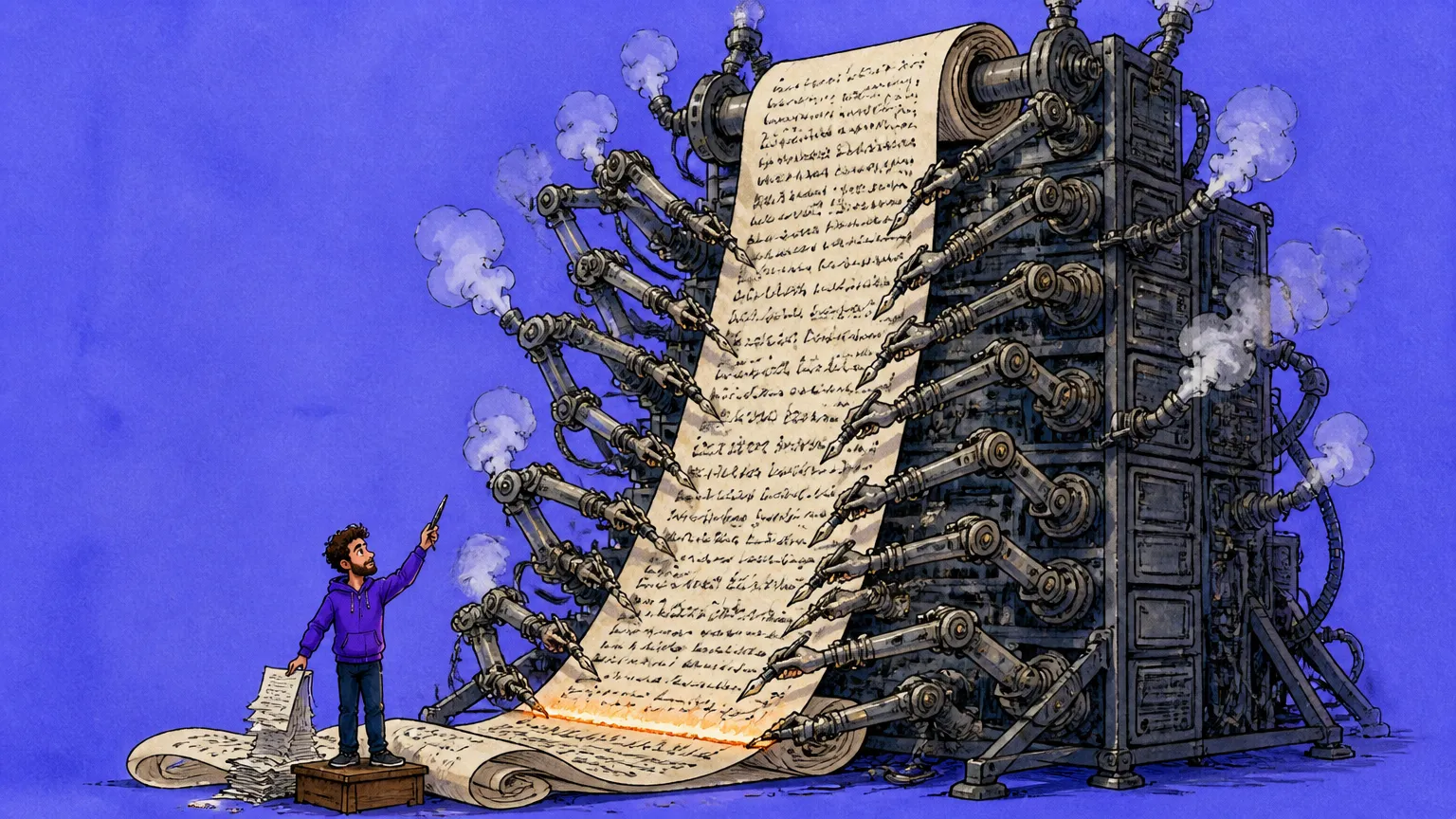
The story: Sumner published Rewriting Bun in Rust on July 8. He ran about 50 dynamic workflows in Claude Code from May 3 to May 14. The merged pull request landed 6,755 commits and a diff of +1,009,272 lines into oven-sh/bun.
The harness is the part worth stealing. One implementer Claude writes the code. Two or more reviewer Claudes see only the diff, each in a separate context window. They are told to assume it is wrong.
“The Claude that wrote the code wants the code to get accepted. The Claude that reviews wants to find issues in the code.” (Jarred Sumner, creator of Bun)
The details:
- The gate: 1,386,826 expect() calls across 60,624 tests on Debian, with zero tests skipped or deleted.
- Peak throughput: 4 git worktrees, 16 Claudes each, about 1,300 lines of code per minute.
- The bill: 5.9 billion uncached input tokens, 690 million output tokens, 72 billion cached reads.
- The verdict: 1,695 thumbs up against 1,722 thumbs down on the merged pull request.
- The inheritance: Bun’s own audit traces 4,530 unsafe Rust sites to Zig-era ownership patterns carried over unchanged.
Why builders care: If your tests run against the interface instead of the implementation, your language stops being a one-way door. Bun’s suite is TypeScript, so it outlived every line of Zig it was written to check.
One regression to sit with: Zig’s assert always runs its argument. Rust’s debug_assert! erases the whole expression in release builds. That silently dropped a call and broke React hot module reloading.
Clone your voice once. Ship every video without re-recording. ElevenLabs Pro trains a voice clone in 30 minutes that sounds like you on every long-form, Short, and podcast you ship. We narrate every video on this newsletter with it. Beats hiring a VO artist on Fiverr or settling for a default TTS bot.
We get a cut if you sign up. Only added for tools we use ourselves.
FARMERS GET ROOT ACCESS
🚜 The FTC settlement forces Deere to hand farmers its dealer-only repair software
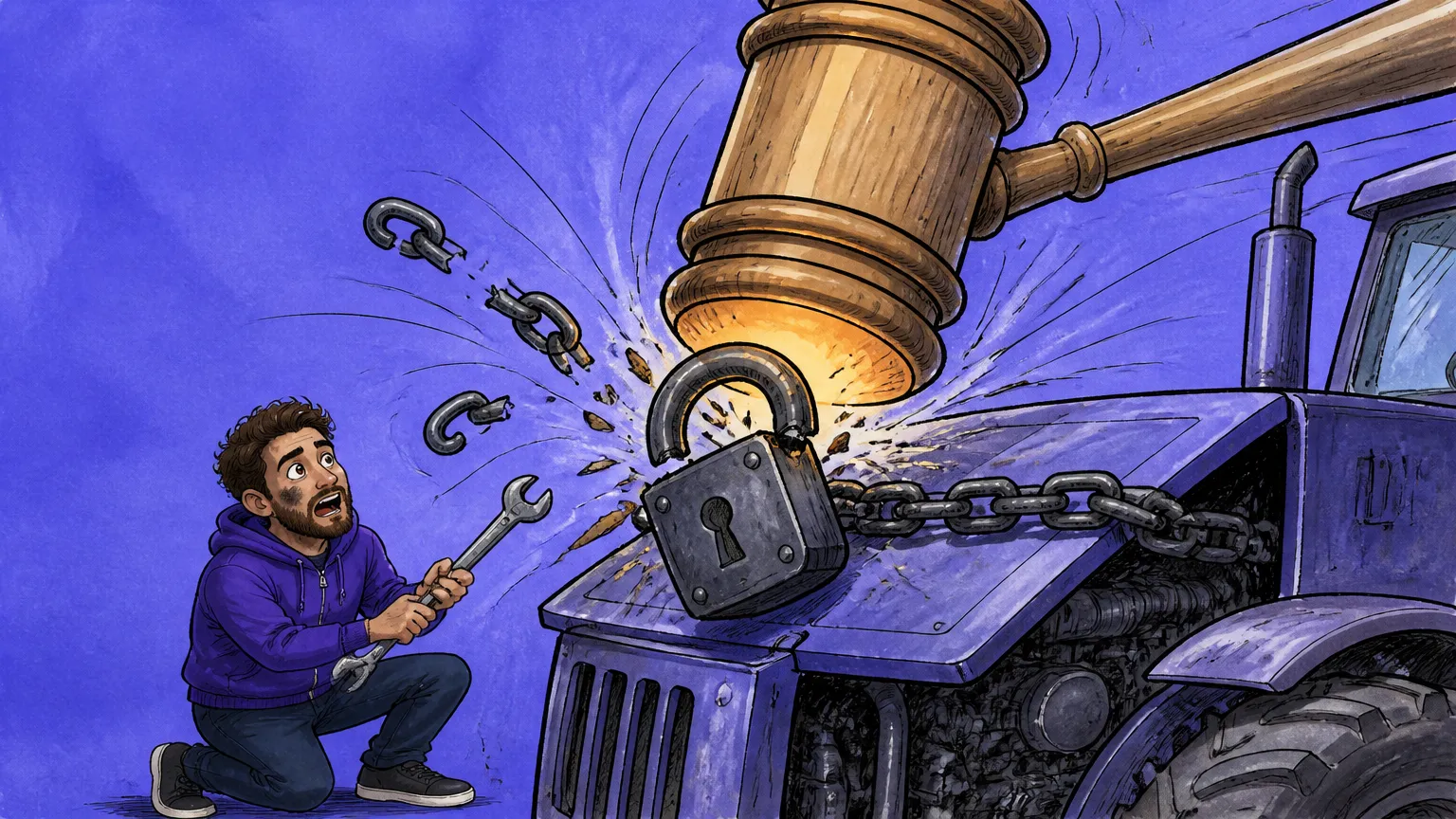
The story: The FTC and five states settled their antitrust case against Deere on July 8. For the next 10 years, Deere must give farmers and independent shops the same repair resources it gives authorized dealers.
The theory of harm was software gatekeeping. Deere shipped Service ADVISOR to its dealers and a crippled Customer Service ADVISOR to the people who owned the tractors. The FTC’s January 2025 complaint alleged that the gap between those two builds was the monopoly. AP reports Deere denied wrongdoing throughout.
The details:
- What opens up: reading and clearing fault codes, reprogramming electronic components, pairing new parts, and clearing emissions limp mode.
- The forward trigger: any future repair tool that reaches 50 percent of US dealers must go to farmers too.
- Anti-retaliation: dealers must promote the resources and cannot punish farmers who skip dealer service.
- The price of the lesson: $1 million to five states. Deere paid $99 million in April to settle a farmers’ class action that bought no repair access.
- Not final yet: the stipulated order still needs Judge Iain D. Johnston’s signature in the Northern District of Illinois.
Why builders care: Hardware with a companion app or a partner-only API tier now has a road-tested antitrust theory aimed at it. Feature-gating the tool that unlocks what the customer already bought can be unlawful monopoly maintenance.
Andrew Ferguson voted against bringing this case in January 2025. As Chairman, he signed the statement supporting the July 2026 settlement.
GRIND, TOUCH GRASS, REPEAT
🐹 A Meta engineer shipped a FAANG escape game, and HN solved it in hours

The story: Escape the Rat Race starts you at 22, signed at a fictional company called Pear for $190,000 a year. One tap advances one quarter of your life. The opening line: “the offer letter calls it a journey, it is a wheel.”
Abey K, who lists himself as a Software Engineer at Instagram, built it. The Hacker News thread took 337 points and 128 comments in about 8 hours. It found the dominant strategy almost immediately.
The details:
- The exploit: grind until burnout passes 80 percent, touch grass until it drops under 30 percent, repeat.
- Four endings: FIRE, FOUNDER, CLIMB, or burning out and getting replaced by an AI named Kevin.
- The receipts: commenters pasted ACQUIRED cards into the thread, exits from $7.36M to $14.98M, every winner above 70 percent peak burnout.
- Not every run exits: one card read DECEASED, dead at 25, $164k unspent, the on-call rotation already updated.
- The author’s reply to the winning loop: “sad reality of life.”
Why builders care: The artifact did the marketing. A result card naming your exit and your peak burnout is the distribution mechanic. The toys that travel now are the ones whose output a reader is compelled to quote.
Commenters mocked the odds of a solo side project selling for millions. The author answered “this is possible now with AI.” Commenter Steppphennn replied: “Because code was never the bottleneck.”
DEPLOY NOW, SIGN UP MAYBE
☁️ Cloudflare Drop puts your folder on the edge, then deletes it in 1 hour

The story: Cloudflare announced Drop on July 8, filed under Workers. Drag a folder or a zip of static assets onto the landing page and you get a live preview URL. There is no Cloudflare account in the way.
The preview dies after 1 hour unless you claim it, and claiming means signing in or making an account. Hacker News gave it 320 points and 154 comments in about 9 hours. Most of that was an argument about phishing.
The details:
- The trap: one uploader got a 403 and a “Sorry, you have been blocked” page. The cause was the git hook sample file that
git initwrites by default. - The economics: Cloudflare’s billing doc says static asset requests are free and unlimited, with no storage cost.
- The other trap: with
run_worker_firstset, a free-tier account over its request limit gets a 429 instead of the static file. - Undocumented limits: a commenter read 25MB per file, under 2,000 files, and under 100MB total off the uploader UI.
- Prior art: Netlify shipped drag-and-drop deploy about 10 years ago, and BitBalloon did it before that.
Why builders care: The claim flow inverts the signup funnel. A working URL reaches your client before anyone makes an account, and the thread immediately asked for a CLI.
PaybackTony built the same thing at quickish.site and gated it behind Google OAuth. He now competes with a free, accountless version shipped by the company that runs the CDN.
FASTEST WAY TO BE WRONG
🏆 The build-off crowned Grok on a cost table measured with different prompts

The story: TryAI gave four models the same three prompts: build a self-contained HTML app, no libraries, one shot each. Claude Opus 4.8 and Fable 5 both nailed the 3D Rubik’s cube on the first try. Grok 4.5 rendered a blank void and spent the single allowed retry. GPT-5.5 rendered one dark face.
Then TryAI crowned Grok. The speed and cost table came from a separate in-house harness, on three unrelated prompts, capped at 400 output tokens. Hacker News shredded it across 109 points and 52 comments.
The details:
- The tell: every model scored 100 percent success in that table, including the one that rendered nothing.
- The conflict: TryAI resells all four models it ranked, and the post closes with a “Start free” button.
- The throughput claim: Grok at 110 tok/s, roughly double the rest of the field.
- The rebuttal: commenter dirteater_ asked why cost per reply matters when what you pay is dollars per finished task.
- The sample: n=1 per model per prompt, against a standing arena of 52 apps across 21 models one commenter pointed at.
Why builders care: Cost per reply is the wrong unit for anyone buying coding tokens. A cheap model that needs a second shot at a stateful build is not cheap.
TryAI’s own verdict calls Opus 4.8 and Fable 5 “the most reliable builders.” The headline still went to Grok.
TRENDING TODAY
💬 Chatto is now open source - 795 points and 211 comments, more than Bun’s Rust rewrite pulled on the same day. Open sourcing is still the cheapest launch there is.
🦾 Mistral shipped a robotics model for machines that move themselves - 431 points in under 10 hours. Robotics is the least crowded lane in AI, and it is the one almost nobody here is building in.
⚠️ “There’s no competition for this” - r/SaaS says an empty market means one of three things. Usually it means you did not look hard enough. Treat the silence as a warning.
FIRST DOLLAR
FIRST APP, FIRST FEEDBACK
📱 A couple shipped their first Android app and asked for honest feedback
Tirtha1991 and their wife spent a few months on Fiscal Atelier, a personal expense tracker. It is live on Google Play, with AI voice logging, budget goals, and recurring transactions. The r/SideProject post asks for honest feedback, which is the right ask and the hardest one to answer kindly.
DRAMA
THE FOUNDER FIRED HIMSELF
🚪 A bootstrapped CEO spent 2 years making himself redundant
StephNass posted that a personal shock nearly shut his company down. As founder and CEO of a bootstrapped startup, the buck ended with him in nearly every department. Things got stuck. The organization hit a standstill. So he spent the years since engineering himself out of the job, and he says today was his last day.
Why builders care: Bus-factor one is the default for every solo build. It stays invisible until the day you cannot open the laptop.
STACK OF THE DAY
An open source project claiming 30 percent savings on Claude Code spend. It landed as a Show HN with 2 points and 1 comment, so you are extremely early. That savings figure is the repo’s own claim, not a measured result, so check it against your last invoice.
Not sponsored. We just feature tools builders would actually use.
BOOKMARKED TODAY
👕 The obfuscated bash script on a Uniqlo t-shirt - Someone decoded the script printed on a retail t-shirt. At 1,327 points it is the highest-scoring thread of the day, beating every AI story on this page.
📓 Loggd - A Notion replacement for habits and goals, now past 5,600 users. The builder used Notion for 3 years and got bored of writing documents to run his life. (r/SideProject)
🥱 I Think I Have LLM Burnout - 170 points and 111 comments, an unusually high comment-to-point ratio. That ratio usually means the thread stopped being about the post and started being about the readers.
Ship to one country, QA it from another. Geo-fenced Stripe checkouts, region-gated APIs, feature flags that only fire in EU. NordVPN's 6,400+ exit nodes across 110+ countries let you test a US-only paywall from EU or hit a EU-only checkout from SF. Bonus: free Meshnet for SSH across your devices.
We get a cut if you sign up. Only added for tools we use ourselves.
Curated by AI, built by a human.