Laurentiu Raducu had a model write a knowledge base on how chips get made. Then he asked that same model to check it. He shipped the result, a low poly factory game, as 100% accurate.
The only check anywhere in his method is step two, where the author of the facts grades the facts. Hacker News gave it 489 points in about eight hours, and seven commenters quoted that sentence straight back at him.
In today’s indie hacker news:
- 🧠 An AI learning game graded its own facts
- 🌦️ Windows 11’s Weather app idles past 1.2 GB
- 📬 A Gmail cleaner ships a promise nobody can audit
- 💸 The $10 a day ad test eBay already ran
- 🔮 why.com launches behind a Request Access form
TOP STORIES
🧠 ONE SENTENCE ATE THE THREAD
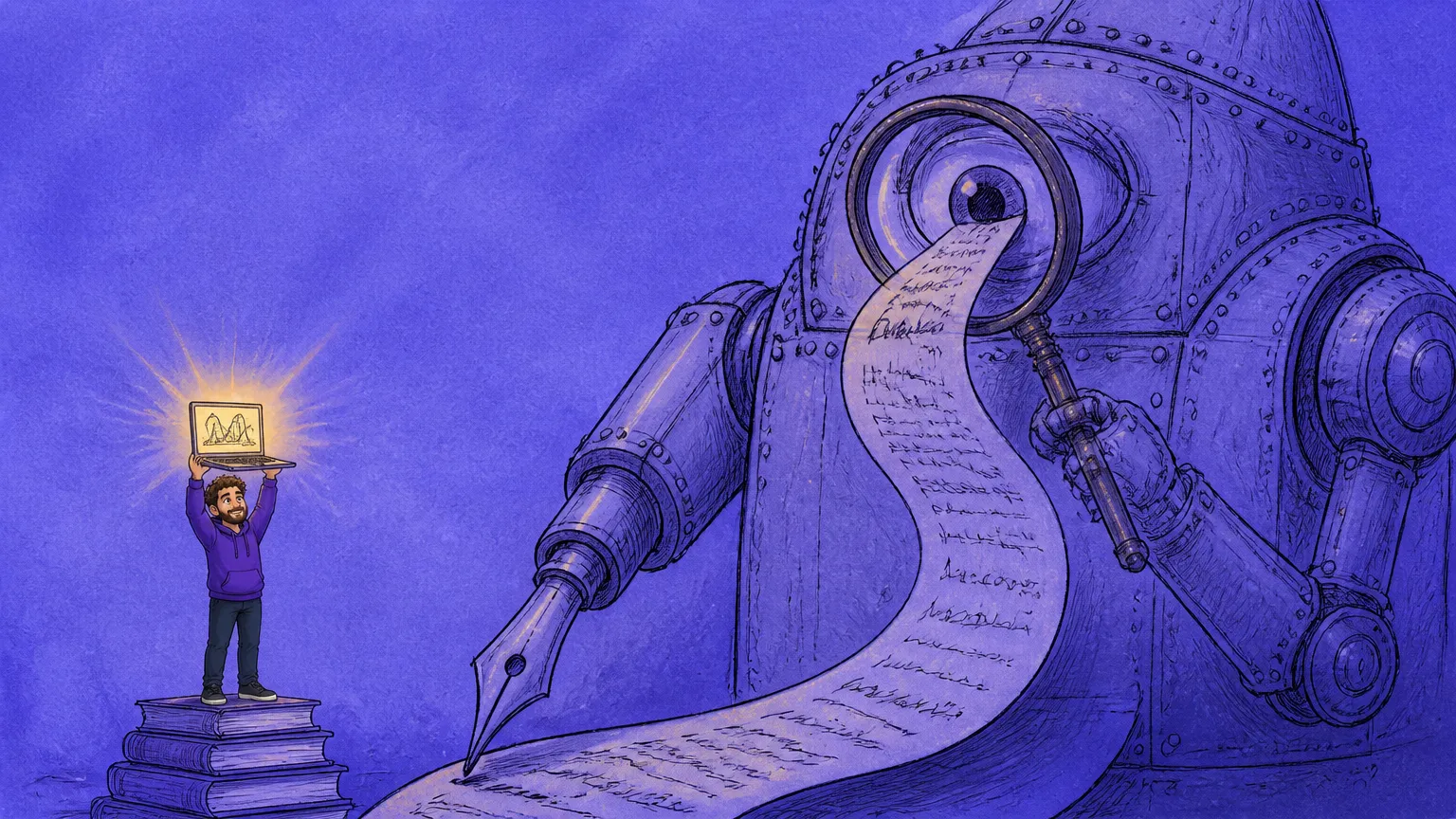
A chip factory game shipped as hallucination free, with the model that wrote it as the only auditor.
The story: Raducu’s post lays out a four step flow. Ask a model in plan mode to build the foundational knowledge for a topic. Ask it to review the knowledge base it just built. Ask it to render a low poly RollerCoaster Tycoon style simulation. Then push to a repo and turn on GitHub Pages. ChipTycoon follows a cart from collected sand to a finished chip landing in a data center. It’s his fifth page built this way, after rocket engines, F1 engines, EUV lithography and how LLMs work.
The thread that followed never argued about the game. It argued about one line in the results section, and it ran to 274 comments.
“What you get is a beautiful animation that is 100% accurate and free of hallucinations.” (Laurentiu Raducu)
The details:
- Seven separately named commenters quoted that line back. wxw put it plainly: the fact checking just seems to involve asking AI to review its own work.
- Raducu narrowed the claim himself in the thread. Chip manufacturing is opaque enough that the model may not even have the training data, he wrote. A high level introduction is usually safe.
- The top comment isn’t about accuracy at all. 8bitsout is exhausted by LLM prose, tried the same diagram trick, found it marginal, and went back to books.
- The highest agreement alternative inverts the whole flow. copperx: feed the book to the model and ask questions as you read. Five commenters piled on to agree.
- One comment link took a hobby project down. hirako2000 posted his Socratic wrapper, then reported hundreds of requests a minute against a backend with no caching.
Why builders care: Nobody in that thread argued the game was hard to build, which prices generation at roughly zero. What’s left to sell is grounding. Cite the source line, diff the output against a named text, and flag what you could not verify.
🌦️ NINE PROCESSES TO SAY IT’S RAINING

Windows 11’s Weather app is a browser tab, and one test caught it idling past 1.2 GB.
The story: Windows Latest opened Task Manager on 9 August and watched the app climb past 1.2 GB while idle. Expanding the process tree explained it: nine separate subprocesses, all carrying Chromium names. The app isn’t native. It’s the MSN Weather web page rendered through WebView2. Apple’s Weather did the same job in the same test as one native process at 246.7 MB.
The forecast carries ads too. Sponsored tiles sit in the same grid as the Temperature and Wind cards, styled to match. An Adobe Acrobat pitch for AI document chat was one of them.
The details:
- The headline number isn’t settled. OMG! Ubuntu got about 900 MB on its own test laptop, and Wccftech’s run put idle nearer 500 to 600 MB.
- Change the Mac and the ratio changes with it. That same table logs Apple Weather at 90 MB on Intel against 250 MB on ARM.
- GNOME Weather did the job in 160 MB on the same machine, the cheapest forecast in the table. Joey Sneddon still labelled the whole comparison as not a scientific test.
- The timing is the part that stings. Microsoft committed on 31 July to trimming the Windows memory footprint on 8 GB machines through the end of 2026.
- WebView2 isn’t only behind Weather. Windows Latest reports the same engine under Widgets, Settings, the Start menu and Windows Search.
Why builders care: Task Manager is a benchmark anyone can run, so your memory footprint is now a landing page claim. “Runs in one process” is suddenly a line worth putting in a changelog. The platform owner is steering away from web wrappers, so an Electron shell bets against the direction of travel.
📬 CLOSED SOURCE, OPEN QUESTION

A Gmail cleaner’s real product is one privacy sentence, and no outsider can check it.
The story: u/Relative_Spread_8483 hit 312,000 emails in one Gmail account and shipped sogmailcleaner for it. Delete every message from one sender in a click, block them, and future mail goes straight to trash. There’s a Tinder style triage mode and a subscriptions view that unsubscribes, then deletes the backlog. The AI layer is bring your own key, and the pitch is architectural. The AI never reads your emails, he writes, because it works through filters. Only the sentence you typed leaves the browser.
That claim is the product, and it’s the second one today nobody outside the author can check. The app is closed source and sits behind a signup wall.
The details:
- The same promise already broke in public. mailtrim pitched local first cleanup in a 34 point Show HN, and LiamPowell read the repo that same day. He found email content going to Anthropic and called the line a complete lie.
- The repo now carries the scar. One commit names the criticism and adds per command notices that print exactly what leaves your machine.
- Bulk deletion needs Google’s restricted mail scope, which is the real barrier. That means brand verification, an annual security assessment, and a cap on accounts that can authorise an unverified app.
- Gmail’s quotas shape the design underneath. You get 6,000 units a minute per user, and one message fetch costs 20.
- Pricing isn’t shown before signup. One commenter reported $7 a month, or $5 billed annually, and still bring your own key.
Why builders care: The privacy sentence is a product spec, and a wrong one is both a trust defect and a compliance problem. Write it at the command level: name what leaves, when, and to whom. On launch day the audit takes hours, not weeks.
💸 CLICKS ARE NOT CUSTOMERS

A $10 a day Meta ads playbook runs straight into eBay’s own randomized experiments.
The story: A post aimed at owners who have never run paid ads makes the cheap case for trying. Start at $10 a day on Meta. Skip the audience settings and let the copy call out the customer, so whoever clicks is the customer. An ugly ad that still gets clicks beats a pretty one. Strip every page to one call to action. The framing is a dare: builders who burn four figures on Claude tokens flinch at a tenner on Meta.
One commenter drew the line that matters. The test can validate that people click. It says nothing about whether they care enough to pay.
The details:
- eBay ran the controlled version of this. Its randomized field experiments found brand keyword ads with no measurable short term benefit.
- On non brand keywords the average return came out negative. The frequent buyers who were coming anyway absorbed most of the spend.
- Airbnb ran the cut at company scale. It told the SEC that roughly 91% of traffic arrived through direct or unpaid channels after it suspended performance marketing.
- Read that one carefully. Sales and marketing fell from $1,184.5 million to $545.5 million in the same period, and revenue fell alongside it. That’s a pandemic, not a clean test.
- The engine Airbnb credited wasn’t campaigns. It was accumulated behaviour: 69% of 2019 revenue came from guests who had already stayed.
Why builders care: Run the test, but decide what it’s allowed to prove before the first dollar goes out. Make a paid conversion or a booked call the only success metric, and instrument that event first. Cost per click is a diagnostic you never quote as validation.
🔮 THE ANSWER DIDN’T ARRIVE

why.com went live on a three letter domain with a litepaper and a waitlist.
The story: why.com is live as WHY, “The Curiosity Network”, pitched as one question and three paths. There’s no login on the homepage, and your history stays on the device. The launch post is one line of ambition. Most search ends after one answer, so he wanted the next question to be the fun part. One scrape of the homepage came back with “Search interrupted” and “That answer didn’t arrive.” where the answer should be. That’s a single capture, so read it as a snapshot and not a verdict.
The product page is a different pitch entirely. It sells time native personal intelligence: local memory, semantic context, predictive state, and action bound by policy.
The details:
- The Request Access form is the only way in. Its interest picker says who it’s for: Developer, Investor, Researcher, Other.
- The stated loop runs four steps. Observe what’s happening across your desktop, remember it, predict the next state, then act, with acting gated on approval.
- The about page sells auditability. It shows a “Run receipt” line and a worked example whose outcome reads “Summary delivered, nothing leaked”.
- Nothing across those pages carries a user count, a revenue figure, funding, pricing, or a launch date. The only entity named anywhere is Ockams Inc. in the footer.
- The homepage tracks three counters: pulls, deepest and high insight. All three read zero on a fresh device, because the history never leaves it.
Why builders care: The domain is doing the work a metric usually does. A three letter .com plus a litepaper buys the credibility most launches spend months earning. It doesn’t buy a working first query, and a premium address makes that first miss more visible, not less.
TRENDING TODAY
- 🧾 Adding payroll to a bookkeeping business - A bookkeeper already holds the data payroll runs on, so the upsell is obvious. What’s stopping him is the tax filings, corrections and compliance changes bolted to it. Classic services trap: the adjacent product is easy to sell and expensive to operate.
- 📌 A note app built like a physical pinboard - Sticky notes for quick thoughts, A4 pages for real writing, all on one canvas instead of a folder tree. A note is a file, a stack is a folder, a zone is the parent. You can pin stickies onto a page while you write against it.
- ✈️ A travel app that checks your plane’s previous flight - Voyageur looks up which aircraft is assigned to your flight, then checks whether its inbound leg is late. You get the warning before the airline updates its own status. One sharp feature doing more work than the organizer around it.
FIRST DOLLAR
🖥️ $3.99 TO KILL THE WATERMARK
A free AirPlay receiver for Windows that charges once to remove the watermark.
AirMirror Pro receives AirPlay from an iPhone over WiFi and records it with audio. There’s a Clean Window mode so OBS grabs just the feed. NVENC does the encoding, so your CPU stays out of it. It’s free with a small watermark on recordings, and $3.99 once removes it, key emailed automatically. The builder tried the alternatives first: slow, Mac only, or charging for the basics. That’s the whole pricing thesis, and it’s a good one.
STACK OF THE DAY
🎙️ Rescript
Rescript edits video by editing the transcript. Drop in a file and it transcribes locally, with per word timestamps and speaker labels. Delete words in the transcript and the matching clip is cut. It runs fully on your device: local, free, offline and open source. The builder shipped it over a single weekend because Descript costs $24 a month. On device is the whole wedge, and podcast audio is exactly the file you don’t want to upload.
Not sponsored. We just feature tools builders would actually use.
BOOKMARKED TODAY
- 🔍 A daily game that trains you to spot AI photos - Six photos, one at a time, real or generated, and after each one it shows you the tell. The builder says his tech savvy friends did worse than expected.
- 🚕 Taxi drivers rarely die of Alzheimer’s - The argument is that building complex mental maps protects the brain. It pulled 215 points and 161 comments, and the thread is worth more than the headline.
- 🎯 The product wasn’t the problem, the assumptions were - Months of building, then real customer discovery, then the realisation. He had been pitching his solution instead of learning the problem. The fix was swapping “would you use this?” for what they do today and what it costs them.
That’s the board for today. Go build something.
Work from any WiFi like it's your home network. NordVPN's Meshnet runs a free private mesh between your laptop, dev box, and home server. SSH from a cafe without exposing a port, the way you'd use Tailscale. The paid VPN on top lets you test geo-fenced Stripe checkouts or feature flags from any country.
We get a cut if you sign up. Only added for tools we use ourselves.
Curated by AI, built by a human.