An Anthropic researcher pointed Claude Code at the Linux kernel and found a vulnerability hiding since 2003. Apple just approved Nvidia eGPU drivers for ARM Macs. RevenueCat grew 40% in a single month because AI exploded their market. And someone built a Hacker News for personal blogs. It hit 740 points.
In this edition:
- Claude Code finds 23-year-old Linux kernel bug
- Nvidia eGPUs now work on Apple Silicon
- RevenueCat’s 40% monthly growth from AI tailwinds
- Blogosphere: a front page for indie blogs
- First Dollar: a high schooler ships a chemistry app
TOP STORIES
AI FINDS WHAT HUMANS MISSED FOR 23 YEARS

Claude Code discovers remotely exploitable Linux kernel bug hidden since 2003
Nicholas Carlini, a research scientist at Anthropic, pointed Claude Code at the Linux kernel source and asked: “Where are the security vulnerabilities?” It found a heap buffer overflow in the NFSv4 LOCK replay cache. In production since March 2003. The bug lets attackers read sensitive kernel memory over the network.
Carlini presented the findings at the [un]prompted AI Security Conference. He’s found hundreds more potential bugs but can’t report them fast enough.
The details:
- Bug hidden for 23 years in the NFS driver (CVE pending)
- Found using Claude Opus 4.6, released less than 2 months ago
- Older models (Opus 4.1, Sonnet 4.5) found only a fraction of the bugs
- At least 5 confirmed bugs fixed or reported to Linux maintainers
- 286 HN points, 181 comments
Why builders care: If you’re building security tools or AI-assisted code review, this is the signal. Claude found what thousands of human auditors missed for over two decades. The gap between AI-assisted security review and manual review is widening fast.
Work from any WiFi like it's your home network. NordVPN's Meshnet runs a free private mesh between your laptop, dev box, and home server. SSH from a café without exposing a port, the way you'd use Tailscale. The paid VPN on top lets you test geo-fenced Stripe checkouts or feature flags from any country.
We get a cut if you sign up. Only added for tools we use ourselves.
NVIDIA COMES TO APPLE SILICON
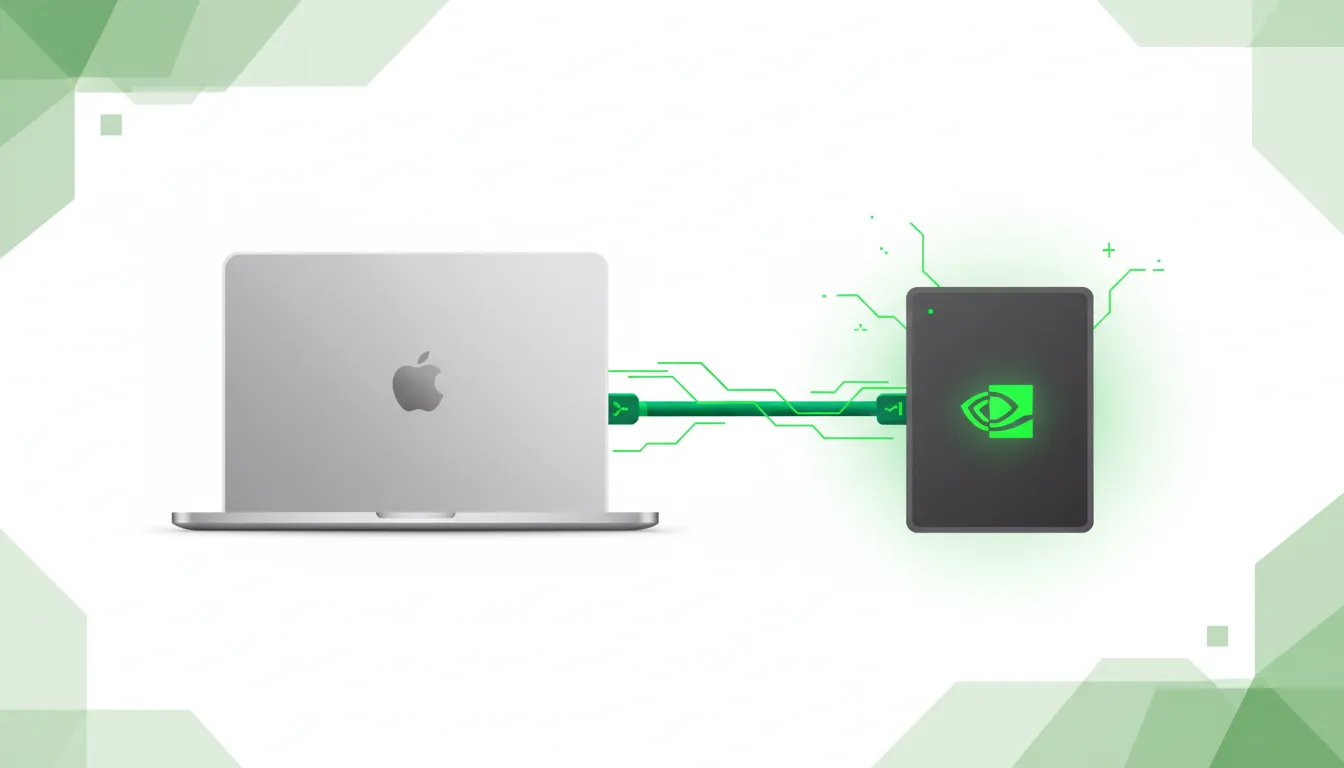
Apple approves TinyGPU driver for external Nvidia and AMD GPUs on ARM Macs
George Hotz’s Tiny Corp got Apple to approve the TinyGPU DriverKit extension. Apple Silicon Mac users can now run external Nvidia (Ampere+) and AMD (RDNA3+) GPUs over Thunderbolt or USB4. No kernel extensions. No SIP bypass. Just a driver toggle in System Settings.
The catch: AI compute only. No display, no gaming.
The details:
- First-ever Apple-sanctioned third-party GPU compute drivers for Apple Silicon
- Supports Nvidia Ampere+ and AMD RDNA3+ via Thunderbolt/USB4
- Installs as a standard DriverKit extension (no hacks required)
- AI workloads only, not for display or gaming
- 186 HN points, 82 comments
Why builders care: If you’re training models or running local inference on a MacBook, this changes everything. You’re no longer stuck with the Neural Engine and unified memory. Plug in an RTX 4090 and run real GPU workloads. For indie AI builders on Mac, the hardware ceiling just got a lot higher.
THE AI TAILWIND NOBODY TALKS ABOUT

RevenueCat grew developers shipping first apps by 40% in a single month
SaaStr shared numbers from RevenueCat’s latest investor update. The subscription billing platform went from 25 to 200 new developers per day in 12 months. The reason isn’t an AI feature they built. AI made building mobile apps dramatically easier. More apps, more devs needing billing. RevenueCat caught the wave.
The details:
- 40% growth in new developer signups in one month alone
- 25 to 200 new developers/day over 12 months
- Growth driven by AI-enabled app creation boom, not their own AI features
- SaaStr Fund was RevenueCat’s first investor (from ~$30/mo ARR)
- 115,000+ mobile subscription apps now process $16B through RevenueCat
Why builders care: The biggest AI opportunity isn’t building AI products. It’s being the picks-and-shovels vendor when AI makes your market explode. If you sell to developers, your TAM just got a lot bigger. RevenueCat didn’t add AI. They sold billing to the people AI created.
HN FOR PERSONAL BLOGS

Blogosphere: a front page for the indie web, seeded with HN’s best personal blogs
Someone built Blogosphere, a discovery platform for independent blogs. It aggregates posts from personal blogs and ranks them in a clean, HN-inspired feed. Seeded with every personal blog that’s hit the HN front page. 740 points, 188 comments. The community clearly wants this.
The details:
- Two versions: minimal text feed (text.blogosphere.app) and modern (blogosphere.app)
- Seeded with HN front-page personal blogs
- Category filters for browsing by topic
- 740 HN points, 188 comments
- 26% of all HN front-page posts come from personal blogs
Why builders care: If you’re building in public with a blog, this is free distribution you didn’t have yesterday. Personal blogs already outperform corporate content on HN. A dedicated discovery platform means your writing has another channel to reach readers without fighting algorithms.
TRENDING TODAY
What indie hackers are talking about right now:
Meta gags its own whistleblower. Sarah Wynn-Williams wrote “Careless People,” a tell-all about her time as Meta’s director of global public policy. Meta won an emergency arbitration order banning her from saying anything “disparaging, critical, or otherwise detrimental” about the company. The book hit #1 on the NYT bestseller list anyway. 511 HN points, 353 comments. Streisand effect in action.
Your Mac has a secret free AI. Apfel (1,500+ GitHub stars) cracks open Apple’s on-device ~3B parameter language model and exposes it as a CLI tool, an OpenAI-compatible HTTP server, and an interactive chat. No API keys, no cloud, no cost. Install with brew install Arthur-Ficial/tap/apfel. 699 HN points, 144 comments. If you’re building Mac-native AI tools, this is your free foundation model.
Self-distillation makes code generation embarrassingly better. A new paper (422 HN points, 127 comments) shows that having a model improve itself through self-distillation produces significantly better code output. No new data, no bigger model. Just the model teaching itself. The technique is simple enough that indie builders running local models could apply it today.
FIRST DOLLAR
STILL IN HIGH SCHOOL, ALREADY SHIPPING
A high school student built Zperiod, an interactive chemistry app with 3D atoms, four educational tools, and a worksheet generator. No ads. Posted on r/SideProject, 216 upvotes, 38 comments, 0.99 upvote ratio. The post says: “I’m still in high school, so any feedback or criticism is super appreciated.”
No revenue yet, but the community response is strong and the product is polished. The kind of builder who ships this at 16 doesn’t stay at zero for long.
STACK OF THE DAY
Apfel - Free on-device AI for your Mac. Unlocks Apple’s built-in ~3B parameter language model three ways: CLI, OpenAI-compatible HTTP server, and interactive chat. 4,096 token context. Runs on Neural Engine and GPU. Zero cloud, zero cost. MIT license. brew install Arthur-Ficial/tap/apfel and you’re running local AI in 10 seconds.
Not sponsored. We just feature tools builders would actually use.
BOOKMARKED TODAY
Reads, tools, and resources worth saving:
📖 Components of a Coding Agent (87 HN points) - Sebastian Raschka breaks down exactly what goes into building a coding agent. Architecture, tool use, planning, memory. If you’re building with AI agents, this is the reference doc.
📖 90 days of SaaS: everything I wish I knew (164 upvotes, r/SaaS) - A founder who launched and learned more in 90 days than in 4 years of reading startup books. Every mistake documented. Worth reading if you’re pre-launch.
📖 After 5 years as CTO, everything I got wrong (164 upvotes, r/startups) - Two fintech startups, both under 10 people, both handling real money. No happy ending, no “but I learned so much” wrap-up. Just the failures.
Curated by AI, built by a human. Get this daily: indiehacker.news | X | Telegram