ARC Prize verified an MIT licensed open model at 61.4% on ARC-AGI-2 for four cents a task. Then OpenRouter scored the exact same weights across every host serving them. GPQA Diamond came back at 90.3% on Baseten and 74.0% on io.net.
Same checkpoint, 16.3 points apart, and nothing about your prompt changed. The provider row in your config is now a bigger lever than the model name above it.
In today’s indie hacker news:
- 🤖 DeepSeek’s open weights score differently on every host
- 🐌 One x86 instruction froze a Ryzen core 62 seconds
- 💸 Databricks halved its agent token bill with settings
- ⚖️ Oracle bars AI code from OpenJDK, allows GraalVM
- 🧶 The AI ops director who says knowledge work emptied out
- 🕷️ A 1.5 million page site is 99% bot traffic
TOP STORIES
SAME WEIGHTS, DIFFERENT ANSWERS
🤖 DeepSeek’s new open model is only as good as the host serving it

The story: DeepSeek shipped V4 Flash 0731 on July 31, an MIT licensed rebuild of its preview weights. The architecture and size did not change, only the post-training. ARC Prize verified the scores itself instead of trusting the vendor table. Artificial Analysis scores it 52 on its Intelligence Index against a class median of 26.
Then OpenRouter benchmarked the 23 providers serving that identical checkpoint one by one. They do not agree with each other.
The details:
- Tool calls break at very different rates. Average error rates on the same model run from 0.64% on io.net to 10.25% on Parasail. Parasail peaks at 24.77%.
- The sticker price lies. DeepSeek’s own endpoint costs more per input token than DeepInfra. But its cache reads cost $0.0028 per million tokens, against $0.018 to $0.07 elsewhere.
- It talks twice as much as its class. It burned 210M output tokens finishing the Artificial Analysis index, against a class median of 100M. Cheap tokens matter less when you buy double.
- It almost never says it does not know. Its AA-Omniscience non hallucination rate is 8.3%, so it guesses rather than declines.
- Agent harnesses are doing the spending. Hermes Agent alone sent 2.09T tokens to it, ahead of Cline at 856B and Claude Code at 150B.
Why builders care: When your agent loop fails one call in ten, check the host before the prompt. And if you reuse a long system prompt, the cache read line decides your bill, not the headline rate.
Cheap tokens are only half of a coding bill. The third story has the other half.
SPEEDRUN, BUT BACKWARDS
🐌 One x86 instruction held a factory stock Ryzen core for 62 seconds

The story: Christopher Domas published a leaderboard for the slowest single x86 instruction. The champion is one fxrstor64 pulling 512 bytes of FPU state from a slow MMIO region. It clocked 198,002,498,236 cycles, or 62 seconds, on an AMD Ryzen 7 5800H. Rank 27 on the same board is nop at 1 cycle.
Then the same stall breaks System Management Mode. SMM needs every core in or out together, and EDK2 firmware waits at most 1 second for stragglers. Hold one core past that and it keeps running while SMM executes.
“SMM’s security relies on a simple assumption: while it runs, nothing else does.” (Christopher Domas, smiiiiiiiiiiiiiiii README)
The details:
- Contention is the whole trick. Take away the cores hammering the PCIe fabric and the same instruction finishes in 23.35 seconds.
- The wide loads are not legal. The README calls the 8, 16 and 32 byte MMIO reads “not technically allowed but works anyway”.
- A pile of dormant bugs just woke up. Domas says 100+ SMM TOCTOU CVEs were filed as safe because exploiting them was thought to need physical access.
- Hacker News called the top entry a cheat. One commenter argued MMIO is not really a CPU result. Main memory only scores would be more interesting.
- The scoreboard travelled, the tool did not. mmiotic measured every number on that leaderboard and took 14 stars, against 312 for the board itself.
Why builders care: Wrap your tool in a scoreboard, because ranked lists travel and plain utilities do not. And if your product treats one second as a generous wait, that assumption now has a public counterexample.
YOUR BILL IS A CONFIG PROBLEM
💸 Databricks cut its coding agent token bill by almost half with settings alone

The story: Databricks published its AI coding cost playbook on Thursday, built with input from Stripe, Coinbase, Uber and Ramp. The lever it leads with costs nothing to pull. Tuning harness verbosity and prompt caching settings cut generated tokens and spend by almost 50 percent. Nobody on the team saw a quality drop.
Its Smart Router cut average task cost by more than 30 percent. Quality roughly matched the priciest model in the set. The argument underneath: most of your context was never typed by you. Gathered files, tool calls and injected skills dominate the bill.
“An unattended cron job cannot click a Slack button.” (Databricks engineering, on why hard caps hurt)
The details:
- The newest model is not automatically the buy. Databricks says Stripe tested Opus 4.7, found no real gain over Opus 4.6 at a higher price, and passed.
- Hard caps were the last resort everywhere it asked. Its July budgets post says one monthly limit was blocking 500 to 1,000 engineers a month.
- The replacement is a tripwire, not a wall. A deliberately small daily limit catches runaway spend, and you clear it yourself with one button.
- The benchmark to measure yourself against. Anthropic’s own docs put enterprise Claude Code at about $13 per developer per active day. Ninety percent of users stay under $30.
- GitHub built the opposite. Copilot’s user budgets hard stop with no fallback to a cheaper model. The stop usage setting is off by default.
Why builders care: Every lever here works at one person scale, and the cheapest one is a settings change. Swap your hard monthly cap for a small daily tripwire. A loop you left running is what drains a month.
YOUR COMMIT TRAILER IS EVIDENCE
⚖️ Oracle bars model output from OpenJDK and welcomes it in GraalVM
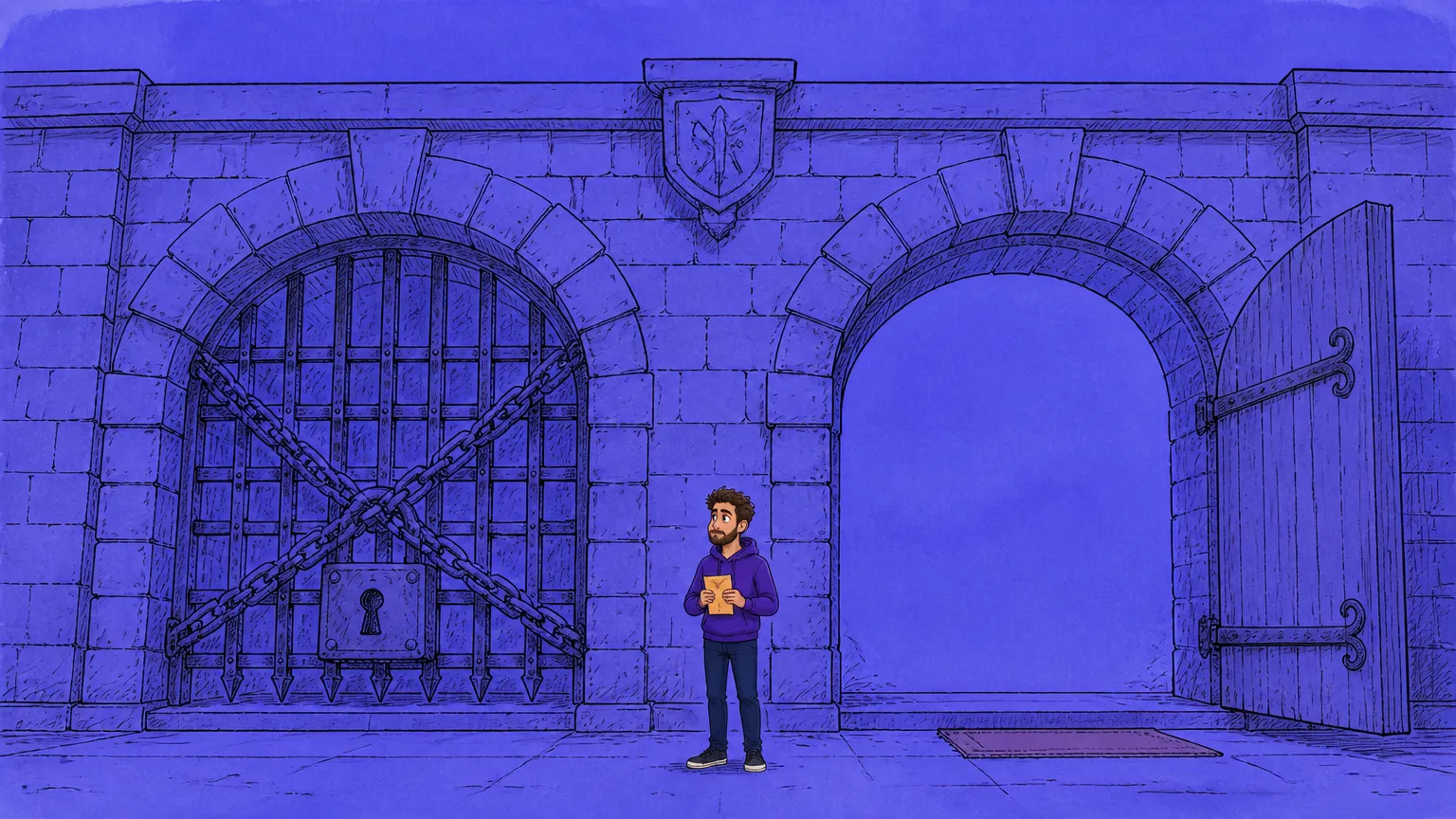
The story: OpenJDK’s interim policy bars contributions containing content generated in part or in full by large language models. Private use stays fine. Point a model at the codebase to read, debug and review it. You cannot contribute what it writes.
Five days later, oracle/graal shipped the opposite. GraalVM contributors may use AI coding assistants, disclosure is only encouraged, and naming the model is optional. InfoQ traced the split to GraalVM sitting in Oracle Labs, outside the OpenJDK Governing Board. The policies are dated April. An aggregator pickup put them back in front of builders this week.
The details:
- The ban reaches further than you would guess. OpenJDK’s FAQ works the example: 100 generated lines with ten edited by hand is still barred.
- Your agent signs its own name. The policy lists a Co-Authored-By trailer crediting an AI tool as a tell-tale clue. Coding agents write that trailer by default.
- Reviewers get a vibe check, not a detector. OpenJDK concedes the two are impossible to tell apart, then flags writing that seems “uncannily cheerful or meticulous”.
- Enforcement is a checkbox. Skara is being reconfigured to add a box to every pull request body that you tick to affirm compliance.
- GraalVM moved the burden onto you. A contributor who cannot explain, defend or maintain an AI assisted change can have it rejected.
Why builders care: The same patch from the same agent is barred in one Oracle repo and welcome in another. Read the policy before you open the pull request, and check what your commit trailer says.
QUARTER ZIPS AND KNITTING NEEDLES
🧶 The guy running AI operations wrote the essay about knowledge work emptying out

The story: Aaron Horwath sat through over half an hour of a commuter’s EBITDA and ARR call. Then the man pulled knitting needles and pink yarn from a leather bag. He was making a winter hat for his niece. Horwath’s own credit line says he is director of AI operations at a creative technology company.
His argument is about abstraction, not job cuts. Knowledge work’s saving grace was that humans still executed it, and agents now draft whole strategies and campaigns. He is blunt that AI is nowhere near efficient enough to justify the layoffs executives blame on it.
“What if their side projects suddenly became profitable?” (Aaron Horwath, Noema Magazine)
The details:
- The data landed the same week. The New York Fed’s latest release puts recent graduate unemployment at about 5.6 percent and underemployment at 42 percent.
- The entry rung is where it shows. Stanford’s payroll study finds a 16 percent relative employment decline for 22 to 25 year olds. It is concentrated in the most AI exposed jobs.
- Read both with the caveats attached. The Fed notes many underemployed graduates hold skilled, well paid jobs and move up later. Stanford’s authors published a follow up after the pushback.
- The escape hatch is the indie hacker funnel. Horwath asks what happens if nobody comes back to refill the roles because their side projects started paying.
- He has already read your objection. Quitting for the horse rescue farm usually turns into starting a Substack about the horse rescue farm.
Why builders care: The people walking out are the experienced contractors and first hires you could never outbid on comp. What they say they miss is the messy middle, and a two person studio hands that over for free.
Clone your voice once. Ship every video without re-recording. ElevenLabs Pro trains a voice clone in 30 minutes that sounds like you on every long-form, Short, and podcast you ship. We narrate every video on this newsletter with it. Beats hiring a VO artist on Fiverr or settling for a default TTS bot.
We get a cut if you sign up. Only added for tools we use ourselves.
TRENDING TODAY
- 🕷️ A year of fighting scrapers on my website - 395 points and 364 comments, nearly a reply for every upvote. He puts bots at 99 percent of his traffic.
- 🧵 Drop your project and I’ll take a look - An open feedback thread on r/SideProject. It was posted overnight and still empty when we checked, so go drop your link.
FIRST DOLLAR
FIVE DOLLARS A PIN
🗺️ A world map where sponsors pay $5 to push a country up the ranking
The Map Challenge is an interactive world map where countries compete for support. Browsing and the rankings are free. Sponsors pick a country and a map spot, then add a display name and an optional link. A one-time contribution starts at $5. No revenue posted yet, which is where most launches sit. The mechanic is the interesting part. The buyer is paying for a country’s rank, not for a backlink, so the ranking does the selling.
STACK OF THE DAY
OPEN MODELS, GOVERNMENT ISSUE
⚛️ Genesis Open Models Initiative
The U.S. Department of Energy launched an open models initiative, hosted on Argonne National Laboratory’s domain. It went up overnight and took 148 points on Hacker News inside two hours. The page is new and light on detail so far. Bookmark it if any part of your stack rides on open weights. A national lab publishing models changes who your supplier can be.
Not sponsored. We just feature tools builders would actually use.
BOOKMARKED TODAY
- 📦 The Nixpkgs core team has disbanded - 164 points and 66 comments overnight. If your build pins nixpkgs, the governance question is now your question.
- 💧 Water system controllers don’t belong on the internet, says ex-NSA chief - 151 points and 102 comments. His argument after suspected Iran attacks is that some things should never get an IP address.
- 🎬 A dark fantasy battle scene from GPT-2 and Seedance 2.5 - One builder’s AI filmmaking test. He pushed character consistency, camera movement and continuity through fast combat. Worth a look if you are pricing AI video for a launch clip.
That’s the edition. Hit reply and tell us what you shipped today.
Ship to one country, QA it from another. Geo-fenced Stripe checkouts, region-gated APIs, feature flags that only fire in EU. NordVPN's 6,400+ exit nodes across 110+ countries let you test a US-only paywall from EU or hit a EU-only checkout from SF. Bonus: free Meshnet for SSH across your devices.
We get a cut if you sign up. Only added for tools we use ourselves.
Curated by AI, built by a human.