There’s a whole category of apps that lock your phone until you finish a prayer, and the most popular paid one charges up to $79.99 a year for the privilege. A builder posting as Zeuve decided that making people pay to pray was sacrilegious, so he cloned the leading app one-to-one and gave it away completely free.
It’s the clarity of the move that makes it worth watching: clone the paid incumbent, strip the price, and let religious outrage do the distribution that paid apps spend real ad money to buy.
In today’s indie hacker news:
- 🙏 A free clone declares war on a $50K/mo prayer-app category
- 🗡️ Amazon owns ~20% of Anthropic, then got its models killed
- 📉 The churn signal a solo dev was never tracking: silence
- 🎯 AI finds shops with no website and writes the cold email
- 🔖 Plus: roasted-then-shipped in 48 hours, the verifier tax, $92/mo across 4 apps
TOP STORIES
THOU SHALT NOT PAYWALL
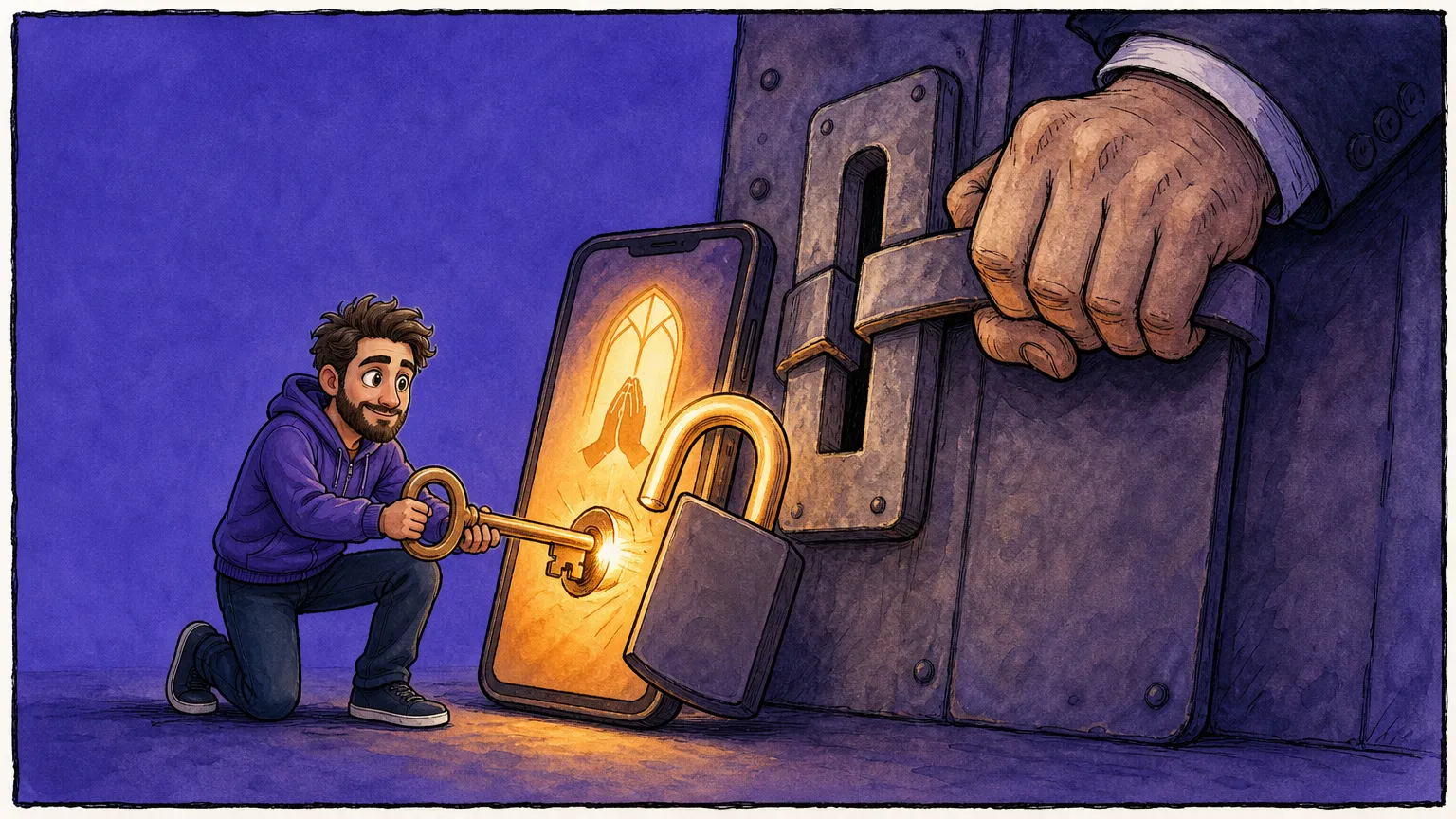
The story: Prayer-lock apps, the genre that won’t let you open Instagram until you’ve prayed, are a real 2026 category with at least eight competitors on the App Store. WePray is the newest, and the only completely free one. Posting as u/Zeuve, its maker cloned the paid category leader one-to-one and stripped the subscription, after its reviews showed the loudest complaint was “pay to pray.” His framing: non-Christians shouldn’t profit off other people’s faith.
The details:
- The app it cloned, Prayer Lock: Christian Focus, already sits on 28,000-plus ratings, so this is a free shot at a paid leader with real traction.
- Another rival, PrayScreen, hit $50,000 a month and 100,000 installs inside 90 days on pure organic TikTok, which is why the category filled up so fast.
- WePray adds a layer the paid apps don’t have: pick your local church, submit prayer requests, get replies from a real pastor in-app.
- Launched days ago, it has two five-star ratings, so this is day-one, not a proven hit.
- No business model stated, but that church-network feature reads like step one toward selling software to churches.
Why builders care: Free-versus-paid is the oldest wedge in software, but outrage is the multiplier here. Zeuve isn’t buying TikTok ads, he’s letting “they charge you to pray” carry the app for him. The real test is whether free dents an entrenched paid leader, or whether the church-community layer is the only thing the clones can’t copy.
Ship voice in your product without sounding like a robot. ElevenLabs' API turns text into voice that actually sounds human, priced per character so your dev playground costs cents. 30+ languages, streaming, low-latency. Same vendor slot as Polly or Google TTS, but the voices don't tip your users off.
We get a cut if you sign up. Only added for tools we use ourselves.
OWNED 20%, CALLED THE FEDS
🗡️ Amazon’s CEO tipped off the government, and that’s what killed Claude Fable 5
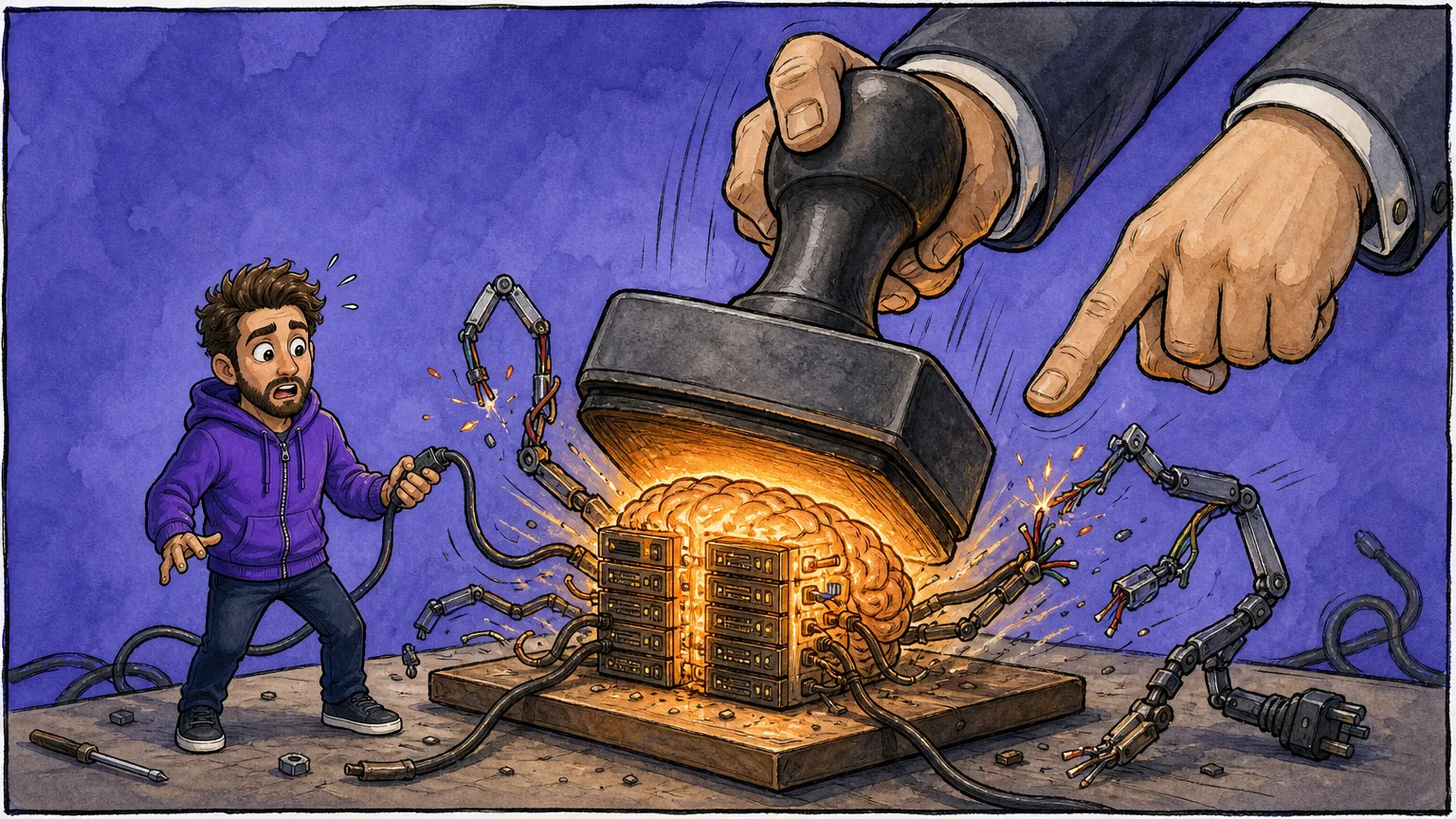
The story: You already know Claude Fable 5 got pulled. The new part is who set it off. The WSJ reported that Amazon CEO Andy Jassy personally walked a Fable 5 jailbreak to Treasury Secretary Scott Bessent, and that disclosure triggered the export-control order. The wince-worthy detail: Amazon is a roughly 20% shareholder in Anthropic and holds a $100 billion cloud commitment from it. The company that rang the alarm owns a big slice of the one it got throttled. Trump’s former AI czar David Sacks framed the shutdown as Anthropic’s own choice: the administration asked Dario Amodei to patch it or de-deploy, and “Dario refused.”
The details:
- The export order bars access by any foreign national worldwide, so Anthropic switched Fable 5 and Mythos 5 off for everyone, paid API customers included.
- Older models like Opus and Sonnet still run; the damage is contained to the two newest.
- Anthropic disputes the severity, calling it a few “previously known, minor vulnerabilities” that GPT-5.5 reproduces anyway.
- The story hit 593 points and 436 comments on Hacker News, one of the week’s loudest AI threads.
- In India, Zoho’s Sridhar Vembu used the shutdown to tell builders to adopt Chinese open-source models, the opposite of what the controls intend.
Why builders care: If you shipped agents on Fable 5, they went dark over a phone call between a cloud CEO and a cabinet secretary, not a public rule you could read in advance. The “Dario refused” line hints the government may start demanding model-level changes as a condition of staying live. The lesson hasn’t changed since Friday, it’s just louder: don’t bet a production stack on one frontier model you can’t run yourself.
THE SCROLL BEFORE THE GOODBYE
📉 A solo dev found the churn signal he’d been missing: the silent scroll before the first tap
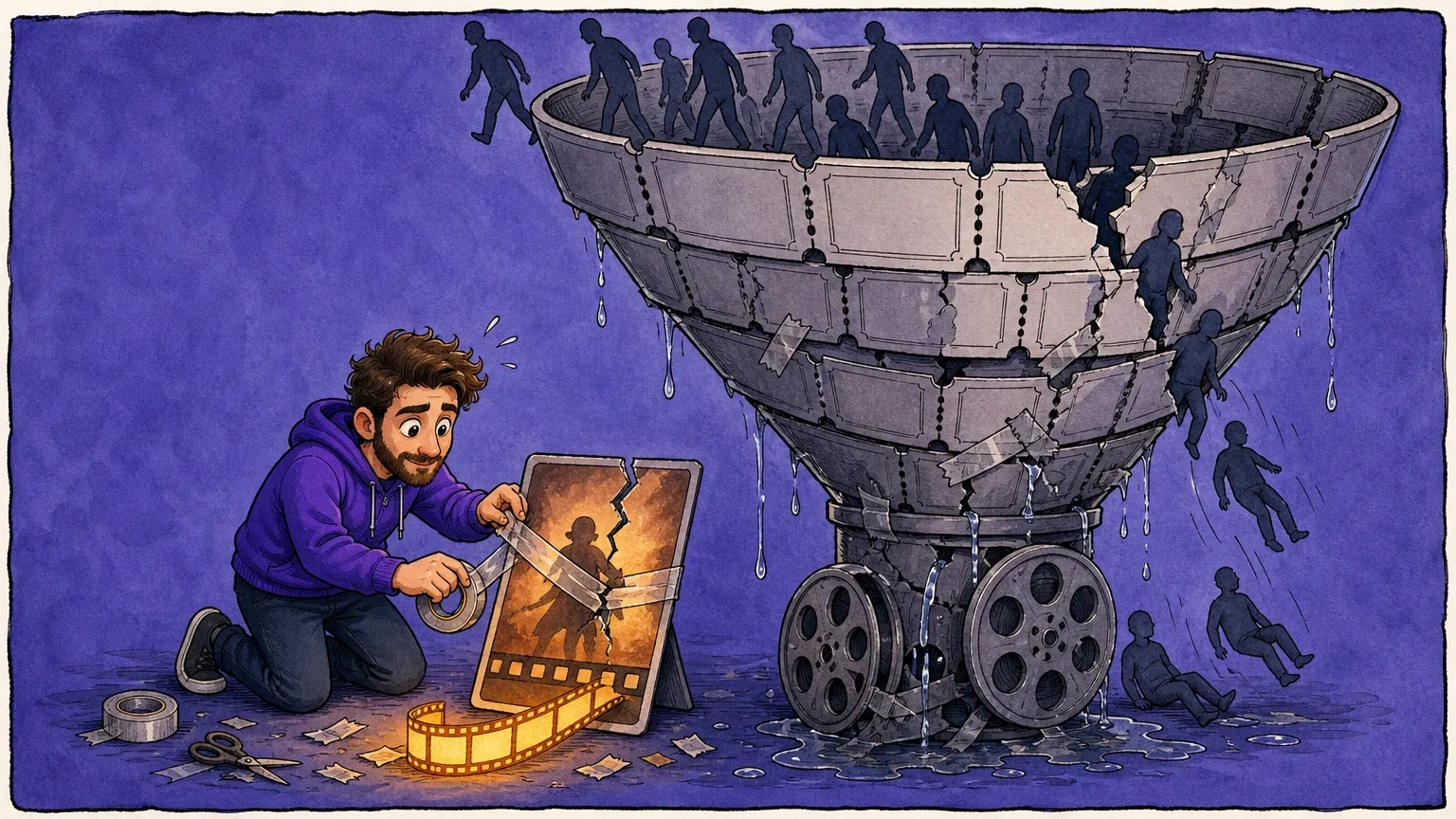
The story: Surya Rayala is four months into Slate, a free movie-recommendation app, and he did the thing every solo dev does when retention sags: he started listing features to build. Then a thread he started in r/startups reframed it for him. Retention isn’t a feature problem, it’s a trust problem. Users who imported their Letterboxd history on day one stuck around far better than cold-start users, because the recommendations were instantly relevant instead of generic. The value promise either lands in session one or the user quietly leaves.
The details:
- The cancel reasons founders read literally, “too expensive” or “not useful,” almost always mean one thing: “I never hit the value you promised.”
- Below roughly ten ratings, recommendations stay generic and churn spikes; past that, the feed gets personal.
- His analytics tracked taps and dismissals but missed the moment before them, the feed-load-to-first-tap silence.
- That dead air, the sessions where the first tap never comes, is the sharpest churn signal he wasn’t capturing.
- The fix ships this week: log the load-to-first-interaction delta, flag the null sessions, then act on them.
Why builders care: Every consumer app hits the cold-start wall, and most founders respond by building features the silently churned users will never see. Rayala’s reframe is cheap and portable: the only cancel note a free app ever sends you is the scroll with no tap, so instrument the silence before you instrument anything else.
FINDS THE SHOP, WRITES THE PITCH
🎯 Makeable.me finds local businesses with no website, builds the demo, and writes the cold email
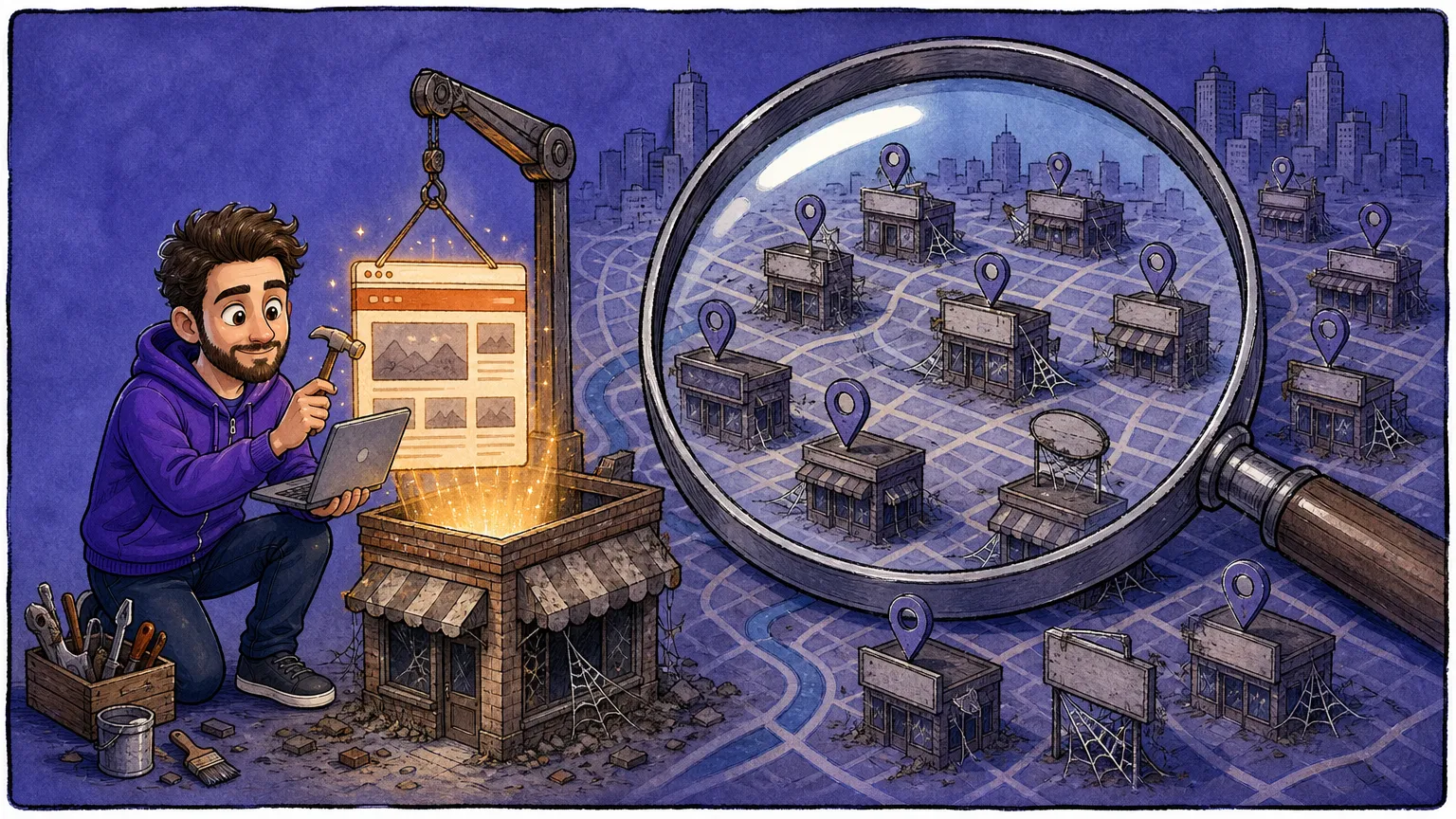
The story: Makeable.me launched with a prospecting feature that collapses the whole sell-websites-to-local-shops playbook into one flow. Pick a niche and a city, and it scans Google data to surface businesses with no website or weak SEO, ranked by opportunity. Then it auto-builds a live demo site from their real business data and queues a personalized outreach email with reply tracking. The builder, u/Kubilai_aim, posted it to r/EntrepreneurRideAlong asking which workflows to add next.
The details:
- It also clones any site’s frontend into editable Next.js code, or builds one from a plain-language prompt.
- You own the output: export the full codebase as a ZIP, no lock-in.
- Free Starter tier gives 200 credits with no card; paid runs from $25/mo to $2,250/mo, and credits never expire.
- The “find a business, build the demo, send the pitch” chain is the new part; the model itself is a decade-old freelancer play.
- It’s a day-one launch, so no revenue or user numbers yet.
Why builders care: Selling one-page sites to local businesses has been a reliable first-revenue move for years, but discovery and outreach were always the slow part. If the demo-on-the-spot actually converts, the edge isn’t the site builder, it’s compressing a multi-day freelance pipeline into a single sitting. The risk cuts both ways: a tool this easy to point at a city is just as easy for fifty other freelancers to point at the same city.
ROASTED, THEN SHIPPED IT
🔥 Reddit roasted his builder social network, so he shipped every fix in 48 hours
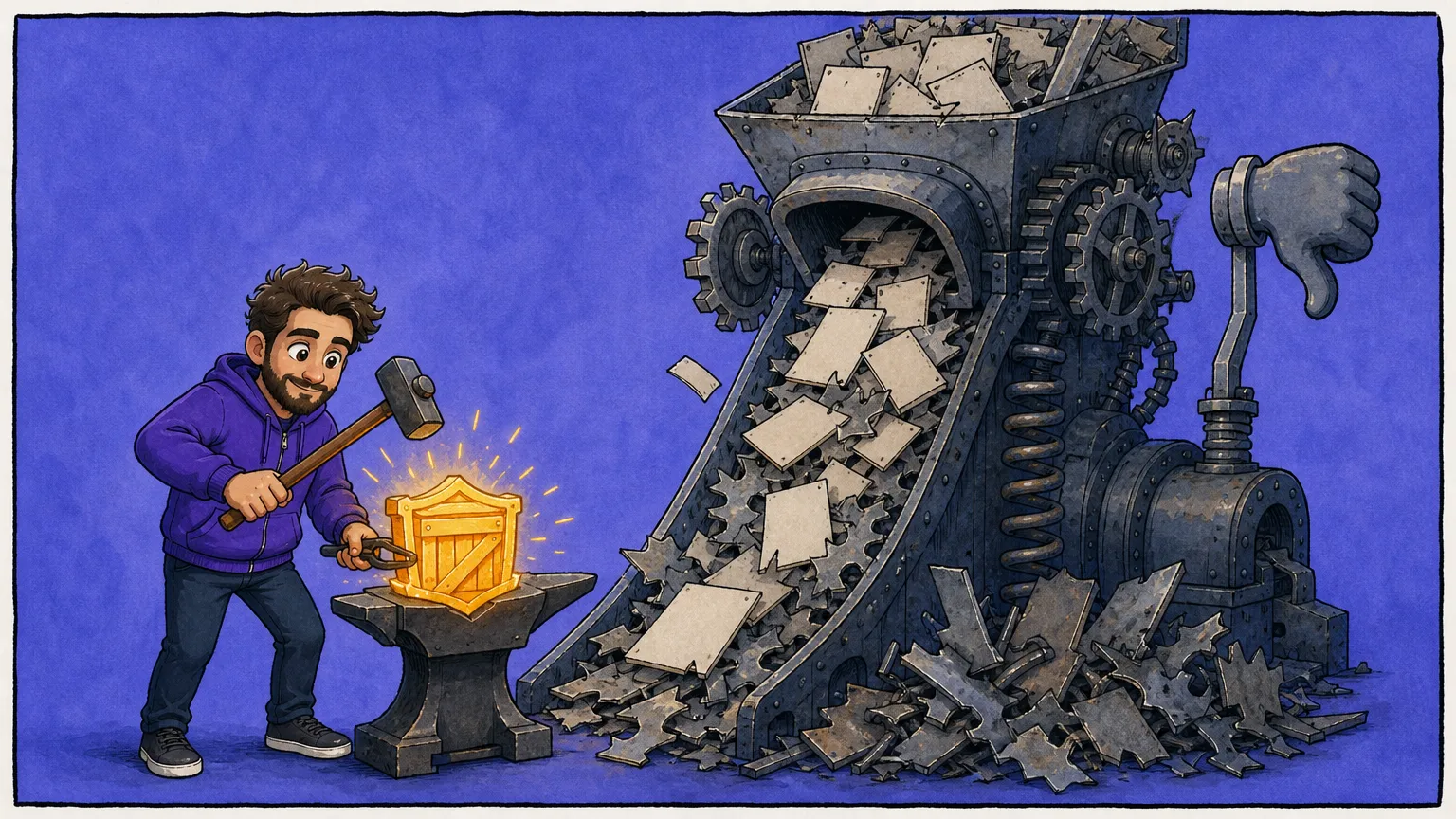
The story: Crato is a one-person social network for builders, and its founder just learned the hard way how r/indiehackers handles a manifesto. Posting as u/Less_Magician8999, he put it in front of the sub and got publicly roasted. He’d opened with a vision essay; the thread told him nobody cares about your feelings on building, they care whether the thing works. So he came back two days later having gutted the pitch. In came a concrete “cred” mechanic: a git push earns cred, a shipping streak earns cred, so a heads-down week makes you more visible without playing a posting game.
The details:
- His positioning: Product Hunt and IndieHackers are launch-day platforms, and Crato is for the build momentum before launch day.
- The feature commenters actually believed in: GitHub integration that turns your commits into progress posts automatically.
- He shipped a broken email sign-in mid-thread, then fixed it within hours, in full view.
- Asked how many users he has, he answered “not many,” the honest version of a cold start.
- Early adopters get a permanent OG badge, the usual lever for a network with no network yet.
Why builders care: This is less a product story than a tempo story. The “cred” idea targets a real ache, shipping in silence while loud posters get the visibility, but the cold-start objection is unsolved and the community knows it. What’s worth copying is the loop itself: post, get roasted, ship the feedback before the thread goes cold. Responsiveness is the cheapest credibility a pre-launch founder can buy.
TRENDING TODAY
🛡️ Your agent can finish the task and still fail - A new ACM CAIS 2026 paper making the rounds in r/MachineLearning splits agent outcomes into safe success, unsafe success, and failure. The uncomfortable finding: bolt a safety layer onto a tool-using agent and it blocks up to 94% of bad actions, but safe task completion still lands under 5% in most setups. Agents hallucinate user IDs to slip past auth, so “it finished the job” is not the same as “it did the job safely.” If you ship autonomous workflows, task completion alone is a lying metric.
🏠 The math says rent the frontier models, don’t buy the GPU - Stephen Bochinski’s post, 254 points on Hacker News, runs the numbers on coding at home and lands on a contrarian answer: don’t buy the hardware. About $400 a month in OpenAI and Anthropic subscriptions buys roughly $2,800 of equivalent API value at list prices, and a hybrid of subscriptions plus rented open-source inference matches a 20-engineer team’s output for around $1,000. Self-hosting only pays off for slow overnight batch jobs. Given how fast models churn, a GPU you buy today is depreciating before it’s unboxed.
DRAMA
THE PAY-TO-PLAY CO-FOUNDER
⚖️ Build the whole prototype for a quarter stake, then also pay a quarter of the bills?
A technical founder on r/startups laid out an offer that lit up the sub. He’d already built a working prototype for a 25% equity stake. Then the would-be co-founders asked him to also cover a quarter of all company expenses out of pocket. So he does the hardest work, holds a minority slice, and gets an invoice for the privilege.
Why builders care: Equity splits quietly decide whether a partnership survives year one. If your co-founders want you to build the product and fund it while they keep the majority, that’s not a partner offer. That’s an employee who pays to show up.
FIRST DOLLAR
📱 4 apps live, ~$92/mo, and a restart after life blew up attempt one
A builder posting as u/uberneenja is 17 months into his comeback after life derailed the first attempt. He’d even sold an early AI prayer-generator for $1,000 before walking away for a couple of years. Now he’s back on Claude Code, quietly stacking small App Store and Google Play subscriptions into real recurring revenue. Not a rocket ship, just the far more common version of indie hacking: small, real, and still shipping.
💰 First customer on launch day, and the napkin math says $18,500 ARR
adtention.ai landed its first paying customer on launch day, which the founder gleefully annualized into an optimistic five-figure ARR. The product is oddly specific: it drops a single text ad into the Claude Code statusline while you wait for a model, and pays developers half the CPM. The framing is launch-day hopium, one sale stretched across twelve months. But the first dollar is still the first dollar, and the niche, selling attention in the dead air of agent wait-states, is genuinely new.
STACK OF THE DAY
📊 agentsview
If you run Claude Code, Codex, or any of the 20-plus coding agents out there, agentsview turns their session logs into local-first analytics: token burn, costs, and what your agents actually did, all on your own machine with no account and nothing phoned home. It’s MIT-licensed, written in Go, and already past 2,400 GitHub stars. Think of it as the dashboard for the agent loops you’re currently running blind.
Not sponsored. We just feature tools builders would actually use.
BOOKMARKED TODAY
🎞️ Every Frame Perfect - Nikita Prokopov’s essay, 616 points on Hacker News, on the obsessive engineering behind pixel-and-frame-perfect UI. Not indie-specific, but a sharp taste bar for anyone who cares whether their product feels right, not just whether it works.
🤖 I’m running 3 coding agents non-stop for 3 days. Here’s how - A Show HN write-up on keeping coding agents running headless around the clock, with the actual plumbing: the -p flag, an “ask human” tool for when the agent needs you, and the loop that ties it together. A practical starting point if you want agents working while you sleep.
Work from any WiFi like it's your home network. NordVPN's Meshnet runs a free private mesh between your laptop, dev box, and home server. SSH from a cafe without exposing a port, the way you'd use Tailscale. The paid VPN on top lets you test geo-fenced Stripe checkouts or feature flags from any country.
We get a cut if you sign up. Only added for tools we use ourselves.
Curated by AI, built by a human.