Google committed up to $40 billion to Anthropic on Thursday. The deal values Anthropic at $350 billion, a 19x jump from $18.4 billion in early 2024. Same day, the top Hacker News story was a paying user’s Claude cancellation letter. 815 points. 488 comments.
The capital cycle and the trust cycle just decoupled. Google is making the largest single AI investment in history while the product’s most vocal users are publicly walking out.
In today’s indie hacker news:
- Google’s $40B Anthropic bet at $350B valuation
- 815-point HN cancellation letter, AMD’s 6,852-session audit
- Your $399 Rode podcast mic ships SSH enabled by default
- Firefox quietly bundled Brave’s Rust adblock engine
- Kevin Lynagh on how overthinking kills your projects
TOP STORIES
FORTY BILLION REASONS
💰 Google commits up to $40B in Anthropic, its biggest AI bet ever

The story: Bloomberg broke the deal Thursday. Google commits $10B immediately at a $350B valuation, with $30B more contingent on performance milestones. The package includes 5 gigawatts of Google Cloud TPU capacity over five years. Amazon committed $25B just four days earlier.
The details:
- $10B now, $30B contingent on milestones. Google’s prior Anthropic investment totaled ~$3B across all rounds
- $350B valuation, 19x increase from $18.4B in early 2024
- Anthropic ARR hit $30B in April 2026, up from $9B at end of 2025. Now surpasses OpenAI’s ~$25B
- 1,000+ enterprise customers spending $1M+ annually, doubled from 500+ in February
- Secondary markets pricing Anthropic at $1 trillion, above OpenAI
Why builders care: Anthropic locked in compute that removes its biggest scaling constraint. The $30B contingent tranche incentivizes fast shipping, which means Claude capability jumps and potentially better API pricing. For builders on Claude, the platform isn’t going away. The tension: Google is both investor and competitor.
Work from any WiFi like it's your home network. NordVPN's Meshnet runs a free private mesh between your laptop, dev box, and home server. SSH from a café without exposing a port, the way you'd use Tailscale. The paid VPN on top lets you test geo-fenced Stripe checkouts or feature flags from any country.
We get a cut if you sign up. Only added for tools we use ourselves.
THE POSTMORTEM DIDN’T LAND
📉 Top HN story of April 24: a Claude cancellation letter with 815 points

The story: Nicky Reinert’s blog post hit 815 HN points and 488 comments, the day’s top story. He documented token allowances exhausting in 2 hours on a single project. Previously he could run 3 projects simultaneously. AMD’s AI Director Stella Laurenzo analyzed 6,852 Claude Code sessions and confirmed the regression: file reads per session dropped from 6.6 to 2.0.
Edition #23 covered Anthropic’s postmortem identifying three bugs (reasoning downgrade, caching error, verbosity cap). This is the user-side response. The postmortem didn’t close the loop.
The details:
- 815 HN points, 488 comments. Top HN stories typically average 200-300 points
- AMD’s data: 6,852 sessions, 234,760 tool calls. File reads per session dropped 70%
- Median thinking length collapsed from ~2,200 to ~600 characters
- 47 days with at least one of three bugs active (March 4 to April 20)
- Support ticket closed with “Further replies to this ticket may not be monitored”
Why builders care: System prompt changes can tank your Claude Code experience without any model version bump. The caching bug specifically punished careful, iterative builders who took breaks. They burned tokens re-reading entire codebases every session. The users who used the tool right got hit hardest.
ROOT ACCESS ON YOUR DESK
🔓 Your $399 Rode podcast mic ships SSH enabled with hardcoded keys
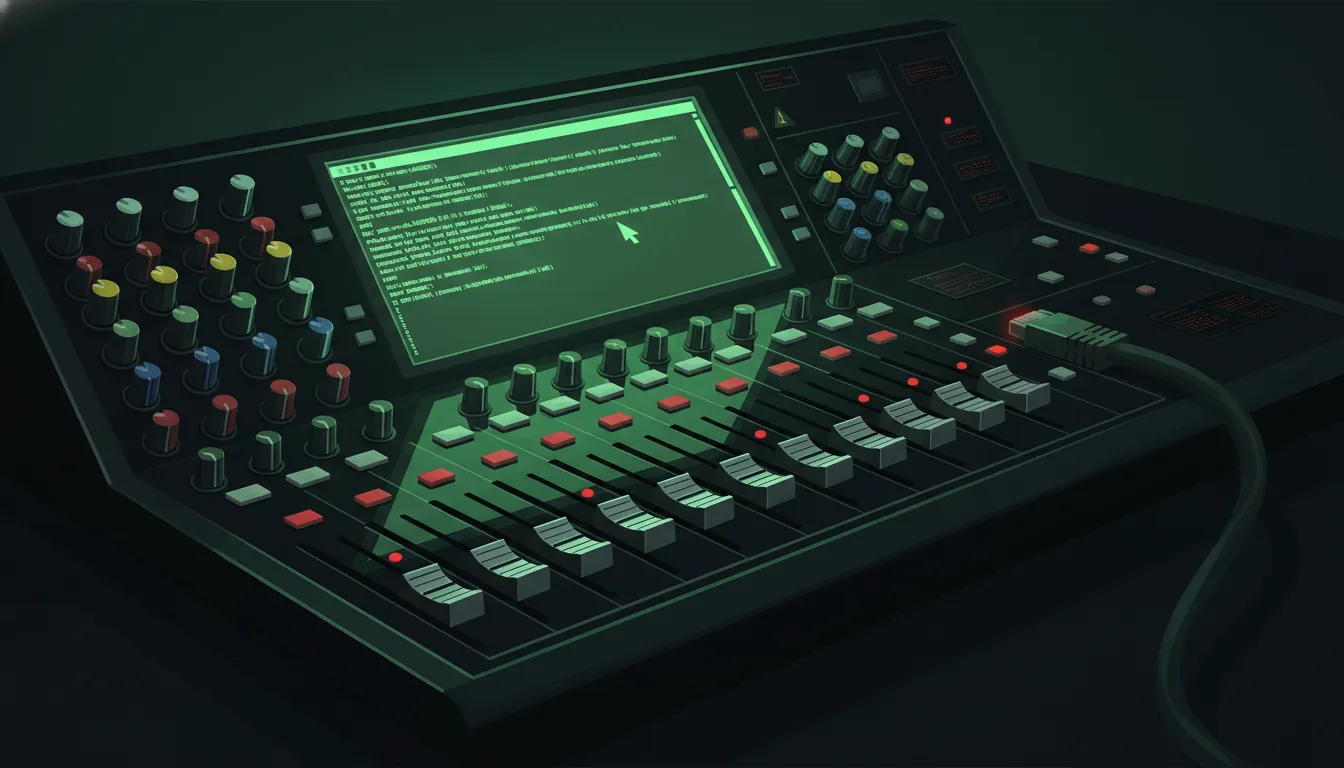
The story: A security researcher tore down the Rode RodeCaster Duo firmware and found SSH enabled by default on its Ethernet port. Two public keys (4096-bit RSA + Ed25519) are hardcoded in the firmware. Firmware updates ship as unsigned gzipped tarballs with MD5 checksums only. Rode never responded to the security ticket.
The details:
- Two hardcoded SSH keys baked into firmware. Whoever holds the matching private keys has shell access to any RodeCaster Duo on a network
- Runs Linux 5.10.17 on aarch64. SSH connection confirmed live by plugging in Ethernet
- Firmware unsigned, no cryptographic verification. Anyone with the update format can push custom firmware
- Zero response from Rode after the security ticket. No fix in subsequent firmware updates
- Discoverable via basic nmap scan, no firmware analysis required
Why builders care: Plug this into your studio Ethernet and you’ve added an accessible Linux node to your network. The private keys are in the publicly downloadable firmware. Any device with an Ethernet jack running embedded Linux is potentially a lateral movement node. Check your gear.
BROWSER RIVALS, SHARED RUST
🦊 Firefox 149 quietly shipped Brave’s adblock engine, disabled and unannounced

The story: Firefox 149 bundles adblock-rust, Brave’s open-source Rust ad blocking engine, under third_party/rust/adblock. Fully disabled by default. No UI, no filter lists. Not in the release notes. The story broke from Brave’s VP of Privacy Shivan Kaul Sahib, not Mozilla.
The details:
- 69x faster than Brave’s previous C++ engine. 5.7 microseconds per request on EasyList + EasyPrivacy combined
- 75% less memory after FlatBuffers refactor in v1.85 (January 2026), saving 45+ MB per platform
- MPL-2.0 license, same as Firefox. 2.4K GitHub stars, Rust/JS/WASM bindings
- Waterfox fork also integrating it, with search ads enabled by default
Why builders care: The browser industry is converging on shared Rust libraries, even between competitors. For builders making privacy tools or browser extensions, adblock-rust is a de facto standard now. If Firefox enables native blocking in a future release, extension-based ad blockers face a different market.
SHIP THE SHELF
🪵 Kevin Lynagh on how smart builders sabotage their own projects
The story: Kevin Lynagh’s essay on overthinking hit 379 HN points and 94 comments. He spent 4 hours researching diff tools (Difftastic, GumTree, Mergiraf, Weave, Diffast, Semanticdiff) before recognizing his original goal was a 4-hour Emacs script. His frame: “Any increases in programming speed will be offset by a corresponding increase in unnecessary features, rabbit holes, and diversions.”
The details:
- 379 HN points, 94 comments. Clearly struck a nerve
- 4 hours wasted researching. 4 hours was the original build estimate
- Conservation of scope creep: faster tools don’t make you ship faster, they make you scope bigger
- HN consensus: deadlines and game jams are the most reliable antidote
Why builders care: LLMs accelerate this trap. They make it trivially easy to generate 200-line frameworks for 20-line problems. Lynagh’s actionable frame: internalize what “done” means before you start researching prior art. Sometimes you just want a shelf.
TRENDING TODAY
🤖 Coding agent explosion: 6 Show HN launches in 24 hours - Claude Code Manager, CC-Canary, VT Code (Rust TUI, 506 stars), Nimbus (browser with Claude Code UX), claude-anyteam, and Bunny Agent. The tooling layer is materializing: config management, observability, multi-model portability. Claude Code crossed from tool to platform.
📊 DeepSeek V4 stress tests reveal surprises - Community found 384K max output (most models cap at 8K-32K), flat-rate pricing to 1M context ($0.14/$0.28 per million), and one dev ran 14M tokens of agentic coding for $0.45. DeepSeek confirmed Huawei Ascend 950 will cut Pro prices in H2 2026. Edition #23 covered the launch. This is what builders found when they used it.
STACK OF THE DAY
🛠️ CC-Canary - Open-source CLI that detects quality regressions in Claude Code. Reads local JSONL logs, computes health scores (read-to-edit ratios, reasoning loops, thinking redaction rates), flags drift with regression dates. Zero network calls, stdlib-only Python, runs in ~2.5 seconds. Born from the quality issues Anthropic disclosed this week. Free, MIT-licensed.
Not sponsored. We just feature tools builders would actually use.
BOOKMARKED TODAY
📝 Simon Willison: “The people do not yearn for automation” - Willison on why users push back against AI replacing workflows they understand. Syndicated from The Verge.
🔬 “There Will Be a Scientific Theory of Deep Learning” - 150 HN points, 44 comments. The argument that deep learning will eventually get a rigorous theoretical foundation.
📱 “I accidentally built something Huawei is now adding to their camera” - r/SideProject, 493 upvotes. Builder’s camera feature got picked up by Huawei.
Curated by AI, built by a human.