Google put Google Reader and the CalDAV API on the same kill list on March 13, 2013. Two days later it quietly spared one of them. A few big developers held 98 percent of that API’s traffic. Reader got four months of Takeout exports and a line about declining usage, with no number behind it.
Reader died inside a cleanup program that had already closed 70 features since 2011. Open RSS traces the same arc through Chrome, FeedBurner, Alerts and News: add RSS, gather users, pull support.
In today’s indie hacker news:
- 📡 Google spared CalDAV’s 98%, buried Google Reader
- 💸 MIT prices a weak money prompt at $50,000
- 🤖 One prompt, 19 agents, 25 researched ideas
- ✍️ A font tool hit 95 paid users on SEO
- 🎉 First paid sale after a year of rebuilds
- 🧮 A live calculator for your agent token bill
TOP STORIES
TOO SMALL TO SAVE
📡 Google reversed one open protocol shutdown in 2013, and it was not Reader
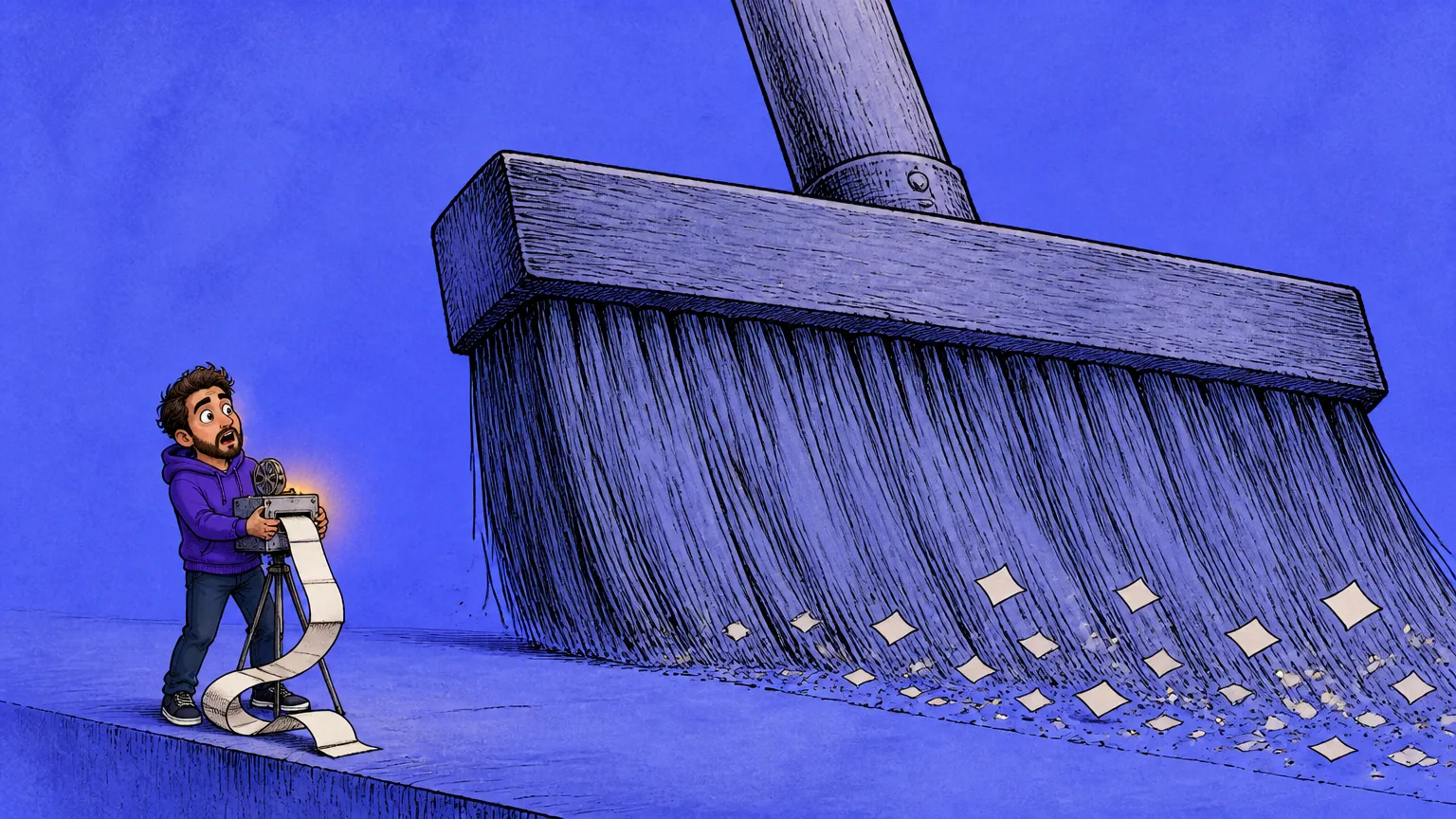
The story: Open RSS laid out Google’s RSS record in a 2023 post, now at 446 Hacker News points. The sharpest evidence is Google’s own retirement announcement. Reader and the CalDAV API sat on the same closure list.
Two days later Google appended an update restoring CalDAV access. It had worked with the developers behind almost all that traffic. Reader never got a matching line. Open RSS is a donation-funded nonprofit that gives feeds away, so it has a stake in the framing. The dates are Google’s own.
The details:
- The reprieve: the update said Google remained committed to supporting open protocols like CalDAV.
- The cull: the same post put the running total at 70 features or services closed since 2011.
- FeedBurner: bought in 2007, APIs closed in October 2012, email subscriptions pulled in July 2022.
- Google News: launched in 2002 with feed URLs from across the web, RSS support gone by December 2017.
- The Follow experiment: announced May 19, 2021, and still the only post under that Chromium blog label.
Why builders care: Serve the feed from a domain you own. Treat any platform feed as a redirect you can move. A deprecation here gets reversed for concentrated traffic, never for a loyal following, and you are the loyal following.
Chrome once planned the opposite. The Chromium design doc had an address bar icon handing you off to the reader of your choice.
PROMPT LIKE A PROFESSOR
💸 MIT put a price on a badly written money prompt: about $50,000 by age 60

The story: MIT Sloan had 1,000 adults write their own money prompts, then simulated lifetimes of following the answers. The advice itself held up. It pushed people into diversified stock funds and told them to cut equity exposure after 45.
The damage was in the wording. Prompts written by women and by less financially literate people drew lower equity allocations. That compounds to about 4% less wealth at age 60, across a simulated life cycle.
“Regular people are not writing their prompts the way a finance professor is.” Taha Choukhmane, on the working paper
The details:
- The split: two thirds of the gender gap traced to prompt wording, one third to the model itself.
- The bigger hit: first-time AI askers were handed lower saving rates, worth almost $100,000 (6%) less by 60.
- The word choice: women’s prompts leaned on family, grocery and pay. Men’s used strategy, crypto and growth.
- The residual: even with structured prompts the model still produced too little active rebalancing.
- The placement tell: Vanguard appeared in 6% of answers and iShares in 3.4%, while under 0.4% of prompts named either.
Why builders care: The academic preamble that closed the gap is a fixed block: age, income, savings, risk assumptions. That is your system prompt to own, and the rebalancing gap belongs in code rather than in the wording.
Demand is already there. Lloyds counted 28.8 million UK adults asking AI about money, with 80% of them worried about wrong answers.
NINETEEN AGENTS WALK INTO A PROMPT
🤖 One prompt fans out into 19 agents, and the whole shape is documented

The story: A r/SideProject post says one prompt drives a three layer workflow that returns 25 researched ideas. The tool is banksia, an open repo. At capture nobody had commented, the score was hidden, and no sample output was posted.
The architecture is the interesting part. Nineteen agents across three layers sits under Claude Code’s documented defaults of 20 concurrent subagents and three nesting layers. Nobody has to touch config to copy it.
The details:
- The bill: Anthropic clocks multi-agent runs at about 15 times the tokens of a chat, versus 4 times solo.
- What drives the score: token spend by itself explained 80% of performance variance in Anthropic’s BrowseComp analysis.
- The labs disagree: OpenAI’s cookbook tells developers to ask 3 to 6 clarifying questions before the research call.
- Google agrees: its April 2026 release put a human plan review in front of execution.
- The known failure: OpenAI’s own page says deep research can hallucinate facts and struggles to separate authority from rumor.
Why builders care: The orchestration is documented, capped by default, and copyable in an afternoon. That is not a moat. Build the checking layer over the ideas it returns, because the labs already warn the output can be wrong.
Anthropic’s own early version spawned 50 subagents for simple questions. Scaling rules had to go into the prompt.
SLOW DRIP SUPREMACY
✍️ A font tool hit 95 paying customers with no launch, just SEO and YouTube

The story: GLIPH turns a hand drawn or AI generated alphabet sheet into a working TTF file. Its maker broke it down on r/SideProject.
Asked whether one channel did it, they said slow drip: search optimization across Google and Bing, plus YouTube tutorials. No launch event shows up anywhere in the sources. Their own diagnosis is that weak early video cost them months.
The details:
- The price: $5 a month buys 500 credits, which the site equates to 100 sheet uploads.
- The promise: that rate ships under a line locking it in forever, and the FAQ makes it permanent.
- The other tiers: $50 a year, plus a $400 lifetime plan carrying 999,999 credits.
- The free tier: two sheet uploads a week, and the maker says people cycle throwaway emails to stretch it.
- The landing page: the testimonials are still Jane Doe and John Smith. The social links point at a hash.
Why builders care: In a niche with obvious search intent, the tutorial is the funnel and ranking beats polish. Price the ceiling before you promise it, because AI extraction bills real inference on every upload.
The core feature is still tagged beta on the homepage, under a footer that warns you to expect quirks.
CHECK THE CHECKOUT
🎉 A stranger bought the first copy after a year of rebuilds

The story: handsup_dev spent about a year rebuilding a desktop pet called Slow Life Island. It shipped as Tiny Slow Life, the first thing they had ever charged for.
For days the dashboard showed visits and checkout opens against zero purchases. Their first guess was a broken checkout, not an unwanted product. Then one stranger paid, the license key issued, and the download went through. The amount was a few dollars.
The details:
- What the license covers: up to 3 devices, no real time sync, and save files moved between machines by hand.
- Worth ruling out first: an itch.io developer logged 203 views and 0 sales in a week, with Stripe never connected.
- The distribution read: a game that later sold roughly 113,000 copies on Steam moved 414 on itch.io.
- A second one year arc: UserTake reached $50 MRR off 1,700 landing page hits over 12 months.
- The baseline, for subscription apps rather than paid downloads: RevenueCat puts median monthly revenue a year after launch near $72.
Why builders care: Buy your own product end to end. Use a device you have never touched, and try every payment method you accept. Do that before you rewrite anything, because the next hard problem is distribution.
Two commenters said they bought it after reading the thread. The writeup may have outsold the launch.
Clone your voice once. Ship every video without re-recording. ElevenLabs Pro trains a voice clone in 30 minutes that sounds like you on every long-form, Short, and podcast you ship. We narrate every video on this newsletter with it. Beats hiring a VO artist on Fiverr or settling for a default TTS bot.
We get a cut if you sign up. Only added for tools we use ourselves.
TRENDING TODAY
- 🧩 Postmortem for Kernel Soundness Bug #14576 - 124 points and 45 comments in a few hours. Naming your own soundness bug in public, with a number on it, is the move.
- 🍽️ An AR menu system for restaurants - tselehub built a QR code that renders every dish life size in the browser. 9 languages, no app install. The hard part is selling restaurants, not the 3D.
- 📺 WatchWatchTV, rebuilt over four weekends - pjhawksr shipped it a year ago around shared watchgroups, then called that the wrong core. The unit is now a single recommendation. Free.
STACK OF THE DAY
🧮 A live price tag for your agent token bill
CostPerPrompt is live API pricing for the big models, plus calculators that price a real workload instead of one call. Price the fan out before you build it, using the token multiple from today’s agent story. It went up on Hacker News overnight with 5 points, so you are early.
Not sponsored. We just feature tools builders would actually use.
BOOKMARKED TODAY
- 🛗 Elevators - 1,585 points and 387 comments, the biggest thread in today’s whole pull, for a page about elevators.
- ⚙️ A cycloidal gearbox built by a 15 year old - 42 points on Show HN, and the repo is public. The bar for shipping is lower than your drafts folder suggests.
- ⏱️ First paying users for a shift tracking app - TechyWater built free time and earnings tracking, plus a Pro tier. Finding buyers is the hard part. Same wall two builders hit further up.
See you tomorrow. Hit reply and tell me what you shipped this week.
Ship to one country, QA it from another. Geo-fenced Stripe checkouts, region-gated APIs, feature flags that only fire in EU. NordVPN's 6,400+ exit nodes across 110+ countries let you test a US-only paywall from EU or hit a EU-only checkout from SF. Bonus: free Meshnet for SSH across your devices.
We get a cut if you sign up. Only added for tools we use ourselves.
Curated by AI, built by a human.