OpenAI says GPT-5.6 Sol Ultra closed the Cycle Double Cover Conjecture in just under an hour. It had been open for roughly 50 years. The proof that came back runs under 3 pages, and no named mathematician has checked it.
The endorsements going around are the tell. In a 303-comment thread, the checks people posted were verdicts from other language models grading the PDF.
In today’s indie hacker news:
- 🤖 OpenAI shipped the prompt with the unchecked proof
- ⚖️ Apple’s complaint says candidates brought parts to interviews
- 💳 Your cancel flow becomes a legal surface October 1
- 🕰️ A free clone out-features a EUR 8,000 clock
- 🌾 Three dry years ended a five-century empire
- 🧰 Claude Code sessions that survive the terminal
TOP STORIES
NOBODY HAS CHECKED THE HOMEWORK
🤖 GPT-5.6 claims a 50-year conjecture, and OpenAI published the prompt
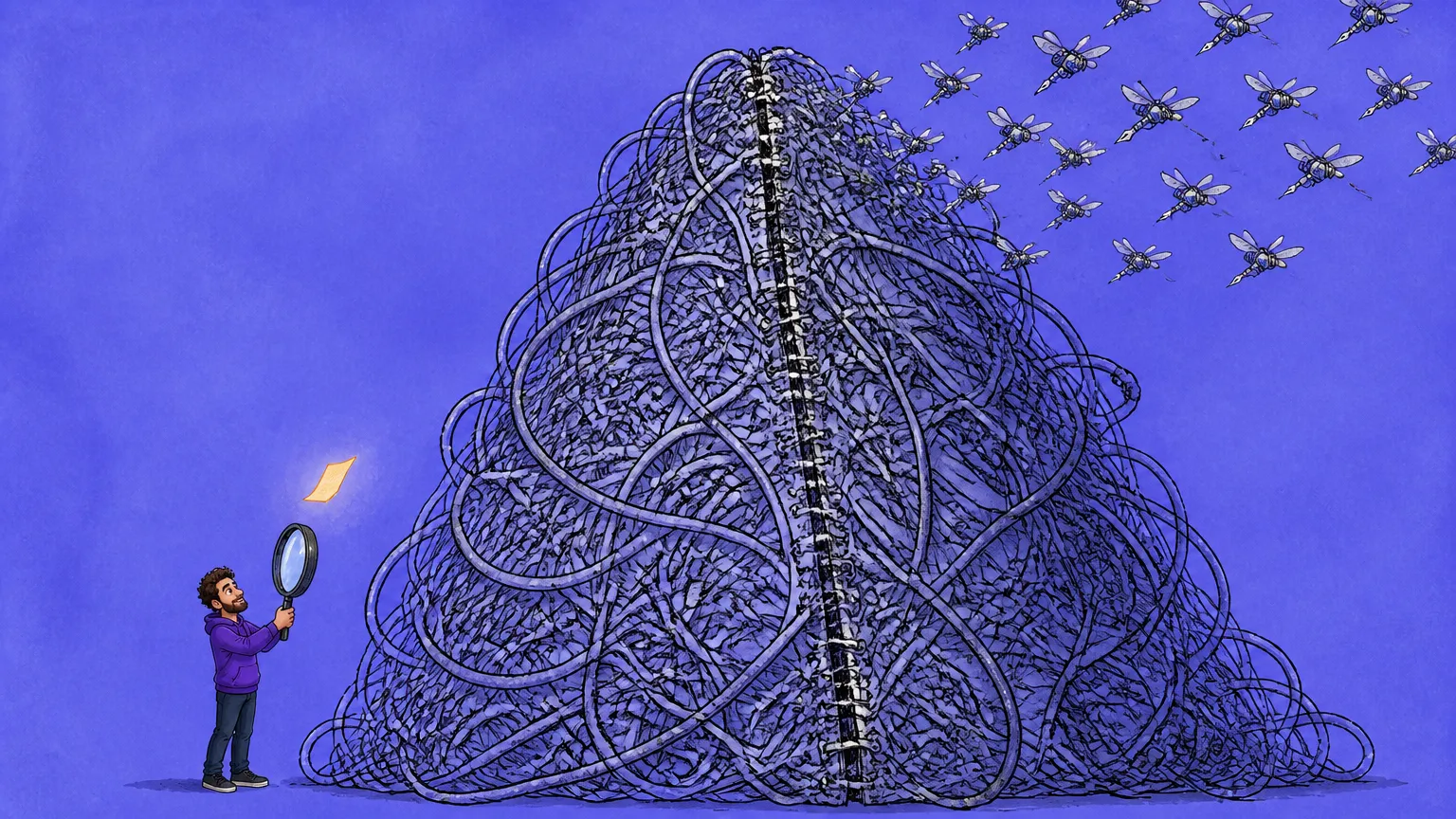
The story: The conjecture asks whether every bridgeless graph has cycles that cover each edge exactly twice. Tutte posed it, and so did Szekeres, Seymour, and Itai and Rodeh. It stayed open. OpenAI’s preprint credits the proof entirely to GPT-5.6 Sol Ultra, with the writeup done by Codex. No human is named as an author or a reviewer. The announcement came from @eknight on X, one day after Sol Ultra hit general availability.
The details:
- The prompt is the artifact: it tells the model to assume a complete proof exists. It bans status reports, vague optimism, and calling an unproved statement routine. One reader estimated only about a fifth of it concerns the mathematics.
- The fan-out is a config value: the run used 64 subagents. OpenAI’s own launch post says shipped ultra coordinates 4 agents by default.
- You can rent the same fan-out: the concurrent-subagent capability sits in the Responses API multi-agent beta. Sol runs $5 in and $30 out per 1M tokens.
- The proof is old-fashioned: every reference it cites is dated between 1954 and 1994. No mathematics from the last 30 years appears in it.
- Lean was never involved: it was not run through a proof assistant. Commenters say Graphlib, Lean’s leading graph theory library, is not ready for research-level theorems.
“Spend at least 8 hours on this before even thinking of returning or giving up.” The published prompt, quoted on Hacker News
Why builders care: Generation got cheap and parallel. Checking did not, and that is the lane still open for whoever builds the verifier.
On FrontierMath Tier 4, the hardest math tier OpenAI publishes, Sol scores 83%. Claude Fable 5 scores 87.8% on the same benchmark. The model credited with the proof is not the leader on OpenAI’s own hardest math test.
SHOW AND TELL GOES TO COURT
⚖️ Apple’s 41-page complaint turns the job interview into the crime scene
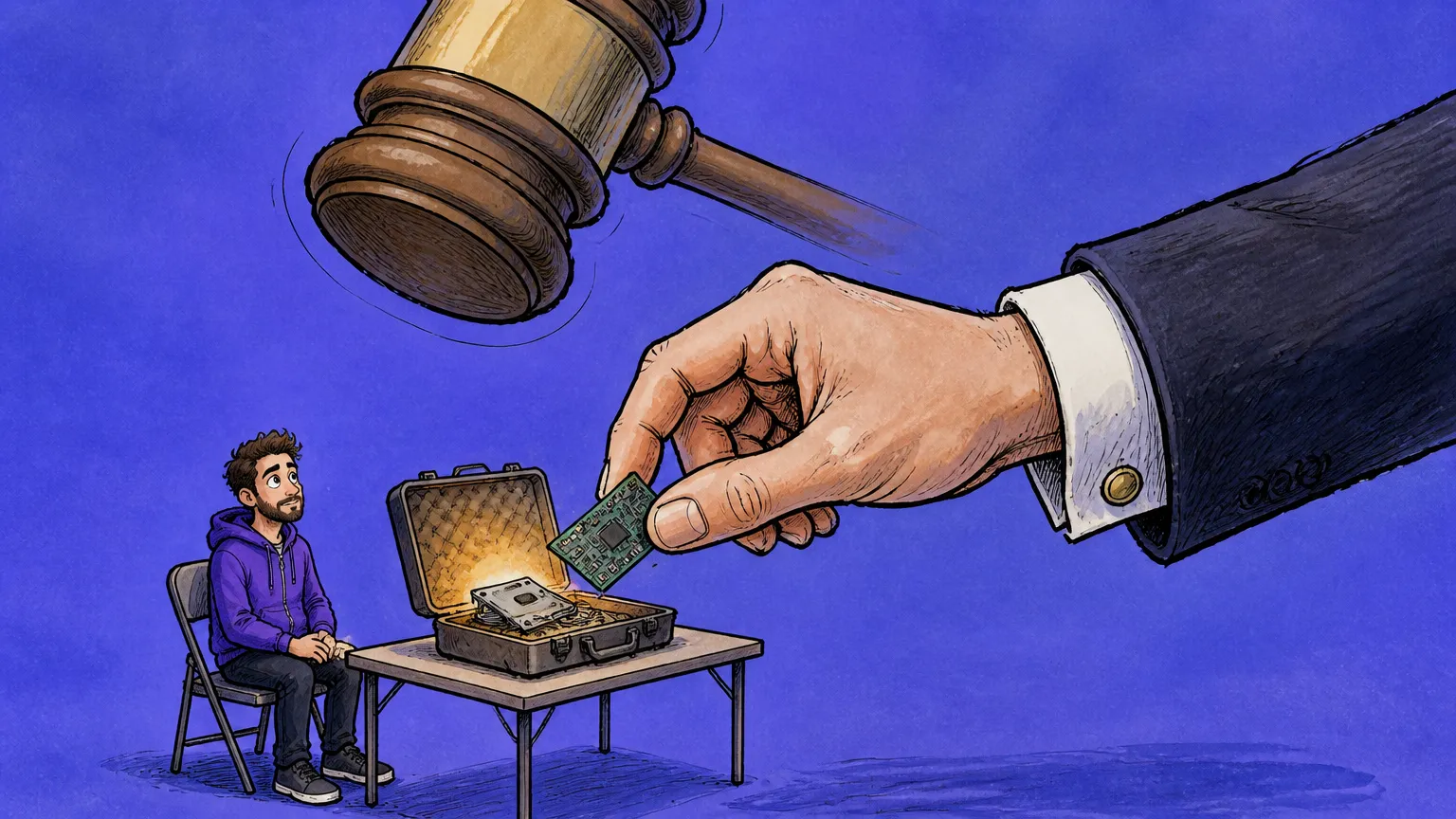
The story: Apple filed Apple Inc. v. Liu in the Northern District of California on July 10. It names OpenAI as two separate entities, io Products, hardware chief Tang Tan, and engineer Chang Liu. The complaint alleges the theft ran at every level, from technical staff to the chief hardware officer. Apple’s own filing says more than 400 former Apple people now work at OpenAI. Two of them are defendants.
The details:
- Bring the parts: Apple alleges Tan told candidates still on Apple’s payroll to bring “Actual parts” to their interviews. One of them said he “didn’t even know we could take those from the office.”
- The ask list: the complaint says candidates were told to bring CAD artifacts and prototypes to the interview. They were also asked about vendor selection and subsystem choices.
- The offboarding leak: Apple alleges Tan passed an internal “Need to Know” document to new OpenAI hires. They had not resigned from Apple yet. It included Apple’s departure security protocols.
- The download: Apple alleges Liu grabbed a compilation of technical files running over a thousand pages. He joked about it in messages instead of reporting the security bug he used.
- The partnership holds: Apple’s updated Siri ships this fall on Google’s Gemini. Apple says the ChatGPT agreement is not at issue in this case.
“We have no interest in other companies’ trade secrets.” Drew Pusateri, OpenAI’s Director of Strategic Communications
Why builders care: Hiring from a bigger rival now carries a paper trail risk you did not design for. Write your interview questions as if a plaintiff’s lawyer will read them back as exhibits.
The interview loop is not the only ordinary process that became a legal surface this week.
YOUR CANCEL FLOW IS NOW EVIDENCE
💳 New York City’s click-to-cancel rule lands October 1 at $525 a violation
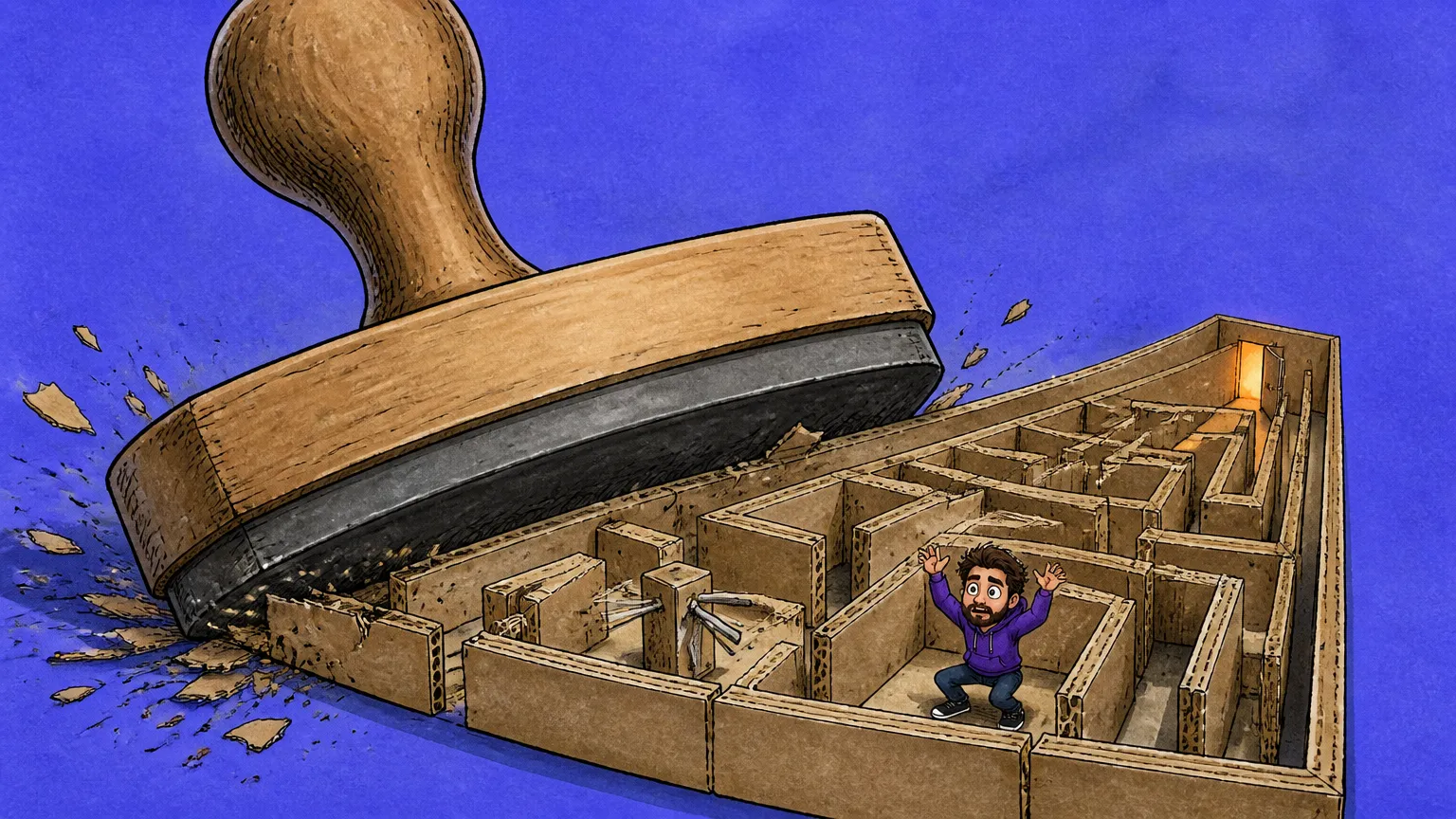
The story: The rule is adopted and takes effect October 1, 2026. Cancelling has to be at least as simple as signing up. Kilpatrick Townsend’s client alert tells national subscription businesses to assume they are covered. The trigger is having a meaningful share of subscribers in New York City, wherever you are incorporated.
The details:
- The penalty: civil penalties start at $525 per violation, on top of restitution to the customers you trapped. The Guardian reports the same figure per user subscription, so the unit is not settled.
- DCWP already warned the gyms: the agency sent subscription-trap notices to 187 gyms and health clubs earlier this year. That was before the rule was adopted.
- The federal rule died: the Eighth Circuit vacated the FTC’s click-to-cancel rule in July 2025. It was a procedural ruling, and the rule never took effect.
- The strictest layer sets your build: Colorado wants a one-step cancel link. Minnesota already bans unsolicited save offers, and California wants affirmative consent.
- The save offer is the open question: industry groups spent the comment period fighting to keep retention screens legal. The announcements do not settle whether a discount screen on the way out survives.
“If you can sign up with one click, you can cancel with one click.” Zohran Mamdani, Mayor of New York City
Why builders care: The retention funnel most indie SaaS copies from bigger companies now carries a price tag. If cancelling your product takes an email to support, you have until October to rebuild it.
IF YOU CAN’T BUY IT, BUILD IT
🕰️ A free browser clone of a EUR 8,000 kinetic clock ships 14 choreographies
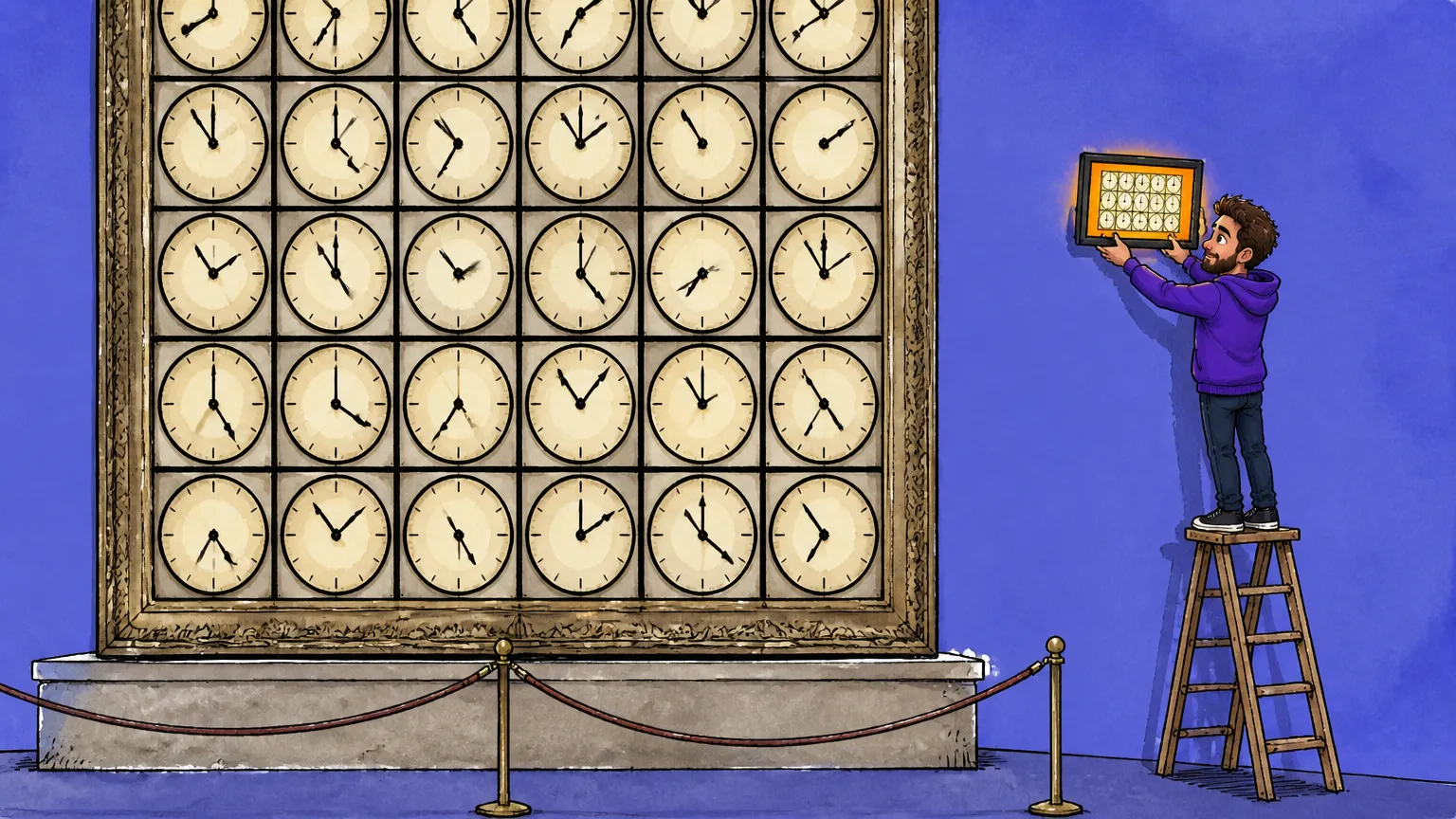
The story: twentyfourclocks rebuilds the ClockClock 24 in a browser, a wall of analog clocks that spells the time. The builder, posting as SYEOMANS on r/SideProject, says it is fully 3D in React and three.js. It’s free. The original is a limited-edition art object from Humans since 1982, hand assembled in Stockholm.
The details:
- The clone out-features the original: the browser version claims 14 choreographies. The physical clock has three modes of movement: minimal, medium or elaborate.
- The price tag is fuzzier than the post: the builder cites 4,999 with no currency symbol. The studio’s own store starts at EUR 8,000, and MoMA lists it at 106,200 kr.
- The hardware clone has a lawyer problem: an open-source replica ships its gerbers, firmware and bill of materials. It withholds the case files. Its author writes that he does not want a letter from Humans Since 1982’s lawyers.
- Atoms cost more than pixels: one physical clone needs 8 PCBs, 24 stepper motors and 16 driver chips. The browser clone needs a Vercel deploy.
Why builders care: When the incumbent’s moat is a physical object, the software homage is the version that ships. It can out-feature the original on the axis buyers watch.
The genre has history: a 2017 browser homage by Manuel Wieser ran on a Raspberry Pi. The GitHub hardware replica credits its animation design to him.
RUNWAY, BRONZE AGE EDITION
🌾 Three dry years in a row ended an empire that had survived five centuries
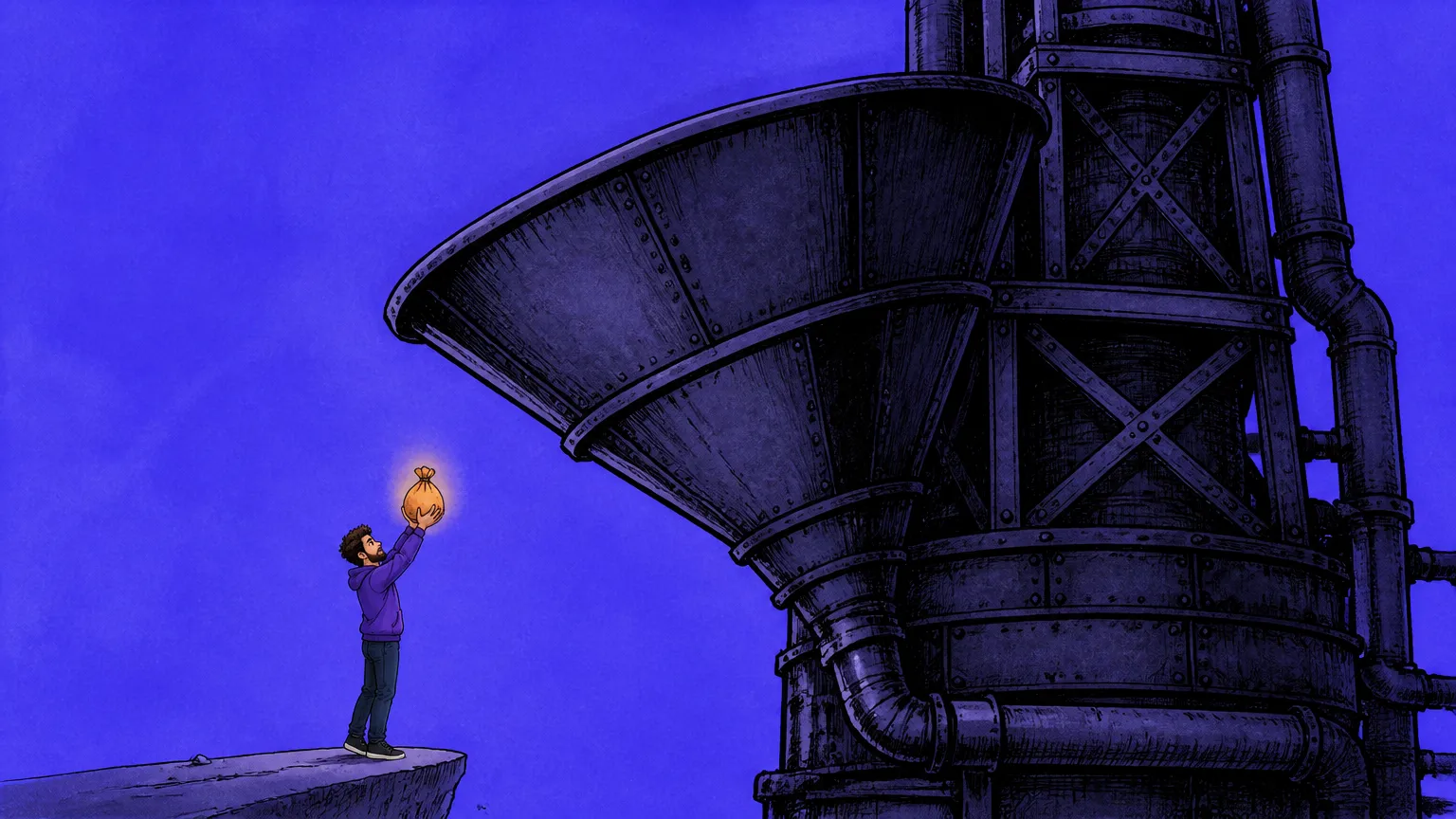
The story: Bret Devereaux’s explainer put the Late Bronze Age Collapse back on the front page. The sharper answer sits in a 2023 Nature paper. Manning et al. read juniper tree rings at Gordion in central Anatolia. They found three consecutive years, 1198 to 1196 BC, in the driest band of a 701-year record. It’s the only such run in the 135 years around the collapse.
The details:
- The buffer was the failure, not the shock: Mediterranean farming and storage was built to survive one bad harvest. Back-to-back harvest failures hit central Anatolia once or twice a century.
- The capital was never stormed: archaeology now says the royal administration emptied Hattusa and walked out. It burned later.
- The dependency graph killed the survivors: every army ran on bronze. Tin and copper never occur in the same place. When trade broke, Egypt and Mesopotamia contracted without ever being touched by the drought.
- The paper refuses its own headline: Manning et al. write that they lack the evidence to establish direct causation. The drought contributed to the collapse, they say. It did not solely cause it.
- Distance was protection: Çadır Höyük, about 70 km from the capital, adapted and carried on.
Why builders care: Every buffer you have is sized against a shock you already survived. The Hittites had survived all of theirs, and the one they never priced in is the one that landed.
Ship voice in your product without sounding like a robot. ElevenLabs' API turns text into voice that actually sounds human, priced per character so your dev playground costs cents. 30+ languages, streaming, low-latency. Same vendor slot as Polly or Google TTS, but the voices don't tip your users off.
We get a cut if you sign up. Only added for tools we use ourselves.
TRENDING TODAY
📡 QuadRF can spot drones and see WiFi through my wall - Jeff Geerling’s write-up sees WiFi through drywall. It pulled 492 points and only 181 comments, which is the Hacker News signature for “no notes”.
🛡️ An MCP server that lets AI agents request insurance quotes - An agency owner vibe-coded it in Claude Code. He says he’s not a developer. His reason is the story: his prospects now start by asking an AI what coverage to buy.
🏫 A tool that finds good schools nearby - The builder made it for himself, then left it free. He bought a house with it. He also rate-limits you, so his own API bill stays at zero.
FIRST DOLLAR
FIFTY BUCKS, NO FRIENDS INVOLVED
💵 A video-to-text app crossed $50 MRR, with no friends or family on the list
The builder’s first public share is a Stripe screenshot and a request for feedback. Every founder reading this remembers that exact screenshot.
LIFETIME DEAL, ZERO SIGNUP
📸 A screenshot API priced at $50 for life, with a free tier and no signup
Vxpix is betting that builders will pay once and never think about it again. The free tier skips the signup entirely, which is the part that gets tried.
STACK OF THE DAY
🧰 agentpeek
Persistent Claude Code sessions you can drive as a terminal or as a chat. It’s open source on GitHub, and it hit Show HN overnight with a single point on the board.
Not sponsored. We just feature tools builders would actually use.
BOOKMARKED TODAY
⚛️ Einstein’s relativity rules chemical bonds in heavy elements - Brown researchers say relativity governs how the heaviest elements bond. One for the tab you never close.
🔍 How the terrorist group Boko Haram uses frontier AI - A CASP report on AI in bad hands. It drew 162 comments against 192 points, the ratio of a story people argue about.
🔨 Good Tools Are Invisible - gingerbill’s argument: the tool you notice is the tool failing you. 380 points on Hacker News, and the title is the whole argument.
Forward this to a builder who ships. Subscribe to indiehacker.news.
Got a launch, a milestone, or some drama? Send it to daily@mail.indiehacker.news.
Work from any WiFi like it's your home network. NordVPN's Meshnet runs a free private mesh between your laptop, dev box, and home server. SSH from a cafe without exposing a port, the way you'd use Tailscale. The paid VPN on top lets you test geo-fenced Stripe checkouts or feature flags from any country.
We get a cut if you sign up. Only added for tools we use ourselves.
Curated by AI, built by a human.