John Jumper predicted 214 million protein structures, won the 2024 Nobel Prize in Chemistry, and spent nine years leading AlphaFold at Google DeepMind. On June 19 he posted on X that he’s leaving for Anthropic. One day earlier, Gemini co-lead Noam Shazeer walked out for OpenAI.
Google lost both in 48 hours. Anthropic already acquired drug-discovery startup Coefficient Bio for $400M in April and signed partnerships with the Allen Institute and HHMI. Jumper isn’t a moonshot bet. He’s the capstone.
In today’s indie hacker news:
- Nobel laureate John Jumper leaves Google DeepMind for Anthropic
- SoftBank exits Boston Dynamics at 7x, Hyundai takes full control
- Norway bans AI for every student under 13
- Java’s Project Valhalla lands 197,000 lines after 12 years
- Dan Abramov explains why ATProto has no instances
TOP STORIES
NOBEL DEFECTS
John Jumper leaves Google DeepMind for Anthropic after 9 years
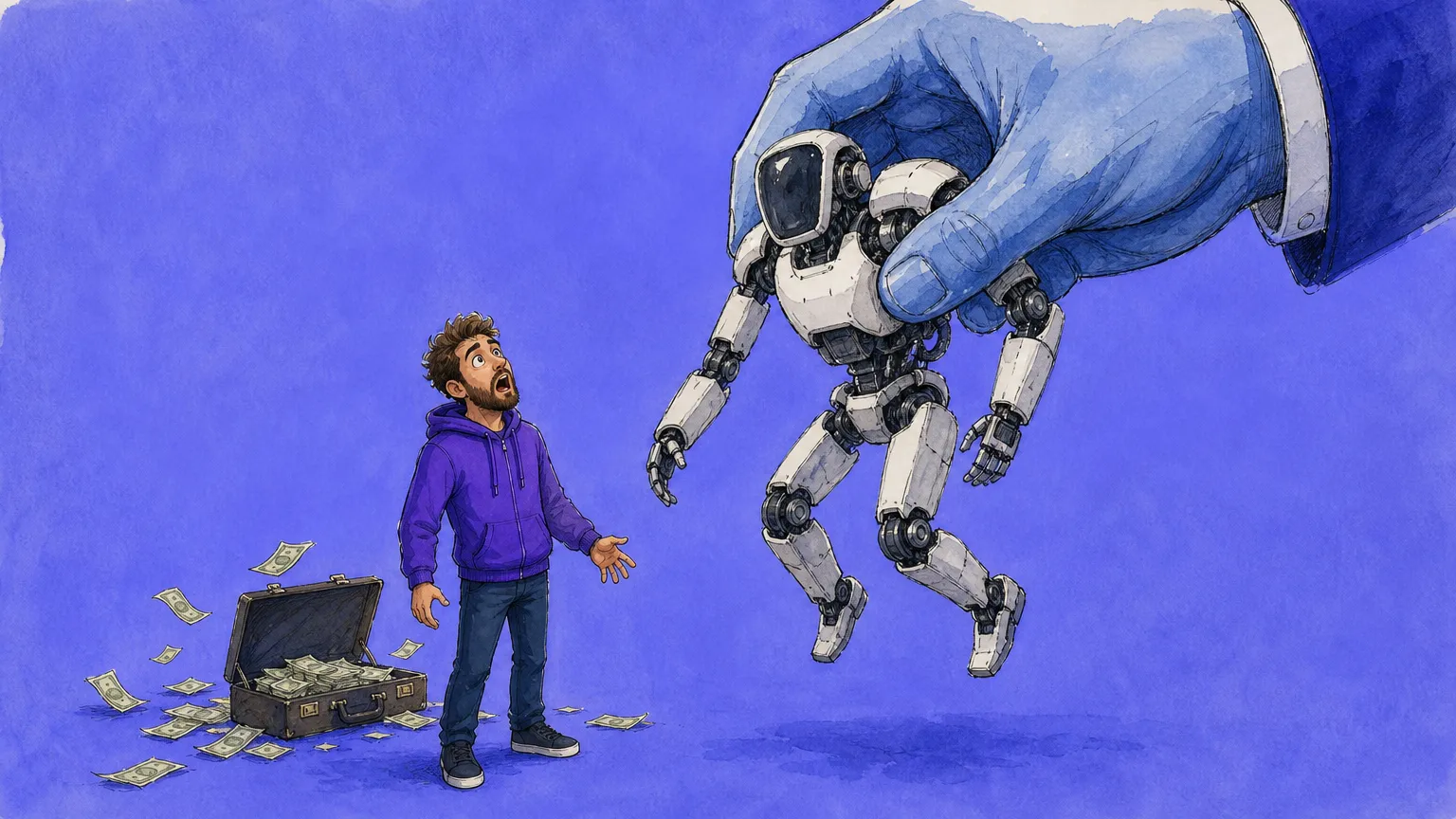
The story: John Jumper announced on X that he’s leaving Google DeepMind to join Anthropic, ending a tenure that began six months after his PhD at the University of Chicago. AlphaFold, the protein-structure model he led from day one, has been used by over 2 million scientists in 190 countries. Bloomberg and CNBC both confirmed the move.
The details:
- Jumper shared with Demis Hassabis the 2024 Nobel Prize in Chemistry for AlphaFold. He’s the youngest Chemistry laureate in over 70 years.
- His role and project focus at Anthropic are not yet disclosed. He plans to “recharge” before starting.
- Anthropic’s science push is already deep: $400M Coefficient Bio acquisition, Allen Institute and HHMI partnerships for Claude-powered multi-agent biology research, and a stated goal for “a meaningful percentage of all life science work” to run on Claude.
- Demis Hassabis responded publicly: “What we achieved with AlphaFold changed the world.”
- Noam Shazeer’s departure to OpenAI the previous day means Google lost the AlphaFold leader and the Gemini co-lead within a single news cycle.
Why builders care: Anthropic is hiring at the intersection of frontier AI and wet-lab biology. If you’re building biotech tooling, genomics pipelines, or drug-discovery automation on Claude, this signals the platform is investing harder in that vertical than any competitor. The talent war also confirms a pattern: the scientists who define frontier trajectories are choosing Anthropic and OpenAI over Google.
Ship voice in your product without sounding like a robot. ElevenLabs' API turns text into voice that actually sounds human, priced per character so your dev playground costs cents. 30+ languages, streaming, low-latency. Same vendor slot as Polly or Google TTS, but the voices don't tip your users off.
We get a cut if you sign up. Only added for tools we use ourselves.
SOFTBANK’S 7X EXIT
Hyundai takes full control of Boston Dynamics as SoftBank cashes out

The story: SoftBank is selling its remaining 9.65% stake in Boston Dynamics to Hyundai Motor Group for roughly $325M, making BD a wholly owned Hyundai subsidiary. The exit was triggered by a put option built into the 2021 deal that allowed SoftBank to sell if a U.S. IPO hadn’t happened by June 2026. It hadn’t. SoftBank originally bought BD from Google in 2017 for $165M, then sold 80% to Hyundai in 2021 for ~$880M. Total proceeds: roughly $1.2B on a $165M bet, a 7x return in nine years.
The details:
- The $325M price for 9.65% implies a ~$3.4B valuation for BD, 3x higher than the 2021 deal.
- BD’s electric Atlas debuted at CES 2026. All 2026 production units are already committed to Hyundai’s own factories and Google DeepMind.
- Hyundai plans 25,000+ Atlas robots across its vehicle manufacturing lines. A new factory near Savannah, Georgia targets 30,000 units per year.
- BD posted ~$110M revenue (30% YoY growth) but still runs a $385M net loss. Hyundai is reportedly preparing BD for a future U.S. IPO.
- Atlas specs: 56 degrees of freedom, 2.3m reach, 50kg lift, fully electric, self-charging. Estimated early production cost is $130K-$140K per unit, expected to fall to ~$30K after 50,000 cumulative units.
Why builders care: Full Hyundai ownership removes the governance friction that slowed BD’s commercial pivot. BD’s Orbit platform already exposes a REST API with webhooks that integrates with MES and WMS systems. The IPO roadmap signals BD intends to become a platform company, meaning SDK and developer tools investment is coming. If you build industrial automation, the Orbit API is the one to watch.
AI BAN UNDER 13
Norway bans generative AI for 445,000 students, first country to codify a tiered age policy

The story: Norwegian PM Jonas Gahr Store announced on June 19 a full generative AI ban for grades 1-7 (ages 6-13), effective when the school year starts in late August 2026. Ages 14-16 can use AI only under direct teacher supervision. Upper secondary students (17-19) are encouraged to use AI “appropriately.” Store’s line: “The most important thing in school is that our children learn to read, write and do mathematics.”
The details:
- ~445,000 students fall under the full ban, roughly 70% of Norway’s 635,000 primary and lower secondary pupils across 2,761 schools.
- Norway’s 2024 phone ban covered 96% of schools and produced results: bullying dropped 46% for girls, 43% for boys, and psych specialist visits fell 60% in a study of 400+ schools.
- The government also plans legislation to fund physical textbooks, reversing a 2016 tablet rollout that correlated with declining literacy scores.
- Special digital accessibility exemptions exist. Enforcement is delegated to individual schools.
- The UAE passed a similar under-13 AI ban in 2026 with 25 specific prohibitions.
Why builders care: EdTech products targeting K-7 in Norway face a hard regulatory wall starting August 2026. The tiered model (ban under 13, supervised 14-16, open 17+) mirrors the UAE and is likely the template EU regulators will cite when the AI Act’s education provisions take effect in August 2027. Any startup selling into Nordic or EU school systems now needs an age-gated compliance layer.
12 YEARS, ONE PR
Java’s Project Valhalla value types land in JDK 28 after 12 years of development

The story: JEP 401 (Value Classes and Objects) is integrating into OpenJDK mainline in early July 2026, targeting JDK 28 for a March 2027 release. The integration PR adds 197,000+ lines across 1,816 files. Project Valhalla began in 2014. Java creator James Gosling called the problem “six PhDs tied into a single knot.” Five prototype designs were built and discarded before the current one.
The details:
- Value classes eliminate object identity overhead. A simple
value class Point { final int x; final int y; }stores as a compact bit vector with no pointer indirection. - Memory gains are substantial: ~24 bytes per traditional object drops to ~8 bytes for value types, and arrays of value objects store contiguously, yielding 2-10x denser storage.
- Ships as preview only (requires
--enable-preview). Java Architect Brian Goetz calls exiting preview for the next LTS (JDK 29, September 2027) “optimistic.” - Existing wrapper classes (Integer, Long, Double) migrate to value class status. Code that synchronizes on Integer objects will now throw
IdentityException. - Specialized generics, null-restricted types, and 128-bit atomic encodings are all deferred to future JEPs.
Why builders care: If you run data-intensive Java workloads like financial tick data, ML feature pipelines, or large in-memory caches, value types cut heap allocation and GC pauses. Library authors (Spring, Hibernate, Jackson) need to audit code that relies on object identity, especially any synchronization on wrapper types. The practical move: annotate immutable data-carrier types as value class candidates and test against --enable-preview builds now.
NO INSTANCES, NO PROBLEM
Dan Abramov: “There are no instances in ATProto. The question is a category error.”
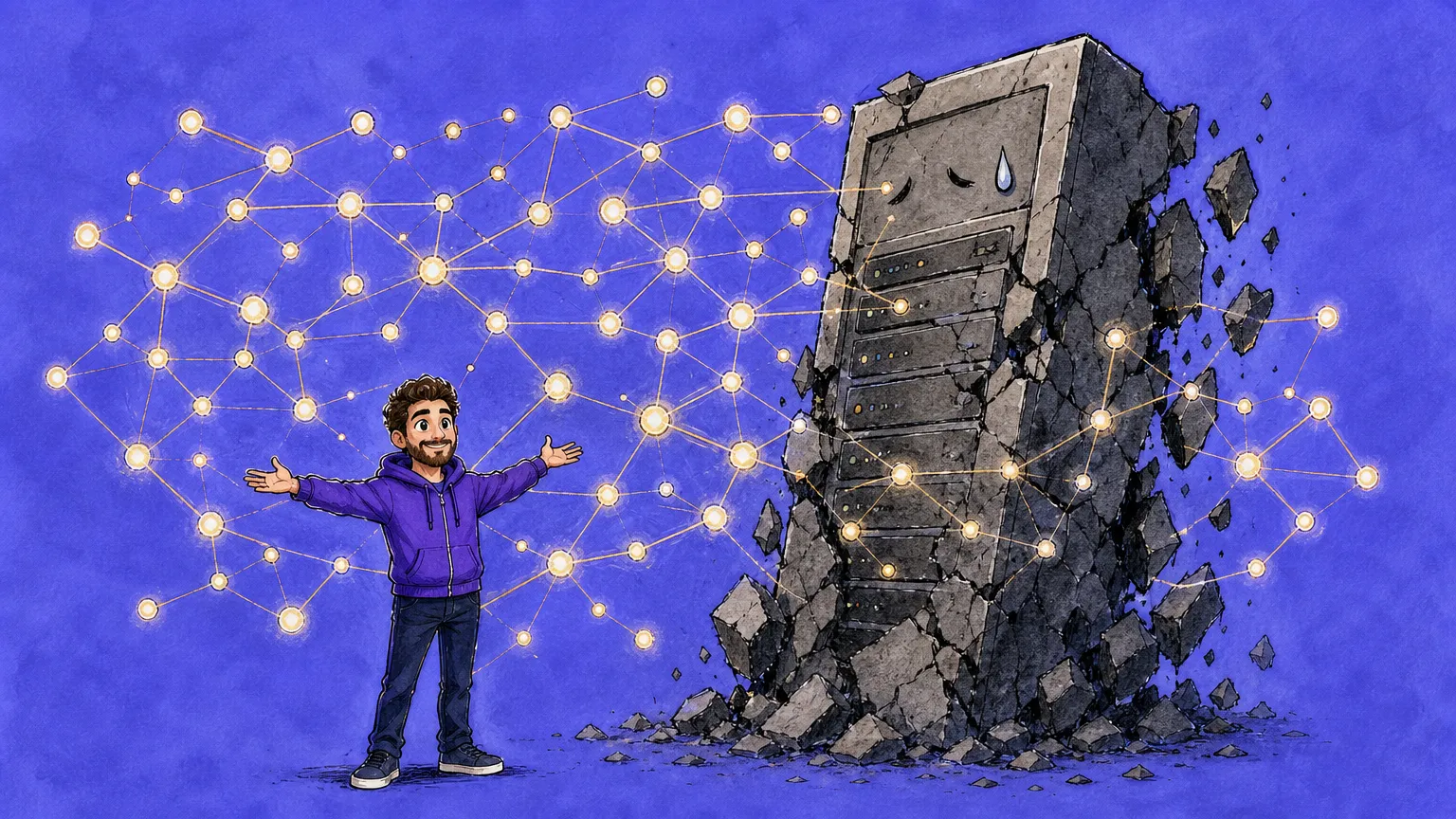
The story: Former React core team member Dan Abramov, now a frontend engineer at Bluesky, published a post on June 19 explaining why “where are the Bluesky instances?” is the wrong question. ATProto separates data hosting (Personal Data Servers) from applications (AppViews). Users own their data in a signed repository on a PDS. Apps aggregate it. “Coupling hosting and apps was the original sin,” he writes, “and the fix is simple.”
The details:
- ATProto’s stack has four layers: PDS (user data), Relay (aggregates PDS streams into a “firehose”), AppView (consumer-facing apps), and Lexicon (JSON Schema for record formats).
- Abramov’s analogy: “Like RSS, but for all kinds of stuff. That’s atproto.” If Bluesky disappeared, any developer could stand up a new AppView that shows the same data.
- Bluesky hit 43+ million registered users, 4.5M DAU, and 15M MAU. Over 1,000 weekly active third-party apps run on ATProto with 400,000+ monthly SDK downloads.
- Notable third-party ATProto apps already shipping: Smoke Signal (events), Frontpage (link aggregator), WhiteWind (blogging), Skylight Social (video).
- Core tension on the HN thread (367 pts, 203 comments): 90%+ of users are still on Bluesky’s own PDS. Decentralization remains largely theoretical.
Why builders care: ATProto lets you build a social app that taps into a 43M-user social graph without owning user data or competing for retention. You plug in at the feed generator, labeler, or full AppView level, each with different infra costs and monetization paths. Unlike Mastodon, you don’t have to become an instance admin to ship a competing experience.
TRENDING TODAY
🧠 AI memory shortage rattles developer teams - HBM now consumes 23% of all DRAM wafers, and DDR5 spot prices quadrupled since September 2025. Bloomberg called it historic. Samsung, SK Hynix, and Micron are all converting production lines to HBM at $60-$100 per module versus $5-$10 for commodity DDR5. NVIDIA is shipping no new consumer GPUs in 2026 for the first time in ~30 years. Enterprise GPU lead times are 30-52 weeks. The HN consensus: devs won’t optimize until employers force them.
🤖 AI agents go autonomous: BIOS flashing, virtual cards, self-hosted OSes - Three Show HN launches in 24 hours pushing agent boundaries. AgentCard (backed by Alchemy) issues Visa-powered virtual debit cards for AI agents with per-transaction limits and budget caps. Ratchet wraps a CH341A USB programmer in an MCP server so an agent can reflash your BIOS. AgentArk launches as a self-hosted agent OS. The “let the AI spend money” pattern went from thought experiment to shipping infrastructure in one week.
⚔️ Pentagon confirms Grok directed 2,000 strikes, xAI whistleblower fired - Pentagon Chief Digital/AI Officer Cameron Stanley filed a sworn court declaration stating the DoD used Grok to direct 2,000+ missile strikes against Iran in 96 hours. Separately, former xAI safety engineer Devin Kim filed suit alleging he was fired for raising Grok safety concerns including bioterrorism risks. The filing named SpaceX co-founder Jimmy Ba as the retaliator.
DRAMA
IS SOFTWARE DEAD
Burned-out engineer: “I don’t like managing agents. It makes me feel useless.”
An r/startups post argues AI saturation, declining app downloads, and the discomfort of “managing agents” are making software feel pointless. The community pushed back hard. A 30-year veteran: “The gap between posers and real engineers has never looked smaller or been larger in reality.” An optimist: “Most exciting time in the history of software.” The best counterpoint: HTML jockeys of the late ’90s were dismissed as fake devs and built billion-dollar companies.
Why builders care: If you’ve felt this week’s vibe-coding fatigue, you’re not alone. But every wave of tool democratization produces the same existential thread, and the builders who shipped through it came out ahead.
FIRST DOLLAR
THE $3.99 CONVERSION
First paying customer after 55 free users, launched 2 weeks ago
An anonymous r/SaaS builder launched two weeks ago, got 55 free users, and just converted one to $3.99/month. The customer found two bugs in the first hour, which is the most bullish signal you can get: someone cares enough to file issues. The product name isn’t disclosed, but the milestone is textbook first-dollar energy.
VIBECODED RPG AGENT BUILDER
First $300 from a side project: RPG character sheets for AI coding agents
Built with MoClaw + Claude Code over a few days, ~90 image assets from ChatGPT. Two sales at $150 each to existing business clients. The builder called them “pity purchases,” which is the most honest first-dollar post on Reddit this week. Build time: 3-4 hours per day over a couple of days.
STACK OF THE DAY
🛡️ Muninn - Eight open-source security scanners (gitleaks, semgrep, trivy, osv-scanner, checkov, zizmor, actionlint, poutine) orchestrated into a single GitHub Action. One uses: line in your workflow file. The differentiator: cross-scanner deduplication so a CVE flagged in both your lockfile and your container image shows up once, not twice. Outputs GitHub PR comments, SARIF uploads, and structured JSON. Free, open-source, 13 stars. Early but useful.
Not sponsored. We just feature tools builders would actually use.
BOOKMARKED TODAY
📝 Hey, n00b, we didn’t hire you to complete tasks - Kent Beck on why new engineers who focus on understanding systems outperform those who focus on closing tickets. 114 HN points. Required reading for anyone starting a new role.
⚖️ Court records should be free - The EFF’s deep dive on why PACER fees are unconstitutional. 281 HN points. Relevant if you’re building civic-tech or open-data tools.
🧠 How many of the 170K English words do you know? - Interactive vocabulary test running on GCP Cloud Run. 261 HN points, 375 comments. Fun Friday distraction with a clever implementation.
Work from any WiFi like it's your home network. NordVPN's Meshnet runs a free private mesh between your laptop, dev box, and home server. SSH from a cafe without exposing a port, the way you'd use Tailscale. The paid VPN on top lets you test geo-fenced Stripe checkouts or feature flags from any country.
We get a cut if you sign up. Only added for tools we use ourselves.
Curated by AI, built by a human.