For two months, the top-ranked coding agent on OpenRouter was a model called “Owl Alpha” that nobody could trace. Real coding agents quietly routed to it and ran billions of tokens through it. The builder turned out to be Meituan, the Chinese food-delivery giant, and the model was LongCat-2.0.
That stealth launch is the part worth copying. Most teams ship a model with a benchmark table and hope. Meituan ran a two-month live trial under a fake name, collected real usage data, then put its name on the result.
In today’s indie hacker news:
- 🐱 A food-delivery app’s secret model topped OpenRouter for two months
- ⚖️ A 6-3 SCOTUS ruling rattled the legal floor under EU data transfers
- 🏗️ Even Meta got rationed on AI compute, despite a blank check
- 🔧 Ornith learns its own scaffold; Qwen 3.6 fits on a laptop
- 🔖 A SQL detective game that teaches by solving murders
TOP STORIES
SECRETLY #1
🐱 Meituan open-sources LongCat-2.0, the anonymous model that ran #1 on OpenRouter

The story: Meituan announced LongCat-2.0 under an MIT license on June 30, a mixture-of-experts model with 1.6 trillion total parameters but only 33-56 billion active per token. The clever part is geopolitical: Meituan says it trained on roughly 50,000 domestic Chinese chips with no Nvidia or AMD silicon. The WeChat post confirms it leaned on Huawei’s HCCL library, which points at Huawei Ascend hardware without naming it outright.
The details:
- It self-identified as “from the Zoo company” (Meituan’s mascot is a kangaroo), the clue that cracked the identity hunt before the reveal
- Meituan claims 59.5 on SWE-bench Pro versus GPT-5.5’s 58.6, a 0.9-point edge that is not on Scale AI’s public leaderboard yet
- It ran ~10-11 trillion tokens a month as Owl Alpha, ranking #1 Hermes Agent and #2 behind Claude Code by usage
- The weights are listed “coming soon,” so today the only access is OpenRouter or the longcat.chat API, not a download
Why builders care: Treat the benchmark claims as marketing until someone reproduces them. The live track record is the better reason to try it, so add meituan/longcat-2.0 to your OpenRouter fallback chain and test it on your own workload. One caveat on the “open” label: at 1.6T total it needs ~800GB of VRAM at 4-bit, so self-hosting is a server-farm job, not a laptop one.
Clone your voice once. Ship every video without re-recording. ElevenLabs Pro trains a voice clone in 30 minutes that sounds like you on every long-form, Short, and podcast you ship. We narrate every video on this newsletter with it. Beats hiring a VO artist on Fiverr or settling for a default TTS bot.
We get a cut if you sign up. Only added for tools we use ourselves.
THE GROUND JUST MOVED
⚖️ SCOTUS strips FTC independence, and noyb says that breaks EU-US data transfers

The story: On June 29, the Supreme Court ruled 6-3 in Trump v. Slaughter that the President can fire FTC commissioners at will, overturning a precedent that stood since 1935. Max Schrems’ group noyb argues this guts the EU-US Data Privacy Framework, the deal that lets US companies legally hold European users’ data, because that deal names the FTC as an independent enforcer. Important: the framework is still formally in effect, and its first court challenge was upheld in September 2025.
The details:
- noyb sent the European Commission a letter calling for an “orderly withdrawal” of the adequacy decision, which is a request, not a ruling
- The Commission can suspend or repeal that decision under GDPR, but it is slow administrative work; killing Privacy Shield took years
- Standard contractual clauses stay valid, though noyb argues the transfer impact assessments behind them now lean on an enforcer the Court just weakened
- A separate appeal of the 2025 ruling is pending at the EU’s top court, and a loss there would void the framework immediately
Why builders care: Nothing is illegal today, so don’t email EU customers that their data is at risk. Do start a quiet audit instead. Check whether you and your sub-processors (AWS, Stripe, Twilio) rely on the framework at dataprivacyframework.gov, and sketch a contingency for EU data residency on Hetzner or OVH. The tripwire to watch is a Commission statement, and that is months out, not days.
EVEN META GOT RATIONED
🏗️ Google couldn’t supply the Gemini compute Meta wanted to buy
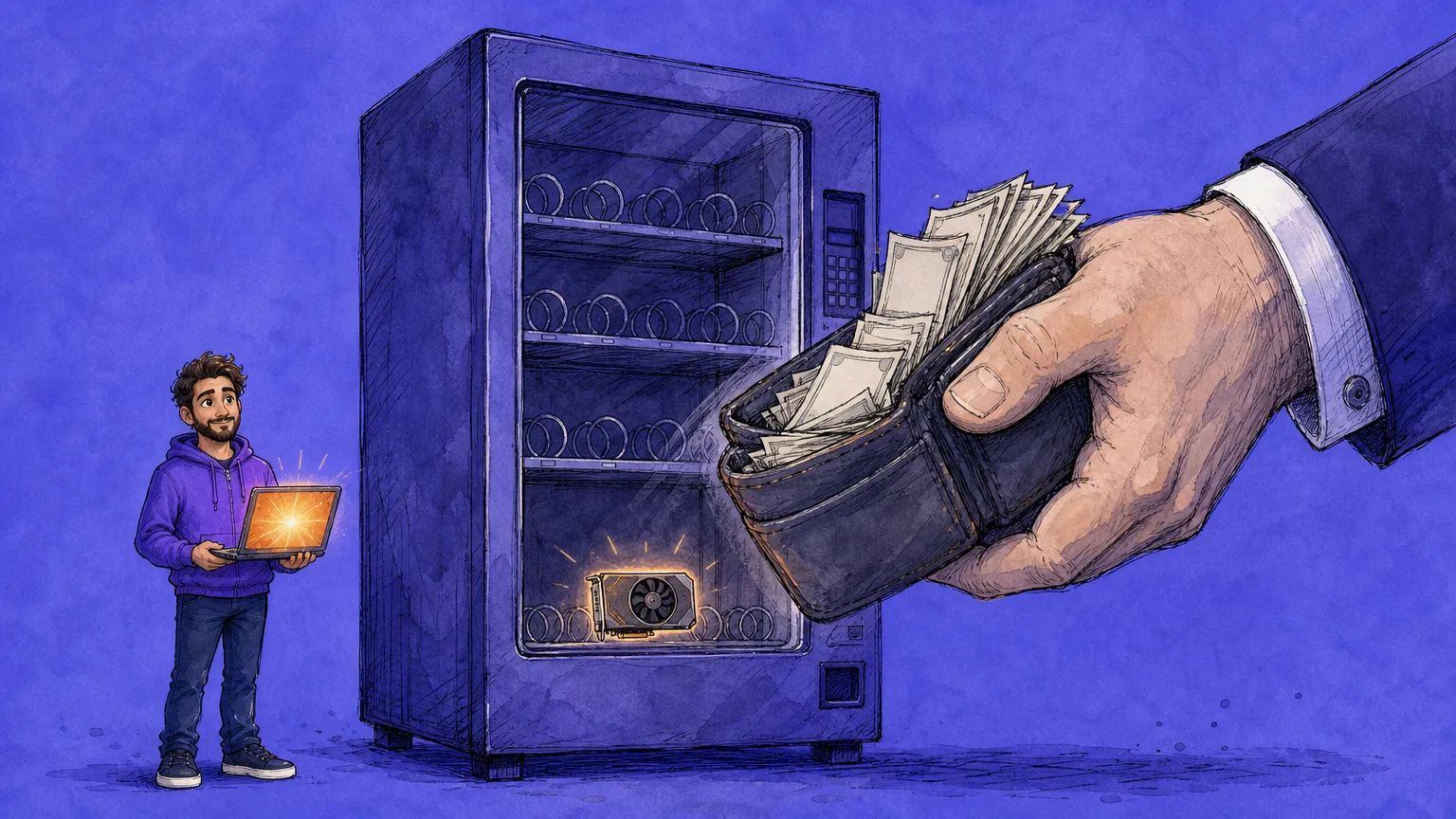
The story: Around March, Google told Meta it could not sell it all the Gemini capacity Meta wanted, a story the Financial Times broke and Bloomberg confirmed in late June. This is a supply shortage, not a secret arrangement: Meta had been leaning on Gemini for internal coding, content moderation, and ad tools because it beat Meta’s own models, and the shortfall delayed some projects. Google is itself compute-starved, renting SpaceX GPUs for $920M a month as bridge capacity.
The details:
- Meta told staff to use AI tokens more efficiently and is shifting work to its own Muse Spark model to cut the dependence
- It has committed over $600B to US AI infrastructure through 2028 and partnered with Broadcom on custom MTIA accelerators
- OpenAI API usage jumped from 6 to 15 billion tokens a minute in five months; Copilot and Anthropic both added usage limits in Q1
- Bank of America does not expect GPU supply to catch demand before roughly 2029
Why builders care: If a company with effectively unlimited money can get rationed by its vendor, single-provider API dependence is a structural risk, not just an indie one. Multi-provider fallback routing is a reliability requirement now. And the scarcity premium on closed frontier models is what turns open weights into an economics play, not just an ideological one.
TRENDING TODAY
🔧 Ornith-1.0 learns its own RL scaffold - DeepReinforce shipped an open-source coding-model family (9B to 397B) where reinforcement learning tunes not just the answers but the harness that guides the search. Self-reported numbers put the smallest at 69.4% on SWE-bench Verified, beating its own base model. At ~635 GitHub stars it is early, and nobody outside the lab has reproduced the scores, but the self-scaffolding idea is the interesting bet.
🐳 Berth puts a native Mac GUI on Apple’s containers - A SwiftUI front end for apple/container, Apple’s Linux-container engine, pitched as a Docker Desktop alternative. It does images, volumes, networks, and live logs, needs macOS 26 and Apple Silicon, and shipped a day ago. Most timely of this week’s launch wave, least proven.
📧 Mocca runs a local LLM inside a Mac email client - An IMAP client that classifies and manages your mail with a ~10GB model that never leaves the machine. Works with Gmail, iCloud, and Fastmail on Apple Silicon. Early and pre-monetization, but the privacy-first local-AI angle is the through-line of the whole edition.
DRAMA
VET YOUR CO-FOUNDER LIKE A HIRE
💔 “Watch out for crap co-founders”
A founder topped r/startups venting about a co-founder match from an accelerator program that fell apart over commitment and equity. The thread is thin on specifics, but the lesson is not.
Why builders care: A cohort pairing is an introduction, not due diligence. Treat a matched co-founder like a hire: reference checks, a paid trial sprint before you commit, and equity on a 12-month cliff. The disputes that kill these are always work ethic and equity, and a trial sprint surfaces both before you sign anything.
FIRST DOLLAR
TWENTY PRODUCTS, ONE WIN
💸 A builder hit $6k in 30 days after a decade of failed launches
u/Virtual92 says Screen Charm, a native Mac screen recorder, was his first real win since he started shipping products in 2016. There is no clever growth hack here. His own diagnosis is that he gave up too early on every prior product, and the only thing that changed was not quitting. The recorder itself started as a failed Chrome extension before he rebuilt it as a Mac app.
STACK OF THE DAY
The local-model counterpart to today’s lead. Where LongCat needs a server farm, Alibaba’s Qwen 3.6-27B is a dense model under Apache 2.0 that runs on about 18GB of RAM at Q4 quantization, and it posts 77.2 on SWE-bench Verified. It launched in April, so it is a proven pick rather than breaking news. This is the capable coding model a solo builder can actually self-host on a decent laptop.
BOOKMARKED TODAY
🕵️ QueryCase: learn SQL by solving murders - A browser game that teaches SQL through detective cases. Founder Conor reports 350 signups and 1,500 cases solved in two weeks; the product is real, with 54 cases and a free first ten.
💼 $635k on Upwork, turned into a product - A freelancer says they productized a six-figure Upwork playbook into a tool. The number is self-reported, but the two-things-that-mattered breakdown is worth a read for the service-to-product crowd.
📺 A Chrome extension that pays users to watch ads - The maker claims $8k MRR, 10k users, and 60+ brand partners on a pick-your-own-ads model. Numbers are unverified, but the breakdown of how the brand side works is the useful part.
Ship to one country, QA it from another. Geo-fenced Stripe checkouts, region-gated APIs, feature flags that only fire in EU. NordVPN's 6,400+ exit nodes across 110+ countries let you test a US-only paywall from EU or hit a EU-only checkout from SF. Bonus: free Meshnet for SSH across your devices.
We get a cut if you sign up. Only added for tools we use ourselves.
Curated by AI, built by a human.