New York’s mayor looked at a real photo of Lionel Messi and Lamine Yamal and was sure it was AI. He was wrong, which is exactly why he is now worried. Zohran Mamdani wants landlords to label every AI-altered image in a rental listing, video included.
This is not his first move on renting. In June the city froze rents on about a million stabilized apartments. The same agency that killed tenant-paid broker fees this year already polices this market. The AI clause bolts onto power the city already holds, which makes it worth watching.
In today’s indie hacker news:
- 📷 NYC moves to make landlords label AI listing photos
- 🕳️ A ray-traced black hole grows until you rest
- 🧮 GPT-5.6 shut a 1996 math gap in 148 minutes
- 💸 Posty’s first payment came from the room, not a launch
- 📉 Four products shipped solo, every one earned zero
TOP STORIES
📷 PICS OR IT DIDN’T HAPPEN

NYC moves to make landlords disclose the AI in their rental photos.
The story: On July 16 Mamdani released the Rental Ripoff Report, a 23-plank package aimed at deceptive landlords. One plank targets AI in listings. Brokers and owners would have to disclose when a photo or video was touched up with generative tools. The city’s own release files it under a fairer market. PetaPixel flagged that the scope covers moving video, not only stills.
The details:
- Enforcement lands with the Department of Consumer and Worker Protection, which still has to write the actual rules.
- The report drew on more than 2,400 tenants testifying across five borough hearings between February and April.
- The city says it will work with listing platforms including StreetEasy and Zillow to police false ads.
- Nothing is enforceable yet, and the sources note no penalties for skipping the disclosure are spelled out.
Why builders care: This is the shape AI-image rules take first. It is disclosure at the point a customer pays, run by a consumer agency, not a federal ban. If you ship virtual staging or AI product shots, treat capture-time provenance as a coming requirement. The sources say detection and watermarks already miss. Expect the same move anywhere generated media meets a buyer, from marketplace listings to dating profiles.
🕳️ GO TOUCH GRASS, SAYS THE VOID

A ray-traced black hole grows on your screen until you take a break.
The story: Two builders shipped the same gloriously petty idea within weeks of each other. A macOS app at blackholemac.space came out on r/SideProject, built by mynameisjack63. It grows a black hole across your screen the longer you skip breaks. It warps everything with gravitational lensing until you rest. The one that went viral is the open-source Ghostty shader from @s13k_. It does the same in your terminal (repo here) and pulled roughly 6.8 million views on the launch post.
The details:
- The hole is not a sprite or a video. The shader ray-traces real photon paths through a black hole’s gravity. The shadow, the glowing Einstein ring, and the accretion disk all fall out of the math.
- The repo is MIT licensed and sits at about 1,500 stars and 119 forks across just 6 commits.
- The default mode ignores the clock. It sizes the hole to how full Claude Code’s context window is. A fresh session is a dot in the corner. A full one eats half your screen.
- It smuggles the token count to the shader through the terminal cursor color. Every split window gets its own hole. Running /compact snaps it back to the corner seed.
- One caveat: on stock Ghostty through version 1.3 the wall-clock timer never advances. So the pomodoro mode does not work yet, only the typing detector and the token gauge.
Why builders care: Break reminders are the most commoditized side project there is. Most die because they turn into wallpaper within days. This one broke out on spectacle plus one smart choice. It grows on a signal AI coders already watch all day, the context window, not a timer they ignore. Pick a growth trigger your users already stare at, and a novelty screenshot becomes a tool they keep.
🧮 TEN PAGES BEAT THIRTY YEARS
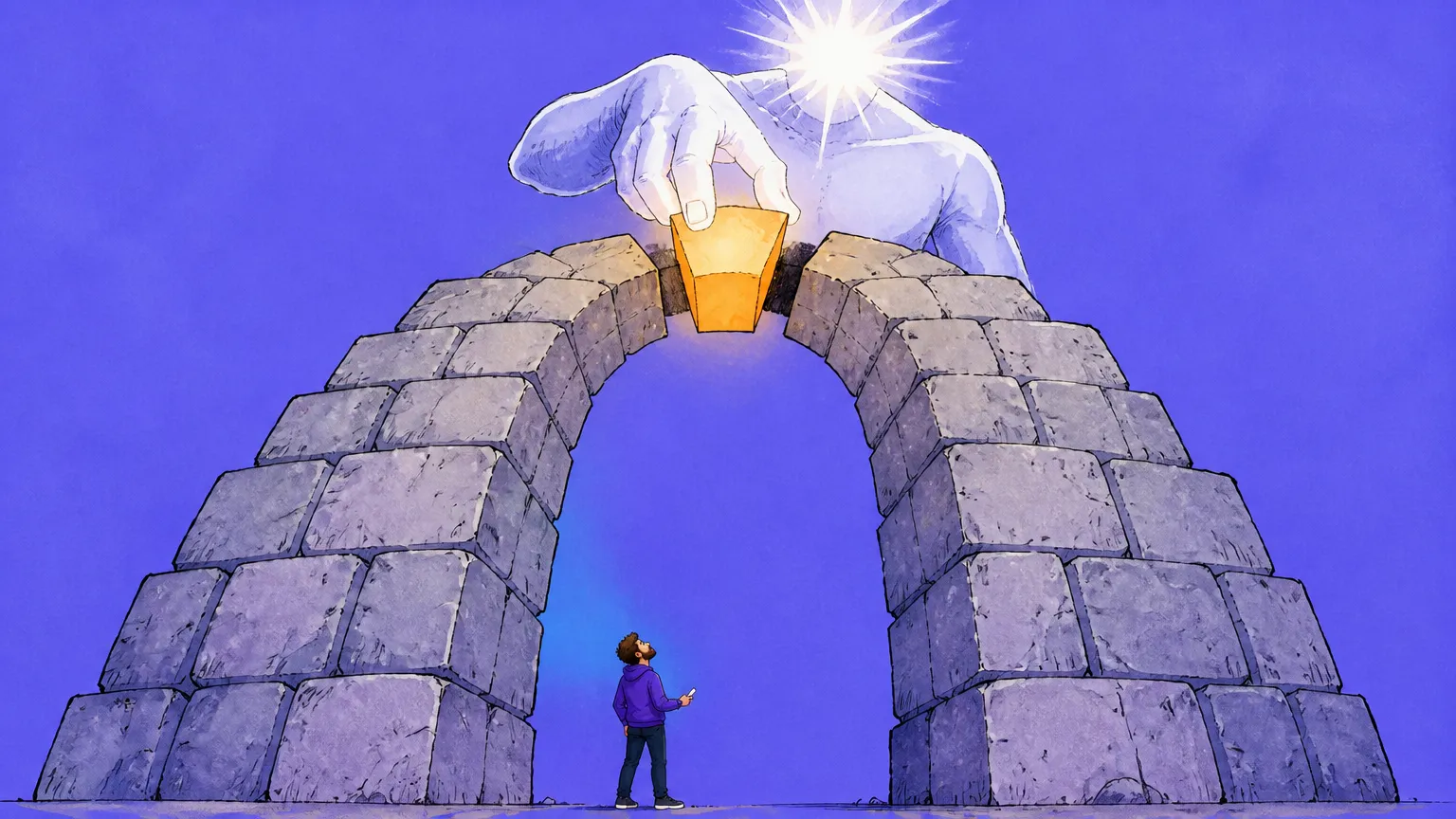
A solo Berkeley professor got GPT-5.6 to close a math gap open since 1996.
The story: Phillip Kerger is a teaching professor in operations research at UC Berkeley. He handed GPT-5.6 a prompt about ten pages long and let it run. After 148 minutes it produced the main argument for a lower bound. That bound closed a gap in derivative-free convex optimization open since 1996. Then he did the part that matters. He formalized the whole proof in Lean before he let himself believe it.
The details:
- A 1996 algorithm showed the problem needs on the order of d-squared function calls. The best matching lower bound had been stuck at order d ever since. GPT-5.6 proved the near-quadratic floor that finally closes it.
- Kerger built the prompt off OpenAI’s Cycle Double Cover proof method and had the model help write it. Earlier marathon sessions with GPT-5.4 and GPT-5.5 had gone nowhere.
- He ran GPT-5.6 Sol Pro, the top tier in the web app, not the Codex Ultra tier above it.
- A skeptic on the thread argued that “one session” undersells a year of on-and-off work plus an AI-written prompt. The result still cleared over 500 points on Hacker News.
Why builders care: The edge here was not just the model. It was the prompt plus a verifier. Kerger fed it the prior work and a strict spec of what would not count. Then he used Lean to trust an answer he could not check by hand. That pattern is a reusable prompt method wired to an automated check. It is the same one already resetting what a proof or a weekend app is worth.
💸 THE GROUP CHAT PAID FIRST

Posty took its first payment two days after launch, from the room it was built in.
The story: A builder posting as Jiro_Custom_Garage told r/SaaS that Posty took its first payment two days after launch. They describe it as Claude Code for X growth. The money did not come from the launch. Posty started as a tool the builder made only for themselves. Then a few YC founders and investors nearby asked to use it. One of them became the first paying customer.
The details:
- The first payment landed the same day as the r/SaaS post, two days after launch.
- Asked about working the warm YC network, the builder called it underrated. But results take weeks, so the case study is “still cooking.”
- First-dollar timelines swing wildly. In the same genre, one founder took ten months to reach a first $20 sale. He then grew it to $30,000 within a year of that customer.
- Another builder’s Product Hunt launch drew two upvotes and no sales. His first customer came through a directory he had submitted to in an hour and forgotten.
Why builders care: The first dollar usually comes from the room you are already in, not a cold launch. A tool you built for yourself, used by the people around you, has its first buyers baked in. So the earliest question is less about how you launch and more about who is already watching you work.
📉 BUILT IT, THEY DIDN’T COME
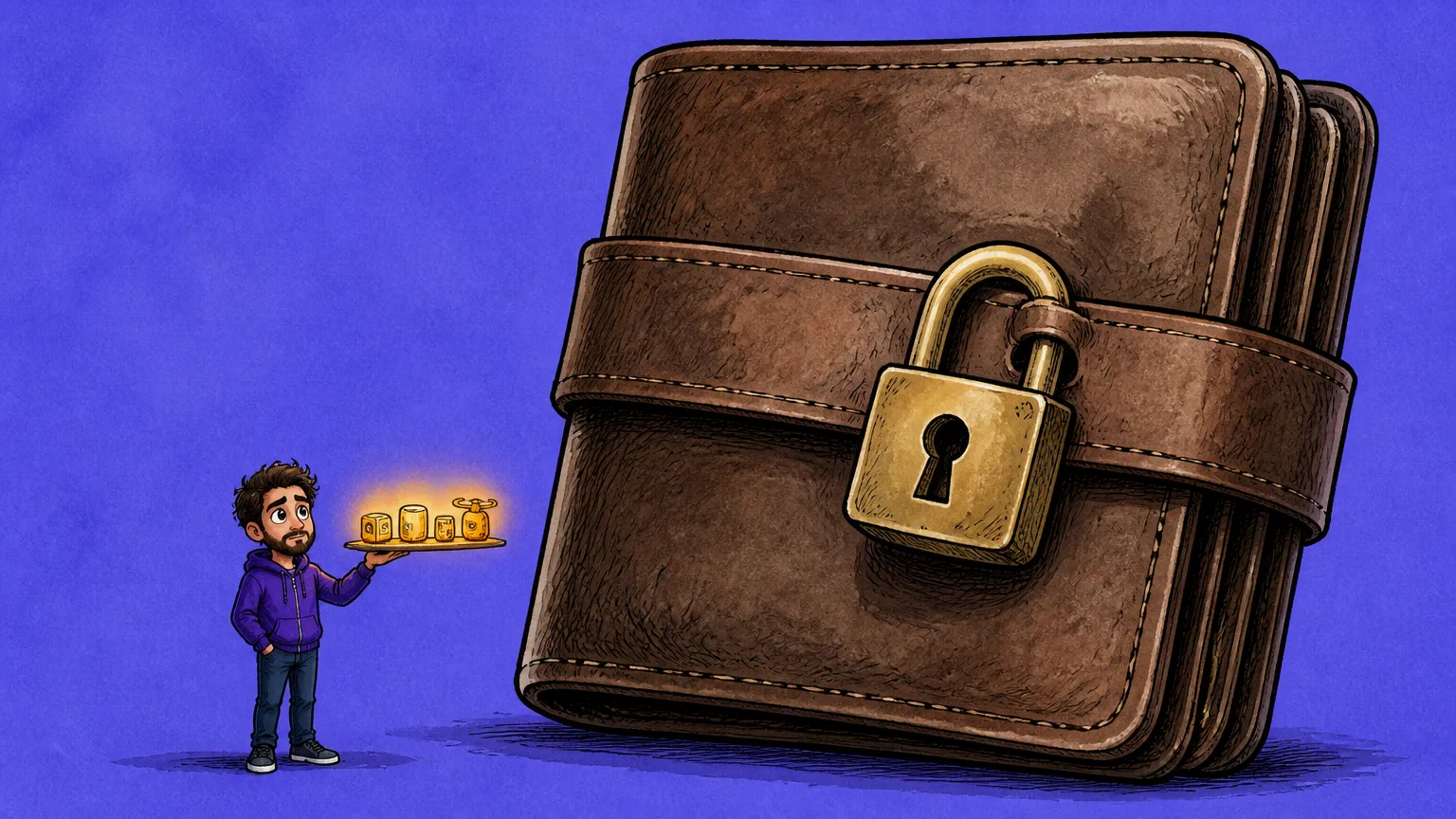
Four products shipped solo, all working, all earning nothing.
The story: Advanced_Form3520 opened a thread on r/SaaS that a lot of builders felt in their teeth. Four products shipped solo, every one working, every one earning exactly $0. Their diagnosis was blunt. Building was never the problem. The killer was pouring months into something, launching, then learning nobody would pay. The replies turned into a validation clinic.
The details:
- The top-voted fix was to sell before you build. Put up a rough page. DM ten to fifteen people who clearly have the problem. Get a yes to a scrappy manual version before you write code.
- One commenter mocks up a fake buy button first. A recipe-app test drew twelve clicks and zero paid signups. It died in an afternoon instead of three months.
- Several people landed on a sharper reframe. Four products at $0 is a distribution problem, not a demand one. The pain might be real; reaching the people who feel it is the actual gap.
- Paul Graham made the same case in 2012. The most common startup mistake is solving a problem nobody has. His fix: try to sell it before you build it.
Why builders care: If your last few launches earned nothing, the reflex is to blame the idea. The thread’s better question is whether anyone could even reach the buyer. Pull a real commitment, money or a booked call, before you write code. Price “I would totally use that” at zero.
TRENDING TODAY
- 🎥 After months of work, someone paid me $9 - A solo founder rebuilt an AI video engine three times and sank about $500 in API and server costs. Then a stranger picked the slowest render and paid $9. The math is savage and the milestone still counts.
- 💍 Wedvite crossed its first $400 - It turns the WhatsApp wedding-invite PDF into one interactive link with RSVP, maps, music, and guest messages. Wedding tech is seasonal and crowded, but killing the ugly PDF is a clear wedge.
- 🚀 This week’s r/SideProject show-and-tell is live - It kicked off with Eyondo, an AI tool for spinning up image and video ads in minutes. These threads are a free distribution channel most builders scroll right past.
DRAMA
🚫 SPAM OR STARVE
Find your first testers, or get banned for trying.
The story: A builder posting as Federal-Cricket558 asked r/SaaS a familiar question. He needs three to eight honest alpha testers for a reselling tool. He cannot recruit them without getting banned. A week of joining relevant Discord communities turned up nothing but strict rules against DMing members and self-promotion. Even asking the owners for permission stalled out. It is the community’s oldest standoff: makers versus the mods who keep the makers out.
Why builders care: The bind is real, but the framing is the trap. If the only way you can reach users is a move the room bans on sight, rethink the plan. That is spam wearing a trench coat. The builders who get testers give value in the room first, then ask second.
STACK OF THE DAY
🔧 Tangled
Tangled is a git forge built on the AT Protocol, the decentralized backbone Bluesky runs on. Your repositories ride an identity you own instead of a platform you rent. It jumped into view this week when the Gleam language mirrored its entire source there. That move pulled 220 points and 139 comments on Hacker News. It is still early and free. A genuine option if you have ever worried about one company owning every repo you have.
Not sponsored. We just feature tools builders would actually use.
BOOKMARKED TODAY
- 🏗️ If You Build It, They Will Come - Ben Landau-Taylor’s essay hit 316 points and 116 comments. Worth reading right next to today’s four-products-at-zero thread.
- 🖥️ Setting up your spare Mac for Claude Code to control - A step-by-step guide to handing Claude Code the keys to a spare Mac. Now the agent can click around a real machine. 195 points and 137 comments, a peek at where agent workflows head next.
- 💵 Got my first paying customer 10 days after launch - Rankpine (SEO articles on autopilot) landed its first customer ten days in. It came through one of its own articles ranking on Google. Proof the channel still works, closed using the product on itself.
That’s the board for today. Go build something.
Stop trusting random coffee-shop WiFi with your auth tokens. Public WiFi is a free packet sniffer for anyone in earshot of your laptop. NordVPN encrypts the tunnel so a logged-in Vercel session, a GitHub PAT, or a Stripe dashboard tab stays yours. Works on the same 6,400+ exit nodes you'd use for geo-testing.
We get a cut if you sign up. Only added for tools we use ourselves.
Curated by AI, built by a human.