A customer charged back two orders from the same shop, then emailed the owner to gloat about it. One shipment even had tracked DHL proof of delivery, and the bank reversed it anyway. So the merchant asked Stripe to flag the guy. Stripe’s written answer: it won’t use that as a signal against him anywhere else on the network.
That’s not a bug in Stripe’s fraud tooling. It’s a design choice. The platform optimizes for payments clearing across the whole network, which means every seller fights a known repeat abuser from a cold start.
In today’s indie hacker news:
- 💸 Stripe tells a merchant it won’t flag a fraudster who bragged
- 📦 Drew Houston hands Dropbox to an 18-month hire after 19 years
- 🏗️ A 19-year-old builds the anti-LinkedIn $44.5M couldn’t
- 🚩 Cloudflare clones LaunchDarkly right after OpenAI buys Statsig
- 📉 r/indiehackers admits the build was the easy part
TOP STORIES
THE HOUSE ALWAYS RESETS
💸 Stripe tells a merchant it won’t flag a fraudster who emailed to gloat about it
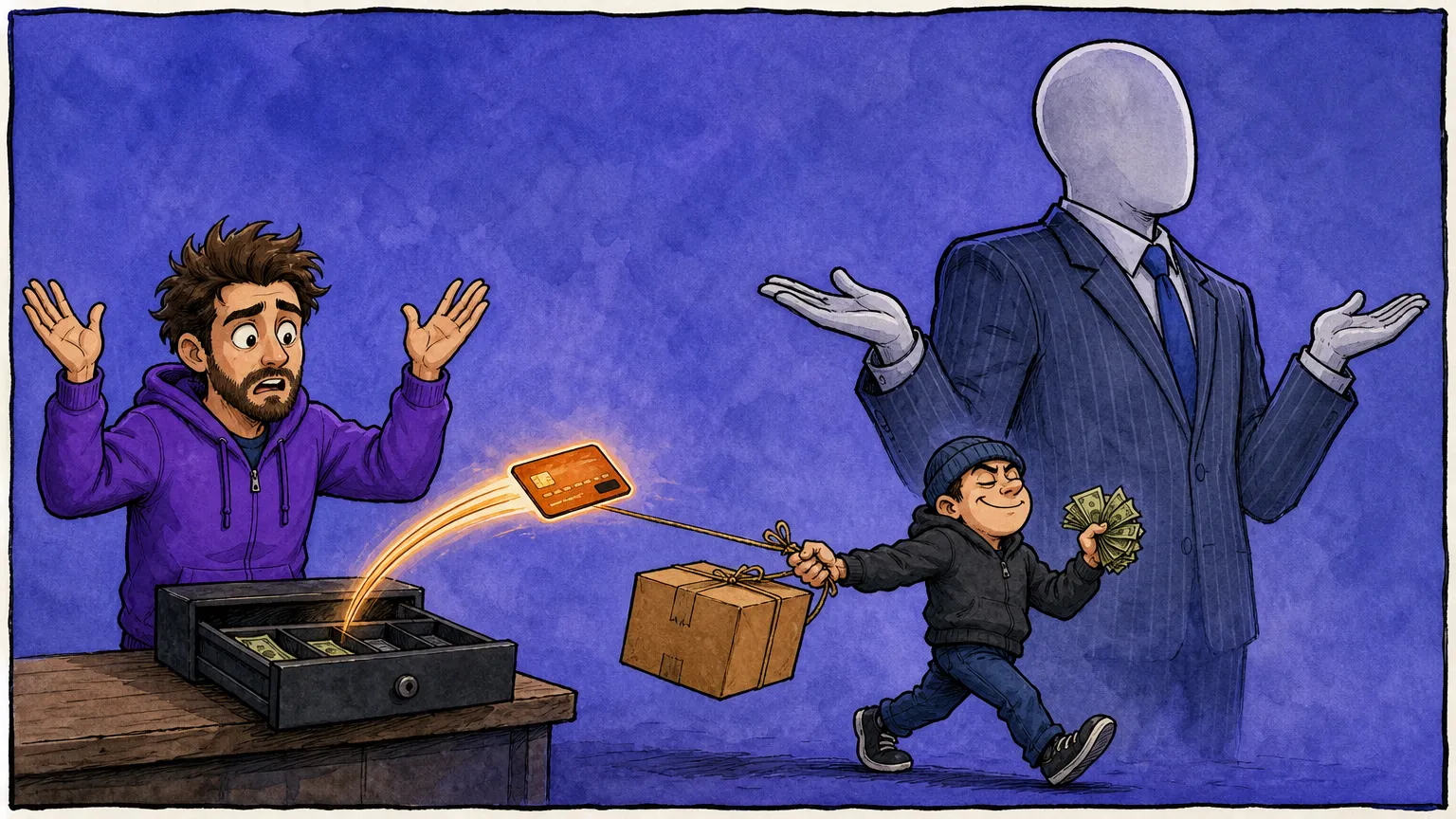
The story: The buyer ran it twice on Yoav Aner (handle gingerlime). He won the first dispute by claiming the bank had bundled the charge with fraudulent ones, then came straight back days later, ordered again on untracked shipping, and disputed that too. By the time Aner had written proof he was dealing with a serial abuser, he asked Stripe to do something with it. The reply: Stripe does not turn one merchant’s post-dispute evidence into a fraud signal, and it won’t act against the card or email anywhere else, because that data flows to the issuing bank, never back into Stripe’s own network. Radar rules, its only suggested fix, guard your account and stop at its border. The HN thread hit ~170 points and 100-plus comments in hours.
The details:
- Stripe takes a $15 dispute fee on every chargeback no matter who wins. Since June 17, 2025 it adds a second $15 “dispute countered fee” the moment you fight back, refunded only if you win, so contesting and losing costs $30 on top of the reversed sale.
- Its “Smart Disputes” AI waives that counter fee but keeps 30% of anything it recovers for you.
- Manual dispute responses through Stripe’s admin win under 20% of the time, per third-party chargeback services, while Mastercard projects global chargebacks climbing to 324M a year by 2028.
- One commenter who’d worked at three companies estimated 90% of all chargebacks are friendly fraud, not stolen cards.
- The contrarian read on HN: Stripe’s support likely gave a legally hedged non-answer to close the ticket, and the issuing bank is the real decision-maker either way.
Why builders care: Since no platform-wide signal is coming to save you, the only winning move is making disputes indefensible before they land. Require tracked shipping on physical goods, log IPs and usage timestamps for digital ones, and do the math before you contest: weigh the counter fee against the order value, because a loss just adds $30 in fees to the sale you already lost.
Ship to one country, QA it from another. Geo-fenced Stripe checkouts, region-gated APIs, feature flags that only fire in the EU. NordVPN's 6,400+ exit nodes across 110+ countries let you hit a US-only paywall from Europe or a EU-only checkout from SF. Bonus: free Meshnet for SSH across your laptop, dev box, and home server, the way you'd use Tailscale.
We get a cut if you sign up. Only added for tools we use ourselves.
THE FOUNDER HANDS OVER THE KEYS
📦 Drew Houston steps down at Dropbox after 19 years, hands it to a hire from 18 months ago

The story: Houston announced on May 26 he’s leaving the CEO seat he’s held since founding Dropbox in 2007, moving to executive chairman. His pick to replace him is Ashraf Alkarmi, who joined in November 2024 to run Dropbox Core and was previously CPO at Vimeo and a GM at Amazon. Alkarmi becomes co-CEO now and sole CEO after a transition. Houston, who built Dropbox at 24 out of the YC Summer 2007 batch and took it public in 2018 as the first YC company to IPO, says he’s not retiring: his next chapter is “entrepreneurial and AI-focused.” On Hacker News the reaction split between nostalgia for a product that just worked and doubt that anything can save standalone storage.
The details:
- Dropbox has 700M registered users but only ~18M paying, a 2.6% conversion rate that’s been slipping for several quarters straight.
- Q1 revenue was $629.5M, up a flat 0.8% year over year, on $2.56B total ARR; the business is profitable at 40% margins but barely growing.
- Market cap sits near $6.18B, down ~31% on the year and roughly half its 2018 peak, with $1.3B cash on hand.
- Two layoff rounds preceded the handoff: ~16% of staff in April 2023 citing “the era of AI,” then ~20% in October 2024 citing an “overly complex” org.
- The bet he’s freeing himself to make room for is Dash, an AI search tool that indexes across all your cloud apps, going up against Glean and Microsoft Copilot.
Why builders care: This is the full YC-to-IPO founder arc closing on a deliberate, non-crisis note, and it models the choice every mature SaaS founder eventually faces. Run a profitable slow-grower forever, or spend the war chest on a directional AI bet. Houston is choosing the bet, just not inside the company he built.
THE ANTI-LINKEDIN, ATTEMPT #100
🏗️ A 19-year-old launches Strivle, an anti-LinkedIn that ranks founders by what they ship

The story: A solo founder who says he’s 19 and building from Sweden launched Strivle and posted it across r/SaaS and r/SideProject two days later. His pitch is a network where status comes from shipping and revenue, not follower count. The headline mechanic: every post starts in front of 100 random people and scales to 1,000 then 10,000 purely on engagement, with no paid boost. He opened the post by calling it “the dumbest possible thing to build,” and his anti-gaming argument is sharp: with a Stripe-verified revenue leaderboard, faking your way to the top means building a real business with paying customers, “at which point the gaming is just running a real company.” Self-reported traction is 100-plus users in 24 hours, 200 in 48.
The details:
- The viral framing nails the pain: “You ship something real, post it on X, get 50 impressions. Some guy with a blue check posts ‘agree?’ with a Canva quote and hits 200k views.”
- The live landing page is narrower than the pitch. It shows a gamified weekly leaderboard (ships, co-working hours, milestones) that resets Mondays, with no visible Stripe verification or cascading algorithm yet.
- Polywork is the cautionary tale: it raised $44.5M selling almost this exact “modern LinkedIn” dream and shut down January 31, 2025.
- A real tailwind: X is killing Communities on May 30 (0.4% of users, 80% of spam reports), displacing exactly the founder crowd Strivle wants.
- The top skeptic comment goes straight at the moat: “Your algorithm will be gamed as soon as you get the audience worth gaming for. Then you end up doing what LinkedIn or Twitter does.”
Why builders care: LinkedIn’s moat was never its features, it’s that recruiters live there, which is why every anti-LinkedIn dies on network effects rather than design. Strivle’s only real wedge is structural, and 200 signups off launch posts is buzz, not fit. The category killer here is day-30 retention, a problem no clever ranking algorithm has ever solved.
CLONE THE INCUMBENT, GIVE IT AWAY
🚩 Cloudflare’s Flagship clones LaunchDarkly at the edge, days after OpenAI buys Statsig for $1.1B
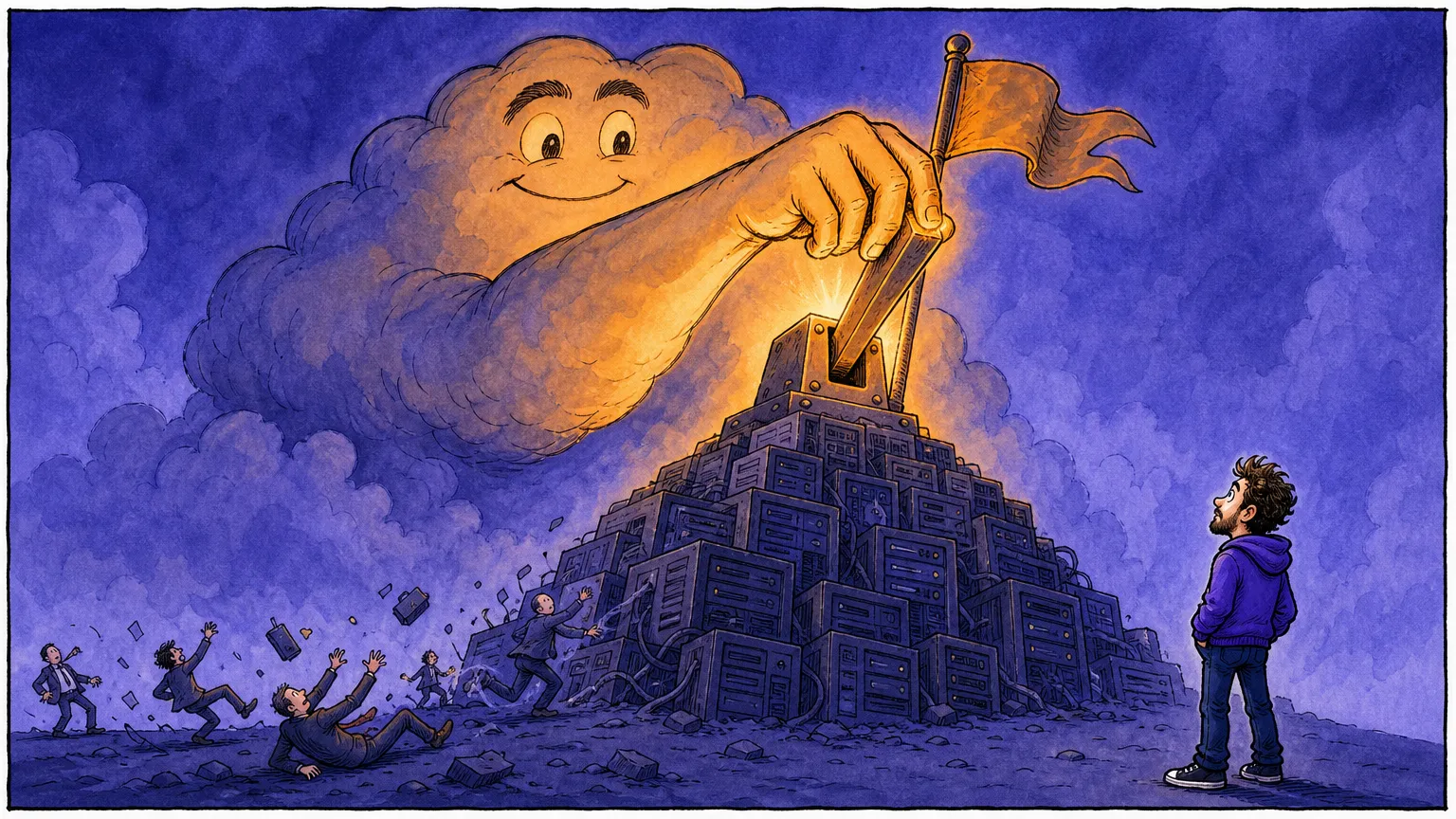
The story: Cloudflare Flagship hit the HN front page on May 27, though it actually shipped April 17 during Agents Week and is still in closed beta. It’s a feature-flag service that toggles features without a redeploy, built entirely on Cloudflare’s own stack: Durable Objects hold the flag config, Workers KV serves the read path, and evaluation runs inside the same Worker handling your request. That means sub-millisecond flag checks with no outbound hop. It implements the CNCF OpenFeature standard, so swapping providers is a one-line config change. Cloudflare is also pitching it as a safety harness for AI agents: an agent writes code behind a flag, ramps it by cohort, and rolls back without a human at every step.
The details:
- The timing is loud. OpenAI just bought Statsig for $1.1B, putting that customer base in limbo, and the incumbent it’s chasing, LaunchDarkly, was last valued at $3B.
- Pricing isn’t published. Cloudflare says it’ll “share more details on pricing as we approach general availability,” but its pattern with KV and R2 is a generous free tier on Workers.
- Beta limits are soft and high: 10,000 apps per account, 5,000 flags per app, plus 11 targeting operators with 6 levels of condition nesting.
- The catch a Cloudflare engineer admitted on HN: the client-side provider needs an API token to fetch flag values, and app-scoped tokens are still “WIP,” so it’s risky in public-facing apps.
- One HN take captured the mood: “There is no way 6 months ago someone at Cloudflare thought it was a good idea to build a competitor to LaunchDarkly.”
Why builders care: If you’re already on Workers, flags that likely cost nothing and run in your own isolate are a real unlock, and OpenFeature means a bad GA price is a one-line escape. Watch the lock-in, though: the config lives in Durable Objects, so migrating your flag history and audit logs out would be lossy even when the SDK isn’t.
TRENDING TODAY
🎰 Spain orders ISPs to block Polymarket and Kalshi - Spain’s gambling regulator told Vodafone, Movistar, and Orange to network-block both prediction markets for operating without a gambling licence, after failing to even reach the firms at their foreign addresses (816 HN points, 375 comments). The block is set to run 3-4 months. It follows the Minnesota ban we covered earlier, so treating prediction markets as unlicensed betting is now a multi-country pattern. If you’re building fintech for EU users, gambling licensing is a hard prerequisite, not an afterthought, and regulators will act at the ISP level without waiting for you to reply.
📉 r/indiehackers admits the build was the easy part - The loudest thread on the sub today (13 upvotes, 52 comments) is a founder confessing they posted 50-plus times and never cracked 1,000 views, before finally landing a first dollar through $20-50 micro-creator deals. It clusters with sibling posts all hitting the same wall. As one builder put it: “I made many saas that failed because I failed at distribution. I hate social media marketing. The next one will be something worth paid ads. I’d rather pay than post organic content.” This is the distribution wall, and it’s a different complaint than the recent debate over whether AI can clone your app.
FIRST DOLLAR
2,400 FREE, THEN THE FIRST 10 PAID
💵 A World Cup sticker tracker turned 2,400 free users into its first 10 paying customers
u/wilburpowery built scanini.app, a browser tool for tracking a FIFA World Cup 2026 Panini sticker collection: mark what you own, manage your extras, and get AI-matched with trade partners’ dupe lists. Tracking is free, and $4.99 one-time unlocks 500 trade matches. Roughly 10 days after launch, the first 10 buyers converted out of 2,400-plus free collectors. “Having random people on the internet pay for something I built for myself is such an amazing feeling.” A clean build-for-yourself origin, and the live collector count on the landing page backs up the numbers.
STACK OF THE DAY
📋 Clipmon
An open-source menubar clipboard manager for macOS. It lives in your menu bar, keeps a searchable history of everything you’ve copied, and pulls back that snippet you overwrote three copies ago. There’s no account or subscription, just a self-contained native utility most Mac builders will reach for daily. Free, on GitHub. The kind of small tool that quietly saves you from re-copying the same API key for the tenth time.
Not sponsored. We just feature tools builders would actually use.
BOOKMARKED TODAY
🌐 Big tech’s anti-labor playbook has come for Wikipedia - A former Wikimedia insider argues the foundation is borrowing big tech’s anti-labor tactics against its own volunteer editors (357 points, 203 comments). A pointed read on who actually owns the work when a platform runs on free contributions.
🤖 Outsourcing plus local AI may soon beat the frontier labs on cost - A contested thesis (262 points, 284 comments) that pairing human outsourcing with local models will undercut frontier-lab APIs on price. Worth a read if you’re budgeting AI spend and weighing self-hosting.
🎨 A few interesting modern pixel fonts - A curated tour of modern pixel fonts that’s been parked on the HN front page (284 points). Save-worthy if you’re doing your own UI and want type with character.