Age checking stopped being an argument on June 4. That’s when Texas SB 2420 took effect, and Apple now wants four separate APIs wired into your app. The last one fires when a parent takes their consent back.
An Effort investigation published yesterday counts that same kind of law being pushed in 21 states and Congress. Neither piece cites the other, so read them as one calendar, not one plot.
In today’s indie hacker news:
- 🏴☠️ Texas turned age checks into Apple plumbing
- 💾 Meta’s 30B local agent ships as one file
- 📊 Zuckerberg’s own table hands Qwen five wins
- 🎮 Stop Killing Games points fans at a pricing case
- 🐔 CHICKEN 6.0 breaks every hex escape you wrote
TOP STORIES
🏴☠️ PAPERS PLEASE, NOW IN XCODE

Apple’s Texas notice turns a child safety law into a build ticket.
The story: Apple told developers on June 3 that a court lifted the injunction on SB 2420. New Apple Accounts in Texas fell under the law the next day. Downloads, In-App Purchases and “significant changes” now need age assurance, plus parent or guardian consent for anyone under 18. The plumbing is four separate things. Declared Age Range for the age band, and PermissionKit’s Significant Change API. Then a StoreKit age rating property, plus a server notification for consent withdrawal.
“it’s the developer’s responsibility to determine when there’s a significant change to their app” (Apple Developer news, June 3, 2026)
A separate Effort investigation maps who writes this kind of law. It names five foreign NGOs and their US affiliates, working from the British Age Appropriate Design Code as the template.
The details:
- Consent is revocable, so approval is runtime state, not an install time check. A parent can pull it after your app is on the phone.
- The busiest name on Effort’s map is 5Rights, a British nonprofit. It counts 42 bills across 18 states.
- Eleven of those are already law. Effort also calls its own map a lower bound, and it’s the only source for the counts.
- 5Rights founder Beeban Kidron now argues for VPN bans too. She called social media bans without them “for show and headlines, not for children”.
- Apple’s notice doesn’t name the court that lifted the injunction, or say what happens to existing Texas accounts.
Why builders care: Plan for per state variants of the same plumbing, because one federal standard isn’t what’s arriving. The ship dates on your compliance work now come from statehouses, not from Cupertino.
💾 BYOG: BRING YOUR OWN GPU

Meta open sourced a 30B local agent model that ships as one 16.8 GB file.
The story: Meta Superintelligence Labs released Muse Glimmer yesterday under Apache 2.0. It’s quantized to roughly 4 bit and built for agents you leave running. At full precision it would want over 55 GB. The recommended build fits a 24 GB card, with headroom left for the KV cache and the vision encoder.
The parts that decide whether it runs at all sit in the GGUF card, not the launch post. You need llama.cpp build b10353 or newer. Older builds don’t register the architecture and refuse to load the file.
“Nothing errors when a generation runs out of context: the request simply produces no answer.” (Muse Glimmer GGUF model card)
The details:
- Quantization costs 1.0% average accuracy on the recommended build, against 0.2% on the 32 GB one.
- Meta measures 74.9 tok/s on an RTX 5090, rising to 233.4 with the DFlash drafter on.
- llama-server splits
-cacross-npslots, so a long agent run can silently return nothing. Meta’s own guidance is-c 524288with-np 4. - The real stop tokens are
<|end_of_text|>and<|eot|>. Add<|eom|>to your stop strings and parallel tool calling collapses. - Apache 2.0 covers the drafter and the vision encoder too. The soft spot is prompt injection. Meta’s own Siren AgentDojo attack success rate is 28.4, worse than the Gemma comparator.
Why builders care: An agent loop that runs all day now has a local price: one card you already own. Keep the API call for the step that actually needs it.
📊 OPEN WEIGHTS, CLOSED TEACHER

Zuckerberg torched labs that keep models to themselves, hours after shipping one distilled from Meta’s closed model.
The story: The Future is for Everyone went up on August 10, the same day as the model above. Its sharpest line names nobody.
“the most dangerous scenario … would be leading AI labs training powerful models and keeping them for themselves” (Mark Zuckerberg)
Muse Glimmer is distilled from Muse Spark, the bigger model Meta still keeps shut. Zuckerberg defends that too, arguing for the principle that you can learn from anything you can observe. His open source promise uses one telling word: Meta will resume releasing some open models.
The details:
- Meta published 12 agentic rows in its comparison table. Its own model leads 7 of them, Qwen takes 5, and Gemma takes none.
- The most cited coding benchmark goes to Qwen: 77.2 against 76.0 on SWE-Bench Verified.
- Computer use is the wider gap. OSWorld-Verified reads 65.9 for Meta against 75.6 for Qwen.
- Fortune puts the essay near 6,500 words and says Meta plans to open Muse Spark 1.2’s weights. No date appears anywhere.
- One day after release the Hugging Face page carried 55 community quantizations.
Why builders care: Pick the local model by the benchmark that matches your workload, not by the lab’s flag. The open weights fight is a marketing surface now, and the frontier model stays shut either way.
🎮 THE CTA NOBODY CAN CLICK

Stop Killing Games put 195.2K views behind a Sony case about prices, open only to Dutch residents.
The story: Stop Killing Games posted on August 10 that it’s time to sue Sony. The case it’s backing was served on 24 June 2025 by a Dutch foundation, over PlayStation Store pricing. It’s an abuse of dominance claim, not a preservation one. The follow up post narrows the ask to people who live in the Netherlands.
The claim page is blunt about eligibility. You have to live in the Netherlands and own a PS4 or PS5. You also need a PlayStation Store purchase since 29 November 2013.
The details:
- The second head of complaint is about developers. Publishers must sell only through the PlayStation Store, and Sony gets the last word on their prices.
- The claimant’s commissioned research says digital copies cost 47% more than the same game on disc. It puts damage to Dutch consumers at 435 million euros across that whole window.
- Fourteen months in, the court hasn’t reached the merits. Sony’s jurisdiction and admissibility arguments were heard on 29 June 2026, with an interim judgment still pending.
- The remedy is structural, not a refund. The foundation expects Sony forced to open PlayStation digital distribution to other providers.
- The Hacker News thread mostly corrected the framing. braiamp: this is not a lawsuit about Sony taking away my discs.
Why builders care: Pricing control, not the size of the platform cut, is what claimants are aiming at now. And if you ever point an audience at a legal fight, the eligibility line belongs in the first post.
🐔 THE BIRD SPEAKS UNICODE NOW
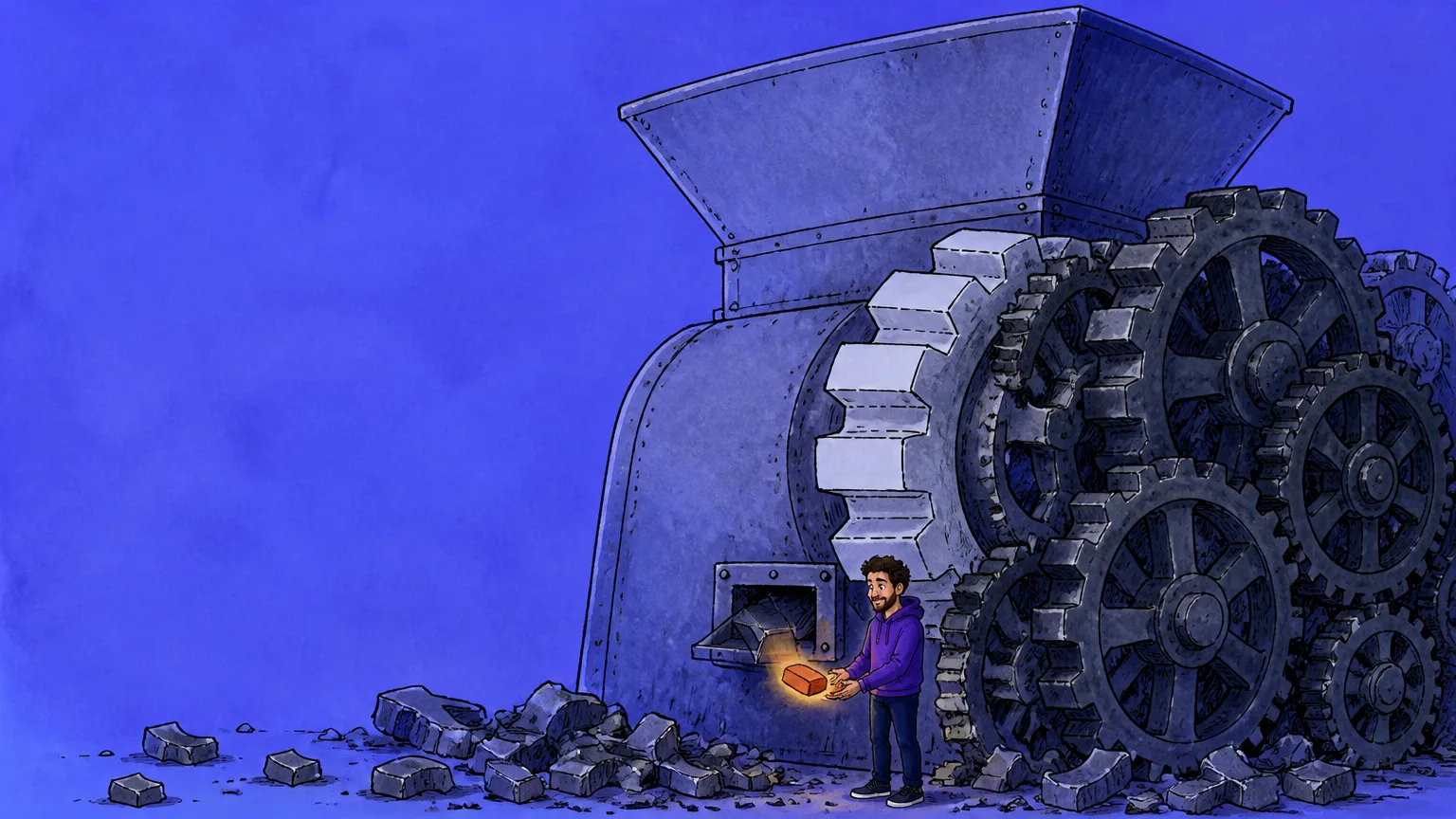
CHICKEN 6.0 gives Scheme to C strings real Unicode, and breaks every hex escape you wrote.
The story: The 6.0 change list is up, the first major bump since 5.0.0. Strings are UTF-8 now, so the compiler that turns Scheme into portable C finally handles Unicode without workarounds. It’s also fully R7RS small conformant, which is where the breakage comes from.
R7RS wants every hex escape in a string literal terminated by a semicolon. Felix Winkelmann, who founded CHICKEN nearly 25 years ago, calls that one much more annoying than the rest.
The details:
- The fallback is the 4 digit
\uNNNNform, which still works on 5 and 6. Use it if one codebase has to build on both. - Blobs are bytevectors now, equivalent to SRFI-4 u8vectors, and the
#${...}read syntax is gone. define-record-typeis generative, as R7RS requires. Every evaluation of the form makes a genuinely new type.- Seven srfi module aliases are gone because R7RS covers them. The porting guide says adding an import of
(scheme base)is usually enough. - Windows lost the cmd.exe build path entirely, so you need a POSIX shell and w64devkit. On the upside,
zig ccnow works as the C compiler.
Why builders care: CHICKEN’s pitch was always the output, one standalone binary with no Scheme on the target machine. Unicode strings remove the thing that disqualified it for most modern work.
TRENDING TODAY
- ✏️ Sketchling, a hand drawn animation language for coding agents - A TypeScript library that gives agents primitives for hand drawn animation. Shapes take character parameters like weight, looseness and energy, then render through rough.js and GSAP in headless Chromium. Built over one weekend, with a linter in the box because the intended user is an agent.
- 📱 Needle2, a 14 MB agentic LLM for phones and robots - Aimed at phones, wearables, smart home devices and robots. It pulled 221 points and 91 comments in under seven hours. The bet is that a lot of agent work never needs a GPU at all.
STACK OF THE DAY
🎈 Airship
Airship lets you edit your running app the way you’d edit a Figma file. Select an element, change it, try a few directions, then let it apply the changes to your source. The pitch is killing the round trip between a design file and the code. It works with Claude Code, Codex and OpenCode, which matters if your UI already comes out of an agent.
Not sponsored. We just feature tools builders would actually use.
BOOKMARKED TODAY
- 🧊 All 43 quintillion Rubik’s Cube states, on one page - Scroll and the cube changes, forever. It’s useless and it’s great, which is most of what a Show HN is for.
- 🍎 antirez wrote a MiniMax H3 inference engine for Macs - Plain C, aimed at the machine on your desk. It picked up 82 points in its first hours.
- 🕰️ What model knowledge cutoffs actually mean - A look at Claude and GPT knowledge cutoffs next to their pre-training timelines. It pulled 125 points against 14 comments, which usually means people saved it rather than argued.
That’s the board for today. Go build something.
Ship to one country, QA it from another. Geo-fenced Stripe checkouts, region-gated APIs, feature flags that only fire in EU. NordVPN's 6,400+ exit nodes across 110+ countries let you test a US-only paywall from EU or hit a EU-only checkout from SF. Bonus: free Meshnet for SSH across your devices.
We get a cut if you sign up. Only added for tools we use ourselves.
Curated by AI, built by a human.